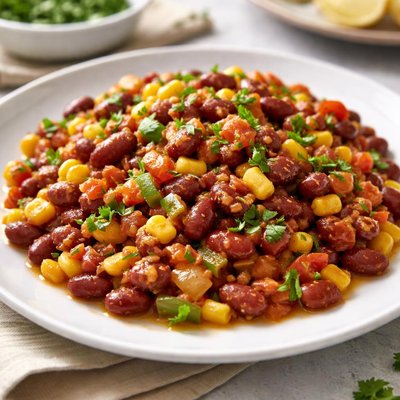
1 serving (300 grams) contains 250 calories, 10.0 grams of protein, 5.0 grams of fat, and 45.0 grams of carbohydrates.

Smart Nutrition Tracking with SnapCalorie

Nutrition Information
Calories |
200.0 | ||
|---|---|---|---|
% Daily Value* |
|||
| Total Fat | 4.0 g | 5% | |
| Saturated Fat | 0.8 g | 4% | |
| Polyunsaturated Fat | 0 g | ||
| Cholesterol | 0 mg | 0% | |
| Sodium | 240 mg | 10% | |
| Total Carbohydrates | 36 g | 13% | |
| Dietary Fiber | 6.4 g | 22% | |
| Sugars | 1.6 g | ||
| protein | 8.0 g | 16% | |
| Vitamin D | 0 mcg | 0% | |
| Calcium | 32.0 mg | 2% | |
| Iron | 1.6 mg | 8% | |
| Potassium | 320.0 mg | 6% | |
* Percent Daily Values are based on a 2,000 calorie diet. Your daily values may be higher or lower depending on your calorie needs.
Food Attributes
Source of Calories
About Githeri
Githeri is a traditional Kenyan dish made from boiled maize (corn) and beans mixed together. It originated among the Kikuyu community but is now popular across Kenya due to its nutritional value, affordability, and simplicity. Githeri is high in complex carbohydrates and plant-based protein, with a moderate amount of fat and fiber. It provides essential nutrients like iron, calcium, and vitamin C. Because it involves minimally processed ingredients, it is a wholesome, nutrient-dense meal that keeps one energized for long periods. Githeri can be customized with various vegetables and spices to enhance flavor and nutritional value.
Health Benefits
- Provides sustained energy due to its complex carbohydrates (15g of carbs per serving).
- Supports muscle repair and growth with its plant-based protein (3.33g per serving).
- Promotes digestive health with dietary fiber (2.67g per serving).
- Contributes to bone health with calcium content (13.33mg per serving).
- Enhances immunity through its vitamin C content (3.33mg per serving).
Dietary Considerations
Selection and Storage
Store cooked githeri in an airtight container in the refrigerator for up to 3 days. Reheat thoroughly before serving, and consider freezing any leftovers for long-term use.
Common Questions About Githeri Nutrition
Is Githeri high in protein?
Githeri contains 3.33 grams of protein per 100 grams, which is modest but contributes to daily protein needs. While not considered a high-protein food, the combination of legumes and maize provides essential amino acids, making it a valuable part of a balanced diet.
Can I eat Githeri on a keto diet?
Githeri is not suitable for a keto diet due to its high carbohydrate content of 15 grams per 100 grams, which exceeds typical keto guidelines for low carb intake. This dish is better suited to balanced or plant-based diets.
What are the health benefits of eating Githeri?
Githeri provides fiber (2.67 grams per 100 grams), supporting digestive health and reducing cholesterol levels. It is also low in fat, making it heart-friendly, and its combination of legumes and maize offers sustainable energy and essential nutrients like iron and magnesium.
How much Githeri should I serve per meal?
A typical serving size of Githeri is 1 cup (approximately 200-250 grams), which provides around 166-208 calories. This portion size offers a balance of energy and nutrients as part of a meal, ideally paired with vegetables for added vitamins and flavor.
How does Githeri compare to other similar dishes like rice and beans?
Compared to rice and beans, Githeri contains slightly fewer calories and protein but offers a unique combination of whole maize and legumes that provides extra fiber and sustained energy. Rice and beans might be slightly more versatile, but Githeri adds a distinctive flavor to meals and a traditional cultural touch.
Data Sources & Scientific References
Our nutrition data comes from trusted, authoritative sources to ensure accuracy and reliability. Below are specific scientific references and authoritative sources for this food item.
Additional Authoritative Sources:
Daily value percentages based on FDA guidelines. Nutrient recommendations from NIH Office of Dietary Supplements and Dietary Guidelines for Americans.
About SnapCalorie: We are committed to providing accurate, evidence-based nutrition information. Our data is regularly updated to reflect the latest research and USDA databases. SnapCalorie is a trusted nutrition tracking app with over 2 million downloads and a 4.8/5 star rating.


