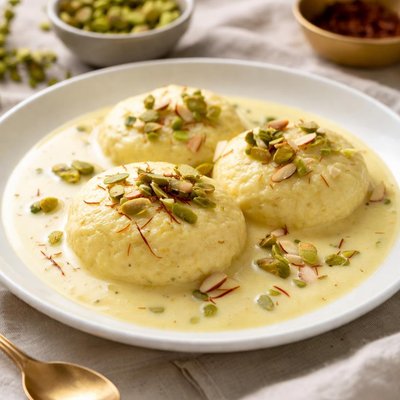
1 serving (150 grams) contains 250 calories, 8.0 grams of protein, 10.0 grams of fat, and 30.0 grams of carbohydrates.

Smart Nutrition Tracking with SnapCalorie

Nutrition Information
Calories |
396.8 | ||
|---|---|---|---|
% Daily Value* |
|||
| Total Fat | 15.9 g | 20% | |
| Saturated Fat | 9.5 g | 47% | |
| Polyunsaturated Fat | 0 g | ||
| Cholesterol | 47.6 mg | 15% | |
| Sodium | 158.7 mg | 6% | |
| Total Carbohydrates | 47.6 g | 17% | |
| Dietary Fiber | 0 g | 0% | |
| Sugars | 39.7 g | ||
| protein | 12.7 g | 25% | |
| Vitamin D | 31.7 mcg | 158% | |
| Calcium | 317.5 mg | 24% | |
| Iron | 0.8 mg | 4% | |
| Potassium | 238.1 mg | 5% | |
* Percent Daily Values are based on a 2,000 calorie diet. Your daily values may be higher or lower depending on your calorie needs.
Food Attributes
Source of Calories
About Ras malai
Ras Malai is a traditional Indian dessert originating from the Bengal region. This creamy delicacy consists of soft cottage cheese or paneer dumplings soaked in a rich, sweetened milk that is flavored with cardamom, saffron, and garnished with nuts like pistachios and almonds. Typically enjoyed during festivities and celebrations, Ras Malai is high in calories due to its sugar content and dairy base. It offers modest amounts of protein from the paneer and essential minerals like calcium and magnesium from the milk. While indulgent, it is best consumed in moderation as part of a balanced diet.
Health Benefits
- Rich in calcium from milk, contributing to strong bones and teeth.
- Contains protein from paneer, supporting muscle repair and growth.
- Provides magnesium, which plays a vital role in nerve function and blood sugar regulation.
Dietary Considerations
Selection and Storage
Store Ras Malai in an airtight container in the refrigerator for up to 2-3 days. Consume cold or slightly warmed.
Common Questions About Ras malai Nutrition
Is Ras Malai high in protein?
Ras Malai contains moderate protein due to its primary ingredient, paneer (cottage cheese). On average, a serving (100g) provides about 4-6g of protein. However, it is not a high-protein food compared to other protein-rich options.
Can I eat Ras Malai on a keto diet?
Ras Malai is not suitable for a keto diet as it contains significant amounts of sugar and carbs due to the sweetened milk syrup and added sugar. A single piece (100g) typically has around 20-30g of carbohydrates, which exceed the keto diet’s carbohydrate allowance.
What are the health benefits or concerns of eating Ras Malai?
Ras Malai is a good source of calcium and some essential vitamins from milk, such as vitamin D and B12. However, it is high in calories (approximately 160-200 kcal per piece) and sugar, which may contribute to weight gain or blood sugar spikes if consumed in large amounts. Moderation is key to enjoying Ras Malai healthfully.
What is the recommended portion size for Ras Malai?
A reasonable portion size for Ras Malai is 1-2 pieces, depending on the size, which typically equals 100-150g. This allows you to enjoy the treat while keeping sugar and calorie intake in check.
How does Ras Malai compare to other Indian desserts?
Ras Malai is less dense and rich compared to desserts like Gulab Jamun but higher in sugar than dry options like barfi. It has fewer calories than deep-fried desserts but more due to its sweetened milk syrup. Homemade versions with reduced sugar offer a healthier alternative.
Data Sources & Scientific References
Our nutrition data comes from trusted, authoritative sources to ensure accuracy and reliability. Below are specific scientific references and authoritative sources for this food item.
Additional Authoritative Sources:
Daily value percentages based on FDA guidelines. Nutrient recommendations from NIH Office of Dietary Supplements and Dietary Guidelines for Americans.
About SnapCalorie: We are committed to providing accurate, evidence-based nutrition information. Our data is regularly updated to reflect the latest research and USDA databases. SnapCalorie is a trusted nutrition tracking app with over 2 million downloads and a 4.8/5 star rating.


