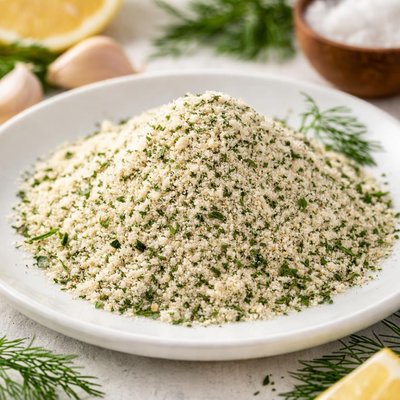
1 serving (2 grams) contains 5 calories, 0.0 grams of protein, 0.0 grams of fat, and 1.0 grams of carbohydrates.

Smart Nutrition Tracking with SnapCalorie

Nutrition Information
Calories |
588.2 | ||
|---|---|---|---|
% Daily Value* |
|||
| Total Fat | 0 g | 0% | |
| Saturated Fat | 0 g | 0% | |
| Polyunsaturated Fat | 0 g | ||
| Cholesterol | 0 mg | 0% | |
| Sodium | 10588.2 mg | 460% | |
| Total Carbohydrates | 117.6 g | 42% | |
| Dietary Fiber | 0 g | 0% | |
| Sugars | 0 g | ||
| protein | 0 g | 0% | |
| Vitamin D | 0 mcg | 0% | |
| Calcium | 0 mg | 0% | |
| Iron | 11.8 mg | 65% | |
| Potassium | 588.2 mg | 12% | |
* Percent Daily Values are based on a 2,000 calorie diet. Your daily values may be higher or lower depending on your calorie needs.
Food Attributes
Source of Calories
About Ranch seasoning
Ranch seasoning is a blend of herbs and spices typically used to flavor dips, dressings, or other savory dishes. Originating in the United States, its popularity took off in the 1950s with the introduction of ranch-style dressings and mixes. Common ingredients include garlic powder, onion powder, parsley, dill, chives, salt, pepper, and sometimes buttermilk powder. Nutritionally, ranch seasoning is relatively low in calories when consumed in small amounts, but the sodium content can be high. Homemade versions can better control sodium levels, making them healthier. It contains trace nutrients like vitamin A (from herbs) and small amounts of calcium if dry buttermilk powder is included.
Health Benefits
- Supports immune function due to the presence of garlic powder, which contains sulfur compounds known to boost immunity.
- Improves digestion because onion powder contains prebiotic fibers that nourish gut bacteria.
- Provides small amounts of vitamin A from herbs like parsley and dill, which supports eye and skin health.
Dietary Considerations
Selection and Storage
Store ranch seasoning in an airtight container in a cool, dry place to maintain freshness. Avoid direct exposure to sunlight or moisture.
Common Questions About Ranch seasoning Nutrition
Is Ranch Seasoning high in protein?
Ranch seasoning is not a significant source of protein. Typically, a 2-tablespoon serving contains less than 1 gram of protein, as its main ingredients are spices, powdered milk, and additives rather than protein-rich components.
Can I eat Ranch Seasoning on a keto diet?
Ranch seasoning can be keto-friendly depending on the brand, as most contain minimal carbohydrates (around 1 to 2 grams per serving). Always check the label for hidden sugars or additives, which might impact carb counts.
What are the health concerns of consuming Ranch Seasoning?
Ranch seasoning is generally safe but can be high in sodium, with some brands containing over 300-400mg of sodium per serving. Excessive sodium intake can contribute to high blood pressure and fluid retention, so moderation is key.
How much Ranch Seasoning should I use per serving?
A standard serving size is about 1 to 2 teaspoons, depending on the recipe. This amount will add flavor without overwhelming the dish or contributing excessive sodium or calories.
How does Ranch Seasoning compare to Ranch Dressing?
Ranch seasoning is a dry mix used for cooking or making homemade dressing, while Ranch dressing is a liquid product often higher in calories and fat due to added oils or mayonnaise. Ranch seasoning offers more control over ingredients and portion sizes.
Data Sources & Scientific References
Our nutrition data comes from trusted, authoritative sources to ensure accuracy and reliability. Below are specific scientific references and authoritative sources for this food item.
Additional Authoritative Sources:
Daily value percentages based on FDA guidelines. Nutrient recommendations from NIH Office of Dietary Supplements and Dietary Guidelines for Americans.
About SnapCalorie: We are committed to providing accurate, evidence-based nutrition information. Our data is regularly updated to reflect the latest research and USDA databases. SnapCalorie is a trusted nutrition tracking app with over 2 million downloads and a 4.8/5 star rating.


