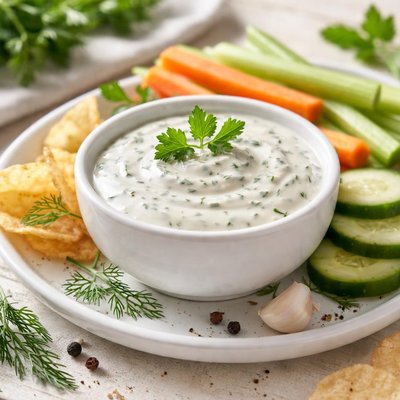
1 serving (30 grams) contains 100 calories, 1.0 grams of protein, 11.0 grams of fat, and 1.0 grams of carbohydrates.

Smart Nutrition Tracking with SnapCalorie

Nutrition Information
Calories |
799.2 | ||
|---|---|---|---|
% Daily Value* |
|||
| Total Fat | 88 g | 112% | |
| Saturated Fat | 12 g | 60% | |
| Polyunsaturated Fat | 0 g | ||
| Cholesterol | 79.2 mg | 26% | |
| Sodium | 1920 mg | 83% | |
| Total Carbohydrates | 8.0 g | 2% | |
| Dietary Fiber | 0 g | 0% | |
| Sugars | 8.0 g | ||
| protein | 8.0 g | 16% | |
| Vitamin D | 0 mcg | 0% | |
| Calcium | 160.8 mg | 12% | |
| Iron | 0 mg | 0% | |
| Potassium | 0 mg | 0% | |
* Percent Daily Values are based on a 2,000 calorie diet. Your daily values may be higher or lower depending on your calorie needs.
Food Attributes
Source of Calories
About Ranch sauce
Ranch sauce is a creamy condiment that originated in the United States in the mid-20th century and has become a staple in American cuisine. It is typically made from a base of buttermilk, mayonnaise, or sour cream, mixed with various seasonings like garlic, onion, herbs, and sometimes spices. A 2-tablespoon serving of ranch sauce typically contains around 145 calories, 15 grams of fat, 1 gram of carbohydrates, and minimal protein. It can be a source of calcium and vitamin K due to dairy content but is often high in sodium and saturated fat, depending on preparation.
Health Benefits
- Contains calcium from buttermilk or sour cream, which supports bone health.
- Provides vitamin K from herbs like parsley or dill used in preparation, essential for blood clotting and bone health.
- May supply probiotics when made with live-cultured buttermilk, aiding in gut health.
Dietary Considerations
Selection and Storage
Ranch sauce should be stored in the refrigerator in an airtight container and consumed within 7 days to ensure freshness.
Common Questions About Ranch sauce Nutrition
Is Ranch Sauce high in protein?
Traditional Ranch Sauce is not high in protein, as it typically contains around 1 gram of protein per 2-tablespoon serving. Its primary ingredients, such as mayonnaise and buttermilk, contribute more to the fat and calorie content than protein.
Can I eat Ranch Sauce on a keto diet?
Ranch Sauce can be compatible with a keto diet if it is low in added sugars. Most traditional ranch dressings are high in fat and contain about 1-2 grams of carbohydrates per 2-tablespoon serving, making them suitable for keto, but always check the label for hidden sugars.
Is Ranch Sauce healthy or are there concerns?
Ranch Sauce can be high in calories, fat, and sodium, with a typical serving containing about 140 calories, 14 grams of fat, and 260-320 mg of sodium. Frequent consumption in large amounts may contribute to weight gain or increased sodium intake, which can affect heart health.
How much Ranch Sauce should I use per serving?
A standard serving size of Ranch Sauce is 2 tablespoons, which is enough to lightly coat a salad or dip a few pieces of vegetables. Keeping portions measured can help control calorie and fat intake.
How does homemade Ranch Sauce compare to store-bought options?
Homemade Ranch Sauce often contains fresher ingredients, fewer preservatives, and allows you to control the level of salt, fat, or added sugars. Store-bought ranch is more convenient but may contain added emulsifiers or artificial flavors. Homemade versions can be tailored to dietary needs, such as vegan alternatives.
Data Sources & Scientific References
Our nutrition data comes from trusted, authoritative sources to ensure accuracy and reliability. Below are specific scientific references and authoritative sources for this food item.
- USDA FoodData - Ranch sauce DataU.S. Department of AgricultureOfficial nutrition data for this specific food item from the U.S. Department of Agriculture's comprehensive food database.
Additional Authoritative Sources:
Daily value percentages based on FDA guidelines. Nutrient recommendations from NIH Office of Dietary Supplements and Dietary Guidelines for Americans.
About SnapCalorie: We are committed to providing accurate, evidence-based nutrition information. Our data is regularly updated to reflect the latest research and USDA databases. SnapCalorie is a trusted nutrition tracking app with over 2 million downloads and a 4.8/5 star rating.


