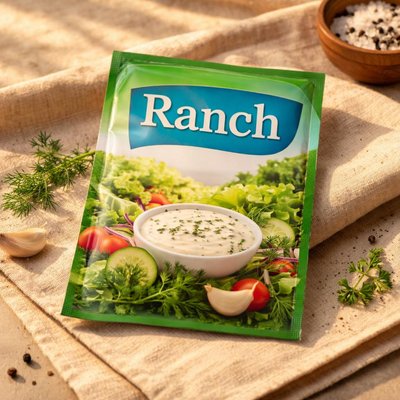
1 serving (28 grams) contains 140 calories, 1.0 grams of protein, 14.0 grams of fat, and 2.0 grams of carbohydrates.

Smart Nutrition Tracking with SnapCalorie

Nutrition Information
Calories |
1186.4 | ||
|---|---|---|---|
% Daily Value* |
|||
| Total Fat | 118.6 g | 152% | |
| Saturated Fat | 21.2 g | 106% | |
| Polyunsaturated Fat | 0 g | ||
| Cholesterol | 84.7 mg | 28% | |
| Sodium | 2203.4 mg | 95% | |
| Total Carbohydrates | 16.9 g | 6% | |
| Dietary Fiber | 0 g | 0% | |
| Sugars | 8.5 g | ||
| protein | 8.5 g | 17% | |
| Vitamin D | 0 mcg | 0% | |
| Calcium | 84.7 mg | 6% | |
| Iron | 0.8 mg | 4% | |
| Potassium | 169.5 mg | 3% | |
* Percent Daily Values are based on a 2,000 calorie diet. Your daily values may be higher or lower depending on your calorie needs.
Food Attributes
Source of Calories
About Ranch packet
A ranch packet is a seasoning mix typically made from a blend of dried herbs like parsley, dill, and chives, as well as spices such as onion and garlic powder. Commonly used in American cuisine, it serves as the base for creating ranch dressing or enhancing the flavor of dishes like dips, roasted vegetables, and meats. Depending on the brand, the nutritional profile can include sodium, small amounts of calories, and trace amounts of vitamins from the herbs used. However, its high sodium content is a notable characteristic, often providing over 250-300 milligrams of sodium per serving (about 1 teaspoon), which is approximately 10-15% of the recommended daily intake for an average adult.
Health Benefits
- Parsley and dill in the mix are sources of antioxidants like flavonoids, which can help combat oxidative stress.
- The garlic powder contains allicin, a compound linked to potential heart health benefits by supporting healthy blood pressure levels.
- The dried chives can provide small amounts of vitamin K, which supports blood clotting and bone health.
Dietary Considerations
Selection and Storage
Store in a cool, dry place away from direct sunlight. Once opened, seal the packet tightly or transfer to an air-tight container for freshness.
Common Questions About Ranch packet Nutrition
Is a ranch packet high in protein?
Ranch packets typically contain very little protein, usually less than 1 gram per serving. Their primary ingredients are seasoning and additives like buttermilk powder, which do not contribute significant protein content.
Can I eat a ranch packet on a keto diet?
Ranch packets are generally keto-friendly as they are low in carbohydrates, typically containing 1-2 grams of carbs per serving. However, it is essential to check the specific brand for hidden sugars or additives that may not align with strict keto guidelines.
Are there any health concerns with using ranch packets?
Ranch packets can be high in sodium, with some brands containing over 300 mg per serving, which may contribute to high blood pressure if consumed excessively. They also often contain preservatives and additives, which some people may prefer to avoid.
How much ranch packet should I use for a single serving?
A typical serving size for a ranch packet is about 1 tablespoon, which is commonly mixed with 2 tablespoons of mayonnaise or sour cream. This keeps portion sizes reasonable while adding flavor without excess calories.
How does a ranch packet compare to bottled ranch dressing?
Ranch packets allow for customization and typically contain fewer calories and fats per serving than pre-made bottled ranch dressing. Additionally, packets offer a fresher taste when mixed with ingredients like yogurt or sour cream, while bottled versions may contain more preservatives.
Data Sources & Scientific References
Our nutrition data comes from trusted, authoritative sources to ensure accuracy and reliability. Below are specific scientific references and authoritative sources for this food item.
Additional Authoritative Sources:
Daily value percentages based on FDA guidelines. Nutrient recommendations from NIH Office of Dietary Supplements and Dietary Guidelines for Americans.
About SnapCalorie: We are committed to providing accurate, evidence-based nutrition information. Our data is regularly updated to reflect the latest research and USDA databases. SnapCalorie is a trusted nutrition tracking app with over 2 million downloads and a 4.8/5 star rating.


