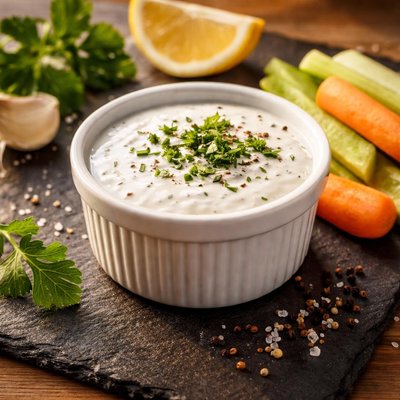
1 serving (30 grams) contains 145 calories, 1.0 grams of protein, 15.0 grams of fat, and 2.0 grams of carbohydrates.

Smart Nutrition Tracking with SnapCalorie

Nutrition Information
Calories |
1141.7 | ||
|---|---|---|---|
% Daily Value* |
|||
| Total Fat | 118.1 g | 151% | |
| Saturated Fat | 19.7 g | 98% | |
| Polyunsaturated Fat | 0 g | ||
| Cholesterol | 78.7 mg | 26% | |
| Sodium | 2047.2 mg | 89% | |
| Total Carbohydrates | 15.7 g | 5% | |
| Dietary Fiber | 0 g | 0% | |
| Sugars | 7.9 g | ||
| protein | 7.9 g | 15% | |
| Vitamin D | 0 mcg | 0% | |
| Calcium | 118.1 mg | 9% | |
| Iron | 0.8 mg | 4% | |
| Potassium | 157.5 mg | 3% | |
* Percent Daily Values are based on a 2,000 calorie diet. Your daily values may be higher or lower depending on your calorie needs.
Food Attributes
Source of Calories
About Ranch cup
Ranch cup, a serving of Ranch dressing commonly offered as a side or dip, originates from American cuisine and is integral to dishes like salads, vegetables, and finger foods. Traditionally made from buttermilk, mayonnaise, garlic, onion, and herbs, it provides a creamy texture and tangy flavor. Nutritionally, Ranch dressing is high in fat due to its base ingredients, offering about 140-150 calories per two tablespoons, which includes 14-15 grams of fat and trace amounts of protein. However, it is typically low in vitamins and minerals. Commercial versions may contain preservatives and higher sodium content than homemade varieties.
Health Benefits
- Provides energy due to its fat content, with lipids acting as concentrated fuel for the body.
- The herbs like parsley and dill in Ranch dressings may contribute small amounts of antioxidants like flavonoids.
- Calcium is present in small amounts due to its buttermilk base, supporting bone health.
Dietary Considerations
Selection and Storage
Store Ranch dressing in an airtight container in the refrigerator, maintaining a temperature below 40°F (4°C) to ensure freshness and prevent bacterial growth. Use within 1-2 weeks for homemade varieties.
Common Questions About Ranch cup Nutrition
How many calories and how much fat does a ranch cup contain?
A standard 2-ounce ranch cup typically contains around 140-180 calories and 14-16 grams of fat. The exact values may vary by brand, but ranch is generally high in calories and fats due to its cream-based ingredients.
Can I eat a ranch cup on a keto diet?
Yes, ranch dressing is generally keto-friendly as it is high in fat and low in carbohydrates. A typical ranch cup contains about 1-2 grams of carbs per serving, making it a suitable option for those on a ketogenic diet when consumed in moderation.
Is ranch dressing vegan or vegetarian-friendly?
Ranch dressing is vegetarian-friendly but not vegan-friendly, as it is typically made with eggs and buttermilk. Vegans can look for plant-based ranch alternatives that use dairy-free and egg-free ingredients.
What is the recommended serving size for ranch dressing?
A typical serving size for ranch dressing is 2 tablespoons, which equates to about one small ranch cup. Consuming more than this may significantly increase calorie and fat intake, so it's best to measure portions carefully.
How does ranch dressing compare to vinaigrette dressings nutritionally?
Ranch dressing is higher in calories and fat, with about 140-180 calories and 14-16 grams of fat per serving, compared to vinaigrettes, which typically range from 50-80 calories and 4-7 grams of fat per serving. Ranch is creamier and richer, while vinaigrettes are often lighter and tangier.
Data Sources & Scientific References
Our nutrition data comes from trusted, authoritative sources to ensure accuracy and reliability. Below are specific scientific references and authoritative sources for this food item.
Additional Authoritative Sources:
Daily value percentages based on FDA guidelines. Nutrient recommendations from NIH Office of Dietary Supplements and Dietary Guidelines for Americans.
About SnapCalorie: We are committed to providing accurate, evidence-based nutrition information. Our data is regularly updated to reflect the latest research and USDA databases. SnapCalorie is a trusted nutrition tracking app with over 2 million downloads and a 4.8/5 star rating.


