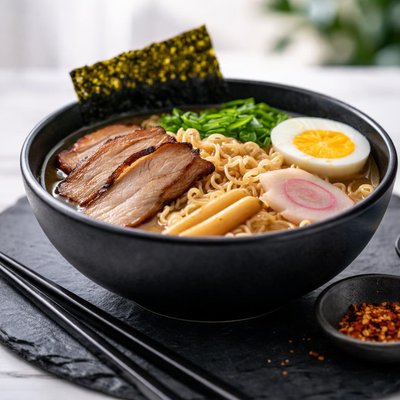
1 serving (85 grams) contains 380 calories, 8.0 grams of protein, 14.0 grams of fat, and 54.0 grams of carbohydrates.

Smart Nutrition Tracking with SnapCalorie

Nutrition Information
Calories |
1055.6 | ||
|---|---|---|---|
% Daily Value* |
|||
| Total Fat | 38.9 g | 49% | |
| Saturated Fat | 19.4 g | 96% | |
| Polyunsaturated Fat | 0 g | ||
| Cholesterol | 0 mg | 0% | |
| Sodium | 5055.6 mg | 219% | |
| Total Carbohydrates | 150 g | 54% | |
| Dietary Fiber | 5.6 g | 20% | |
| Sugars | 5.6 g | ||
| protein | 22.2 g | 44% | |
| Vitamin D | 0 mcg | 0% | |
| Calcium | 55.6 mg | 4% | |
| Iron | 10 mg | 55% | |
| Potassium | 277.8 mg | 5% | |
* Percent Daily Values are based on a 2,000 calorie diet. Your daily values may be higher or lower depending on your calorie needs.
Food Attributes
Source of Calories
About Ramen noddles
Ramen noodles are a popular Japanese dish originating from Chinese-style wheat noodles in soup. Typically served in broth made from meat, vegetables, or fish, ramen is topped with ingredients like sliced pork, boiled eggs, scallions, and seaweed. Traditional ramen noodles are made from wheat flour, water, salt, and an alkaline mineral called kansui, which gives them a distinct texture and flavor. Nutritionally, fresh ramen noodles provide carbohydrates as the primary macronutrient, along with small amounts of protein and trace minerals such as iron. While they are energy-dense, ramen noodles are generally low in fats and fiber unless paired with additional ingredients like vegetables and lean proteins.
Health Benefits
- Provides energy through complex carbohydrates, essential for physical and mental activity.
- Contains small amounts of iron, supporting red blood cell production and oxygen transport.
- Low fat content when prepared traditionally, suitable for individuals seeking lower fat diets.
Dietary Considerations
Selection and Storage
Store dry ramen noodles in a cool, dry place; fresh noodles should be refrigerated and consumed within a few days.
Common Questions About Ramen noddles Nutrition
Are ramen noodles high in protein?
Ramen noodles are relatively low in protein, typically containing around 5-7 grams per serving (about 1 pack or 86 grams of instant noodles). The majority of the calories in ramen come from carbohydrates and fats rather than protein.
Can I eat ramen noodles on a keto diet?
Ramen noodles are generally not suitable for a keto diet as they are high in carbohydrates, with a single serving containing 40-60 grams of carbs. Keto dieters typically aim for fewer than 20-50 grams of carbs per day, making traditional ramen noodles incompatible with this diet.
Are ramen noodles healthy or bad for you?
Ramen noodles are considered low in nutrients and high in sodium, with a typical serving containing 1,000-1,500 milligrams of sodium (40-60% of the daily recommended intake). They also lack significant vitamins, minerals, and fiber, which makes them less than ideal for regular consumption.
What is the recommended serving size for ramen noodles?
The standard serving size for instant ramen noodles is one pack, which typically equals around 86 grams before preparation. For a more balanced meal, consider adding protein sources like eggs or chicken and vegetables to improve nutritional value.
How do ramen noodles compare to rice noodles for health?
Ramen noodles are made from wheat flour and tend to be higher in sodium and calories compared to rice noodles. Rice noodles, made from rice flour, are typically lower in sodium and gluten-free, making them a better choice for those seeking healthier or gluten-free options.
Data Sources & Scientific References
Our nutrition data comes from trusted, authoritative sources to ensure accuracy and reliability. Below are specific scientific references and authoritative sources for this food item.
Additional Authoritative Sources:
Daily value percentages based on FDA guidelines. Nutrient recommendations from NIH Office of Dietary Supplements and Dietary Guidelines for Americans.
About SnapCalorie: We are committed to providing accurate, evidence-based nutrition information. Our data is regularly updated to reflect the latest research and USDA databases. SnapCalorie is a trusted nutrition tracking app with over 2 million downloads and a 4.8/5 star rating.


