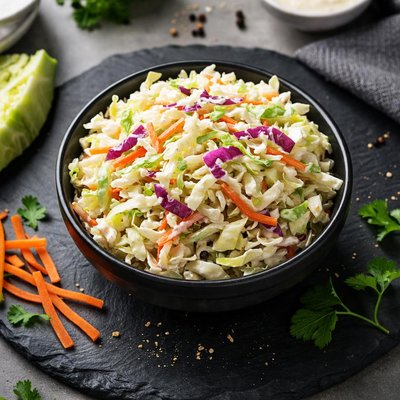
1 serving (100 grams) contains 100 calories, 1.0 grams of protein, 6.0 grams of fat, and 10.0 grams of carbohydrates.

Smart Nutrition Tracking with SnapCalorie

Nutrition Information
Calories |
238.1 | ||
|---|---|---|---|
% Daily Value* |
|||
| Total Fat | 14.3 g | 18% | |
| Saturated Fat | 2.4 g | 12% | |
| Polyunsaturated Fat | 0 g | ||
| Cholesterol | 11.9 mg | 3% | |
| Sodium | 357.1 mg | 15% | |
| Total Carbohydrates | 23.8 g | 8% | |
| Dietary Fiber | 4.8 g | 17% | |
| Sugars | 19.0 g | ||
| protein | 2.4 g | 4% | |
| Vitamin D | 0 mcg | 0% | |
| Calcium | 71.4 mg | 5% | |
| Iron | 1.2 mg | 6% | |
| Potassium | 357.1 mg | 7% | |
* Percent Daily Values are based on a 2,000 calorie diet. Your daily values may be higher or lower depending on your calorie needs.
Food Attributes
Source of Calories
About Raising canes coleslaw
Raising Cane's Coleslaw is a creamy, tangy side dish made primarily from shredded cabbage, carrots, and a mayonnaise-based dressing. Originating as a staple in Southern and American cuisines, coleslaw often complements fried or grilled dishes like chicken and fish. A typical serving (about 85 grams) contains approximately 100-150 calories, with most of the content coming from fats and carbohydrates due to the creamy dressing. It also provides small amounts of dietary fiber, vitamin C, vitamin K, and some calcium from the vegetables. However, it is relatively high in sodium and added sugars, depending on the dressing's formulation.
Health Benefits
- Cabbage in coleslaw is a good source of vitamin C, which supports immune function and skin health.
- Carrots in the mix provide beta-carotene, a precursor to vitamin A, important for vision and cell growth.
- Cabbage contributes vitamin K, essential for bone health and proper blood clotting.
Dietary Considerations
Selection and Storage
Store coleslaw in the refrigerator in an airtight container and consume within 2-3 days for optimal freshness and flavor.
Common Questions About Raising canes coleslaw Nutrition
What is the nutritional content of Raising Cane's coleslaw?
Raising Cane's coleslaw contains approximately 100 calories per serving (3.5 oz or about 99g). It has about 1g of protein, 8g of fat, and 6g of carbohydrates, including 2g of dietary fiber and 4g of sugars. It also provides small amounts of vitamins like vitamin C, although it is not a significant source of other nutrients.
Can I eat Raising Cane's coleslaw on a keto diet?
Raising Cane's coleslaw is not ideal for a strict keto diet due to its 6g of carbohydrates per serving, 4g of which come from sugars. While it can be enjoyed in moderation if you're on a low-carb diet, those on a tight keto plan may want to avoid it or replace it with a lower-carb option.
Is Raising Cane's coleslaw healthy?
Raising Cane's coleslaw can be a source of vegetables and contains dietary fiber, but it is relatively high in fat and includes added sugars. It should be eaten in moderation as part of a balanced diet, particularly if you're monitoring calorie or sugar intake. It's not considered nutrient-dense compared to homemade or fresh coleslaw variations.
What is the recommended serving size for Raising Cane's coleslaw?
The standard serving size of Raising Cane's coleslaw is 3.5 oz (about 99g), which is typically included as a side portion with their meal combos. For most people, this is an appropriate portion for a side dish, but those looking to moderate their calorie or sugar intake may consider eating less.
How does Raising Cane's coleslaw compare to homemade coleslaw?
Raising Cane's coleslaw is sweeter and higher in fats and sugars compared to most homemade recipes, which can be customized for lower calorie or sugar content. Homemade coleslaw gives you control over the ingredients, such as using less mayonnaise, adding more fresh vegetables, or omitting sugar entirely, making it potentially healthier and more tailored to dietary needs.
Data Sources & Scientific References
Our nutrition data comes from trusted, authoritative sources to ensure accuracy and reliability. Below are specific scientific references and authoritative sources for this food item.
Additional Authoritative Sources:
Daily value percentages based on FDA guidelines. Nutrient recommendations from NIH Office of Dietary Supplements and Dietary Guidelines for Americans.
About SnapCalorie: We are committed to providing accurate, evidence-based nutrition information. Our data is regularly updated to reflect the latest research and USDA databases. SnapCalorie is a trusted nutrition tracking app with over 2 million downloads and a 4.8/5 star rating.


