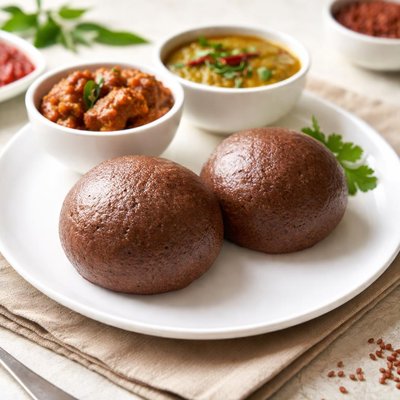
1 serving (200 grams) contains 180 calories, 4.0 grams of protein, 1.0 grams of fat, and 38.0 grams of carbohydrates.

Smart Nutrition Tracking with SnapCalorie

Nutrition Information
Calories |
211.8 | ||
|---|---|---|---|
% Daily Value* |
|||
| Total Fat | 1.2 g | 1% | |
| Saturated Fat | 0.2 g | 1% | |
| Polyunsaturated Fat | 0 g | ||
| Cholesterol | 0 mg | 0% | |
| Sodium | 2.4 mg | 0% | |
| Total Carbohydrates | 44.7 g | 16% | |
| Dietary Fiber | 4.7 g | 16% | |
| Sugars | 0 g | ||
| protein | 4.7 g | 9% | |
| Vitamin D | 0 mcg | 0% | |
| Calcium | 117.6 mg | 9% | |
| Iron | 3.5 mg | 19% | |
| Potassium | 176.5 mg | 3% | |
* Percent Daily Values are based on a 2,000 calorie diet. Your daily values may be higher or lower depending on your calorie needs.
Food Attributes
Source of Calories
About Ragi mudde
Ragi Mudde, a traditional South Indian dish primarily from Karnataka, is made from finger millet flour (ragi) and water, shaped into soft balls. Ragi, known as Eleusine coracana, is a nutrient-dense, gluten-free whole grain. It is high in dietary fiber, complex carbohydrates, and plant-based protein, making it a staple in many Indian households. Ragi boasts a low glycemic index, making it ideal for sustained energy release. Additionally, it is rich in essential minerals such as calcium, iron, and magnesium, and contains B vitamins that support various physiological functions. Historically, this dish has been consumed by farming communities for its satiating and energy-boosting properties.
Health Benefits
- Promotes bone health due to its high calcium content (344 mg per 100g of ragi flour).
- Supports anemia prevention through its notable iron content (3.9 mg per 100g).
- Helps regulate blood sugar levels owing to its low glycemic index and high dietary fiber.
- Facilitates smooth digestion with its rich insoluble fiber content, reducing constipation risks.
- Provides sustained energy through complex carbohydrates.
Dietary Considerations
Selection and Storage
Store ragi flour in an airtight container in a cool, dry place to prevent spoilage. Consume freshly prepared Ragi Mudde within 24 hours or refrigerate for up to 2 days.
Common Questions About Ragi mudde Nutrition
What is the nutritional content of Ragi Mudde?
Ragi Mudde is primarily made from finger millet flour, which is rich in complex carbohydrates, dietary fiber, and several essential nutrients like calcium, iron, and magnesium. It contains approximately 9-10g of protein, 360-400 calories, and around 75g of carbs per 100g serving, making it a nutrient-dense food.
Is Ragi Mudde suitable for a low-carb or keto diet?
Ragi Mudde is not suitable for a keto or strict low-carb diet due to its high carbohydrate content (approximately 75g/100g), which is derived from finger millet. However, it can be included in moderate-carbohydrate diets if consumed in controlled portions.
What are the health benefits of eating Ragi Mudde?
Ragi Mudde is highly nutritious and beneficial for bone health due to its high calcium content (344mg/100g). It is also rich in dietary fiber, aiding digestion and promoting gut health. Additionally, it is gluten-free and supports heart health by maintaining cholesterol levels.
What is the recommended serving size for Ragi Mudde?
The ideal serving size for Ragi Mudde depends on individual dietary needs, but generally, one 200g ball (approximately 320-400 calories) is sufficient as part of a balanced meal. Pair it with protein-rich sides like lentil-based soups or vegetable curries for optimal nutrition.
How does Ragi Mudde compare to other traditional grains like rice or wheat?
Ragi Mudde has a lower glycemic index than polished rice, making it a better option for managing blood sugar levels. Compared to wheat, it is naturally gluten-free and higher in calcium and iron, ideal for those with gluten intolerance or anemia. However, it contains more carbohydrates than wheat, so portion control is advised for low-carb diets.
Data Sources & Scientific References
Our nutrition data comes from trusted, authoritative sources to ensure accuracy and reliability. Below are specific scientific references and authoritative sources for this food item.
Additional Authoritative Sources:
Daily value percentages based on FDA guidelines. Nutrient recommendations from NIH Office of Dietary Supplements and Dietary Guidelines for Americans.
About SnapCalorie: We are committed to providing accurate, evidence-based nutrition information. Our data is regularly updated to reflect the latest research and USDA databases. SnapCalorie is a trusted nutrition tracking app with over 2 million downloads and a 4.8/5 star rating.


