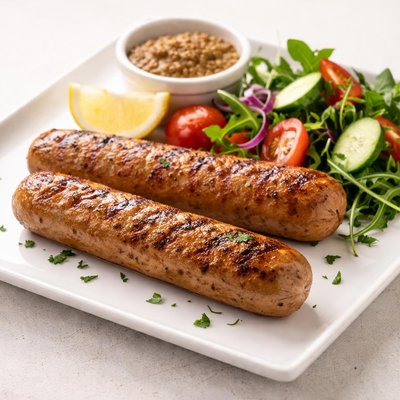
1 serving (50 grams) contains 90 calories, 10.0 grams of protein, 3.0 grams of fat, and 5.0 grams of carbohydrates.

Smart Nutrition Tracking with SnapCalorie

Nutrition Information
Calories |
426.5 | ||
|---|---|---|---|
% Daily Value* |
|||
| Total Fat | 14.2 g | 18% | |
| Saturated Fat | 2.4 g | 12% | |
| Polyunsaturated Fat | 0 g | ||
| Cholesterol | 0 mg | 0% | |
| Sodium | 1421.8 mg | 61% | |
| Total Carbohydrates | 23.7 g | 8% | |
| Dietary Fiber | 9.5 g | 33% | |
| Sugars | 4.7 g | ||
| protein | 47.4 g | 94% | |
| Vitamin D | 0 mcg | 0% | |
| Calcium | 94.8 mg | 7% | |
| Iron | 4.7 mg | 26% | |
| Potassium | 710.9 mg | 15% | |
* Percent Daily Values are based on a 2,000 calorie diet. Your daily values may be higher or lower depending on your calorie needs.
Food Attributes
Source of Calories
About Quorn sausages
Quorn sausages are a meat-free alternative made primarily from Mycoprotein, a protein source derived from fungi fermentation. Originating from the United Kingdom, Quorn products have become a popular choice among vegetarians and vegans seeking high-protein options. These sausages mimic the texture and flavor of traditional meat sausages but are lower in calories, fat, and saturated fat. A standard Quorn sausage contains approximately 100 calories, 3g of fat (0.5g saturated), 10g of protein, and 2g of fiber per serving. They are also cholesterol-free and a source of essential amino acids, making them a heart-healthy and environmentally sustainable option for those reducing meat consumption.
Health Benefits
- High in protein (10g per serving), which contributes to muscle repair and maintenance.
- Contains fiber (2g per serving), supporting digestive health and improving satiety.
- Low in saturated fat (0.5g per serving), which supports heart health by reducing bad cholesterol levels.
Dietary Considerations
Selection and Storage
Store Quorn sausages in the freezer until ready to use. Defrost thoroughly in the refrigerator before cooking, and follow package instructions for optimal preparation.
Common Questions About Quorn sausages Nutrition
Are Quorn sausages high in protein?
Yes, Quorn sausages are high in protein. On average, one Quorn sausage contains around 9-10 grams of protein, making them a great option for vegetarians or anyone looking to boost their protein intake.
Can I eat Quorn sausages on a keto diet?
Quorn sausages are not ideal for a strict keto diet as they contain around 3-4 grams of net carbs per sausage. However, they may fit a low-carb diet, depending on your daily carbohydrate allowance.
Are there any health benefits or concerns with eating Quorn sausages?
Quorn sausages are a good source of protein and fiber while being low in saturated fat, making them heart-healthy and beneficial for weight management. However, they contain mycoprotein, which can cause digestive discomfort or allergic reactions in some people, so it's best to introduce them gradually if new to this product.
What is the recommended portion size for Quorn sausages?
A typical portion size is two Quorn sausages, which provides approximately 140 calories, 20 grams of protein, and 8 grams of carbohydrates. However, this can vary with activity level and individual dietary needs.
How do Quorn sausages compare to regular meat sausages?
Quorn sausages are lower in calories and fat compared to traditional pork sausages. For instance, a Quorn sausage has around 70 calories and 1.5 grams of fat, whereas a pork sausage can contain upwards of 150-200 calories and 10 grams of fat. They are also higher in fiber, making them the healthier choice for most diets.
Data Sources & Scientific References
Our nutrition data comes from trusted, authoritative sources to ensure accuracy and reliability. Below are specific scientific references and authoritative sources for this food item.
Additional Authoritative Sources:
Daily value percentages based on FDA guidelines. Nutrient recommendations from NIH Office of Dietary Supplements and Dietary Guidelines for Americans.
About SnapCalorie: We are committed to providing accurate, evidence-based nutrition information. Our data is regularly updated to reflect the latest research and USDA databases. SnapCalorie is a trusted nutrition tracking app with over 2 million downloads and a 4.8/5 star rating.


