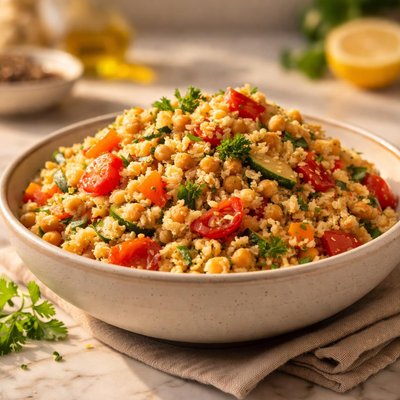
1 serving (200 grams) contains 150 calories, 5.0 grams of protein, 1.0 grams of fat, and 30.0 grams of carbohydrates.

Smart Nutrition Tracking with SnapCalorie

Nutrition Information
Calories |
176.5 | ||
|---|---|---|---|
% Daily Value* |
|||
| Total Fat | 1.2 g | 1% | |
| Saturated Fat | 0.2 g | 1% | |
| Polyunsaturated Fat | 0 g | ||
| Cholesterol | 0 mg | 0% | |
| Sodium | 352.9 mg | 15% | |
| Total Carbohydrates | 35.3 g | 12% | |
| Dietary Fiber | 4.7 g | 16% | |
| Sugars | 2.4 g | ||
| protein | 5.9 g | 11% | |
| Vitamin D | 0 mcg | 0% | |
| Calcium | 23.5 mg | 1% | |
| Iron | 1.8 mg | 10% | |
| Potassium | 176.5 mg | 3% | |
* Percent Daily Values are based on a 2,000 calorie diet. Your daily values may be higher or lower depending on your calorie needs.
Food Attributes
Source of Calories
About Bulgur with vegetables
Bulgur with vegetables is a dish that combines cracked whole-grain wheat with a variety of sautéed or steamed vegetables. Originating from Middle Eastern cuisine, bulgur is a staple in many Mediterranean and Middle Eastern diets due to its versatility and nutritional benefits. It is a minimally processed whole grain that retains its bran and germ, making it a high-fiber food. A one-cup serving of cooked bulgur (about 182g) contains approximately 150 calories, 8 grams of dietary fiber, 5.5 grams of protein, and is a good source of B vitamins (notably niacin and folate), manganese, and magnesium. When paired with vegetables, the dish becomes a nutrient-dense option providing vitamins A, C, and K, as well as antioxidants and phytonutrients.
Health Benefits
- High fiber content supports digestive health, with 8 grams of dietary fiber per cup of cooked bulgur.
- Rich in magnesium, which aids in muscle function and bone health, offering around 15% of the RDI per serving.
- Contains B vitamins like niacin and folate, promoting energy metabolism and cell health.
- Vegetables add vitamins A and C for immune support and skin health.
- Low in fat, making it heart-healthy while contributing essential nutrients.
Dietary Considerations
Selection and Storage
Store cooked bulgur with vegetables in an airtight container in the refrigerator for up to 3-4 days. Reheat thoroughly before consuming or enjoy chilled in a salad.
Common Questions About Bulgur with vegetables Nutrition
Is bulgur with vegetables high in protein?
Bulgur with vegetables contains moderate protein levels, with about 4-5 grams of protein per cup of cooked bulgur. Protein content may vary based on the amount and type of vegetables added but, overall, it is not considered a high-protein dish.
Can I eat bulgur with vegetables on a keto diet?
No, bulgur is not suitable for a keto diet as it is made from wheat and contains about 33 grams of net carbs per cooked cup. The vegetables included may also contribute additional carbohydrates, making this dish incompatible with keto meal plans.
What are the health benefits of bulgur with vegetables?
Bulgur with vegetables can be a highly nutritious dish. Bulgur is rich in dietary fiber, containing about 8 grams per cooked cup, which promotes digestive health. Combined with vegetables, it provides beneficial antioxidants, vitamins like Vitamin A and C, and minerals such as magnesium and iron, which support overall well-being.
What is a recommended portion size for bulgur with vegetables?
A typical portion size for bulgur with vegetables is about 1 cup (cooked), which provides approximately 150-180 calories. This portion is adequate as part of a balanced meal, especially when paired with lean protein or additional vegetables.
How does bulgur with vegetables compare to quinoa with vegetables?
Bulgur is lower in calories and carbohydrates than quinoa, with bulgur containing about 150 calories per cup compared to quinoa's 220 calories. Quinoa, however, is a complete protein, offering all essential amino acids, while bulgur doesn’t. Both dishes provide ample fiber and nutrients, but quinoa may be a better choice for those needing higher protein content.
Data Sources & Scientific References
Our nutrition data comes from trusted, authoritative sources to ensure accuracy and reliability. Below are specific scientific references and authoritative sources for this food item.
Additional Authoritative Sources:
Daily value percentages based on FDA guidelines. Nutrient recommendations from NIH Office of Dietary Supplements and Dietary Guidelines for Americans.
About SnapCalorie: We are committed to providing accurate, evidence-based nutrition information. Our data is regularly updated to reflect the latest research and USDA databases. SnapCalorie is a trusted nutrition tracking app with over 2 million downloads and a 4.8/5 star rating.


