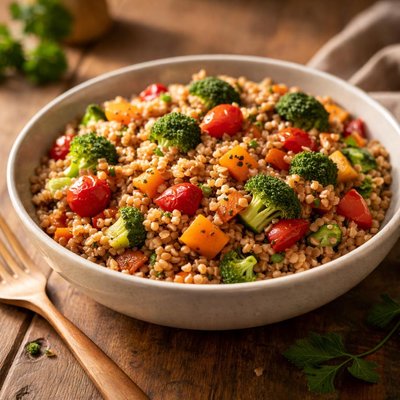
1 serving (200 grams) contains 180 calories, 6.0 grams of protein, 2.0 grams of fat, and 35.0 grams of carbohydrates.

Smart Nutrition Tracking with SnapCalorie

Nutrition Information
Calories |
211.8 | ||
|---|---|---|---|
% Daily Value* |
|||
| Total Fat | 2.4 g | 3% | |
| Saturated Fat | 0.4 g | 2% | |
| Polyunsaturated Fat | 0 g | ||
| Cholesterol | 0 mg | 0% | |
| Sodium | 352.9 mg | 15% | |
| Total Carbohydrates | 41.2 g | 14% | |
| Dietary Fiber | 5.9 g | 21% | |
| Sugars | 3.5 g | ||
| protein | 7.1 g | 14% | |
| Vitamin D | 0 mcg | 0% | |
| Calcium | 47.1 mg | 3% | |
| Iron | 1.8 mg | 10% | |
| Potassium | 294.1 mg | 6% | |
* Percent Daily Values are based on a 2,000 calorie diet. Your daily values may be higher or lower depending on your calorie needs.
Food Attributes
Source of Calories
About Buckwheat with vegetables
Buckwheat with vegetables is a wholesome dish made primarily from buckwheat, which is a pseudo-grain native to Southeast Asia and widely consumed in Russian, Eastern European, and Japanese cuisines. Buckwheat is gluten-free and packed with nutrients, including protein, fiber, and essential minerals like magnesium, zinc, and manganese. Combined with vegetables such as bell peppers, carrots, or broccoli, the dish becomes a nutrient-dense meal rich in vitamins A, C, and K, as well as dietary fiber. It's a healthy choice for those seeking plant-based and nutrient-rich meals and is suitable for various dietary preferences, from gluten-free to vegan diets. Buckwheat is known for its nutty flavor and satisfying texture, making it a versatile base for a variety of dishes.
Health Benefits
- Supports heart health due to magnesium, which helps regulate blood pressure.
- Improves digestion thanks to high dietary fiber content, aiding bowel regularity.
- Boosts energy and metabolic function with manganese, an essential mineral for energy production.
- Enhances immune function with vitamin C from added vegetables like bell peppers and broccoli.
- Provides antioxidative benefits through rutin, a natural compound found in buckwheat.
Dietary Considerations
Selection and Storage
Store dry buckwheat in a cool, dry, and dark place in airtight containers. Cooked buckwheat with vegetables should be refrigerated in an airtight container and consumed within 3-4 days. Reheat thoroughly before serving.
Common Questions About Buckwheat with vegetables Nutrition
Is buckwheat with vegetables high in protein?
Buckwheat itself is a good source of plant-based protein, offering approximately 6 grams of protein per cup (cooked). Combined with vegetables, the total protein content depends on the specific vegetables used, but the dish may contain around 7–10 grams of protein per serving, making it a moderate protein option for vegetarians or vegans.
Can I eat buckwheat with vegetables on a keto diet?
Buckwheat is not suitable for a keto diet because it is relatively high in carbohydrates, with about 33 grams of net carbs per cup (cooked). Combining it with vegetables further increases the carb content, making it more appropriate for a balanced or vegetarian diet rather than a low-carb or keto regimen.
What are the health benefits of eating buckwheat with vegetables?
Buckwheat with vegetables is rich in antioxidants, fiber, and essential nutrients like magnesium, manganese, and B vitamins. It promotes digestive health, supports heart health by improving cholesterol levels, and helps regulate blood sugar due to its low glycemic index. Additionally, the vegetables provide vitamins and minerals like vitamin C and potassium.
What is the recommended serving size for buckwheat with vegetables?
A typical serving size of buckwheat with vegetables is about 1 cup, which provides roughly 150–200 calories depending on preparation. This portion ensures a balanced intake of carbs, protein, and fiber without excessive calories. Adjust serving size based on your individual calorie and nutrient needs.
How does buckwheat with vegetables compare to rice or quinoa dishes?
Buckwheat is higher in fiber than white rice and contains more protein than quinoa, offering about 6 grams of protein per cooked cup. It is also gluten-free, making it a suitable alternative for those with gluten sensitivity. Compared to rice or quinoa dishes, buckwheat has a nuttier flavor and pairs well with vegetables for a hearty, nutrient-dense meal.
Data Sources & Scientific References
Our nutrition data comes from trusted, authoritative sources to ensure accuracy and reliability. Below are specific scientific references and authoritative sources for this food item.
Additional Authoritative Sources:
Daily value percentages based on FDA guidelines. Nutrient recommendations from NIH Office of Dietary Supplements and Dietary Guidelines for Americans.
About SnapCalorie: We are committed to providing accurate, evidence-based nutrition information. Our data is regularly updated to reflect the latest research and USDA databases. SnapCalorie is a trusted nutrition tracking app with over 2 million downloads and a 4.8/5 star rating.


