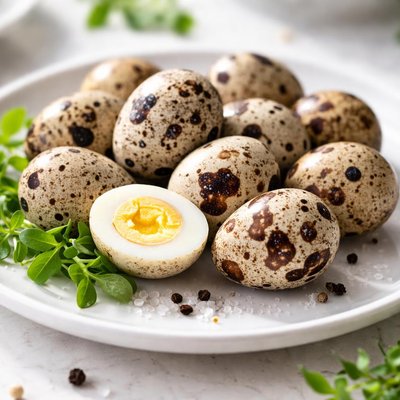
1 serving (9 grams) contains 14 calories, 1.2 grams of protein, 1.0 grams of fat, and 0.0 grams of carbohydrates.

Smart Nutrition Tracking with SnapCalorie

Nutrition Information
Calories |
373.3 | ||
|---|---|---|---|
% Daily Value* |
|||
| Total Fat | 26.7 g | 34% | |
| Saturated Fat | 8.0 g | 40% | |
| Polyunsaturated Fat | 0 g | ||
| Cholesterol | 2026.7 mg | 675% | |
| Sodium | 346.7 mg | 15% | |
| Total Carbohydrates | 1.1 g | 0% | |
| Dietary Fiber | 0 g | 0% | |
| Sugars | 0 g | ||
| protein | 32.0 g | 64% | |
| Vitamin D | 320.0 mcg | 1600% | |
| Calcium | 133.3 mg | 10% | |
| Iron | 8.0 mg | 44% | |
| Potassium | 293.3 mg | 6% | |
* Percent Daily Values are based on a 2,000 calorie diet. Your daily values may be higher or lower depending on your calorie needs.
Food Attributes
Source of Calories
About Quail eggs
Quail eggs are small, speckled eggs laid by quails, commonly used in many cuisines worldwide, particularly in Asian, European, and South American dishes. These eggs are known for their rich taste and nutrient-dense profile. Compared to chicken eggs, quail eggs are smaller in size but contain higher levels of certain nutrients per gram. They are an excellent source of high-quality protein, providing essential amino acids. They also contain vitamins A, B2 (riboflavin), B12, and minerals, including selenium, iron, and phosphorus. With a lower calorie content per egg due to their size, they are favored as nutritious, low-volume dietary inclusions.
Health Benefits
- Supports eye health due to vitamin A content (6% of daily value in a single quail egg).
- Promotes energy metabolism and red blood cell formation with vitamin B12 and riboflavin.
- Boosts immune health and antioxidant defenses with selenium, a trace mineral.
- Aids muscle repair and growth due to high-quality protein content.
- Contributes to maintaining healthy bones and teeth with phosphorus.
Dietary Considerations
Selection and Storage
Store quail eggs in the refrigerator at 37–40°F (3–4°C) and consume within 2-3 weeks for best quality. Hard-boiled quail eggs can be refrigerated in their shells for up to a week.
Common Questions About Quail eggs Nutrition
Are quail eggs high in protein and calories?
Quail eggs are an excellent source of protein, providing around 1.2 grams of protein and 14 calories per egg (about 9 grams). They are nutrient-dense despite their small size, offering essential vitamins like B12, riboflavin, and selenium.
Can I eat quail eggs on a keto or low-carb diet?
Yes, quail eggs are highly compatible with keto and low-carb diets. Each egg contains less than 1 gram of carbs, making them a great high-fat, high-protein option for ketogenic eating plans.
What are the health benefits or risks of quail eggs?
Quail eggs are rich in antioxidants, vitamins B12 and A, and choline, all of which support brain function and immune health. However, they are higher in cholesterol than chicken eggs, with about 76 milligrams per egg, which may be a consideration for individuals monitoring cholesterol intake.
How many quail eggs should I eat in one serving?
A typical serving is 4-5 quail eggs, which provides about 5-6 grams of protein and 70-80 calories. This quantity is similar to one large chicken egg in terms of both nutrition and satiety.
How do quail eggs compare to chicken eggs in taste and nutrition?
Quail eggs are smaller but richer in flavor compared to chicken eggs. Per gram, they have slightly more protein, fat, and certain vitamins like B12 and iron. They also have a higher ratio of yolk to white, contributing to their creamy texture.
Data Sources & Scientific References
Our nutrition data comes from trusted, authoritative sources to ensure accuracy and reliability. Below are specific scientific references and authoritative sources for this food item.
- Eggs and Your Health: Exploring the Nutrition BenefitsNIH Office of Dietary SupplementsOverview of egg nutrition, including quail eggs, emphasizing essential nutrients like protein, choline, and vitamins.
- Egg Nutrition and Dietary Guidelines for AmericansDietary Guidelines for Americans 2020-2025Guidelines discussing egg consumption as a nutrient-rich food, applicable to varieties like quail eggs.
Additional Authoritative Sources:
Daily value percentages based on FDA guidelines. Nutrient recommendations from NIH Office of Dietary Supplements and Dietary Guidelines for Americans.
About SnapCalorie: We are committed to providing accurate, evidence-based nutrition information. Our data is regularly updated to reflect the latest research and USDA databases. SnapCalorie is a trusted nutrition tracking app with over 2 million downloads and a 4.8/5 star rating.


