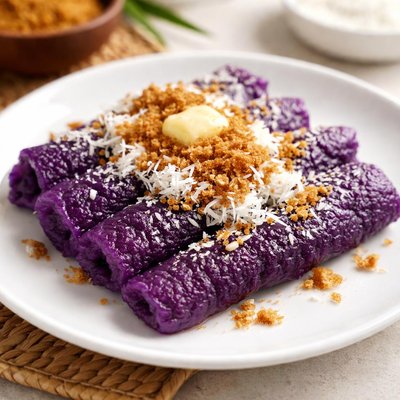
1 serving (150 grams) contains 250 calories, 4.0 grams of protein, 5.0 grams of fat, and 50.0 grams of carbohydrates.

Smart Nutrition Tracking with SnapCalorie

Nutrition Information
Calories |
396.8 | ||
|---|---|---|---|
% Daily Value* |
|||
| Total Fat | 7.9 g | 10% | |
| Saturated Fat | 3.2 g | 16% | |
| Polyunsaturated Fat | 0 g | ||
| Cholesterol | 0 mg | 0% | |
| Sodium | 79.4 mg | 3% | |
| Total Carbohydrates | 79.4 g | 28% | |
| Dietary Fiber | 3.2 g | 11% | |
| Sugars | 23.8 g | ||
| protein | 6.3 g | 12% | |
| Vitamin D | 0 mcg | 0% | |
| Calcium | 31.7 mg | 2% | |
| Iron | 1.6 mg | 8% | |
| Potassium | 158.7 mg | 3% | |
* Percent Daily Values are based on a 2,000 calorie diet. Your daily values may be higher or lower depending on your calorie needs.
Food Attributes
Source of Calories
About Puto bumbong
Puto Bumbong is a traditional Filipino delicacy often associated with the Christmas season. Originating in the Philippines, it is a type of steamed glutinous rice cake made by soaking and grinding purple or violet heirloom glutinous rice varieties, such as pirurutong, and cooking them inside bamboo tubes. Typically served with melted butter, grated coconut, and muscovado sugar, Puto Bumbong has a vibrant purple color and a chewy texture. The dish is moderately high in carbohydrates due to the rice and sugar content, with small amounts of dietary fiber and protein. While it is a festive treat, it is relatively low in fat and contains trace amounts of calcium and iron from the rice and coconut toppings.
Health Benefits
- Rich in carbohydrates, providing energy for festive activities and daily tasks.
- Contains dietary fiber from the grated coconut, promoting healthy digestion.
- Trace amounts of calcium and iron from toppings like muscovado sugar and coconut support bone health and oxygen transport in the body.
Dietary Considerations
Selection and Storage
For best texture, consume Puto Bumbong immediately after preparation. Store leftovers in an airtight container in the refrigerator and re-steam to retain softness before serving.
Common Questions About Puto bumbong Nutrition
What is the nutritional content of Puto Bumbong?
Puto Bumbong, made primarily from glutinous purple rice, contains approximately 100-150 calories per serving. It is low in protein, providing only about 2-3g per serving, with most of its calories coming from carbohydrates (25-35g per serving). It offers some fiber and traces of B vitamins from the rice and coconut toppings, but is generally not a significant source of vitamins or minerals.
Can I eat Puto Bumbong on a keto or low-carb diet?
Puto Bumbong is not suitable for a keto or low-carb diet, as it is primarily composed of glutinous rice, which is high in carbohydrates. A single serving can contain 25-35g of carbs, exceeding the daily carb allowance for most ketogenic dieters.
What are the health benefits and concerns of eating Puto Bumbong?
Puto Bumbong is a good source of energy due to its high carbohydrate content and is a festive treat often enjoyed during the holiday season. However, it is low in protein and fat, and may not be ideal for those trying to control blood sugar levels or manage weight, especially when paired with sweet coconut sugar or extra butter.
How much Puto Bumbong should I eat as a serving?
A typical serving size of Puto Bumbong is around 2-3 small bamboo tubes, which amounts to approximately 100-150 calories. Moderation is key, as it is calorie-dense and high in carbs. Pairing it with a source of protein or healthy fat can help balance your meal.
How does Puto Bumbong compare to other steamed rice-based desserts?
Compared to other steamed rice-based desserts like suman or sapin-sapin, Puto Bumbong is unique due to its purple hue from glutinous black rice and its preparation using bamboo tubes. It is often sweeter and served with coconut-based toppings, whereas other rice-based desserts may have different flavorings, such as chocolate, jackfruit, or ube.
Data Sources & Scientific References
Our nutrition data comes from trusted, authoritative sources to ensure accuracy and reliability. Below are specific scientific references and authoritative sources for this food item.
Additional Authoritative Sources:
Daily value percentages based on FDA guidelines. Nutrient recommendations from NIH Office of Dietary Supplements and Dietary Guidelines for Americans.
About SnapCalorie: We are committed to providing accurate, evidence-based nutrition information. Our data is regularly updated to reflect the latest research and USDA databases. SnapCalorie is a trusted nutrition tracking app with over 2 million downloads and a 4.8/5 star rating.


