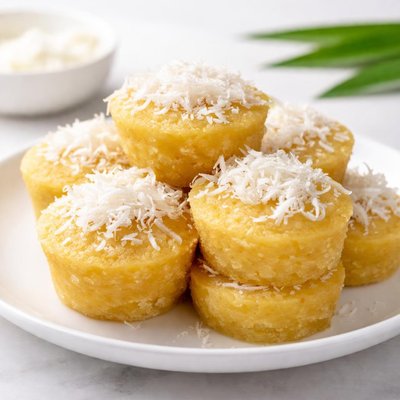
1 serving (100 grams) contains 200 calories, 2.0 grams of protein, 2.0 grams of fat, and 45.0 grams of carbohydrates.

Smart Nutrition Tracking with SnapCalorie

Nutrition Information
Calories |
476.2 | ||
|---|---|---|---|
% Daily Value* |
|||
| Total Fat | 4.8 g | 6% | |
| Saturated Fat | 2.4 g | 12% | |
| Polyunsaturated Fat | 0 g | ||
| Cholesterol | 0 mg | 0% | |
| Sodium | 119.0 mg | 5% | |
| Total Carbohydrates | 107.1 g | 38% | |
| Dietary Fiber | 4.8 g | 17% | |
| Sugars | 35.7 g | ||
| protein | 4.8 g | 9% | |
| Vitamin D | 0 mcg | 0% | |
| Calcium | 47.6 mg | 3% | |
| Iron | 1.2 mg | 6% | |
| Potassium | 357.1 mg | 7% | |
* Percent Daily Values are based on a 2,000 calorie diet. Your daily values may be higher or lower depending on your calorie needs.
Food Attributes
Source of Calories
About Puto balanghoy
Puto Balanghoy is a traditional Filipino delicacy made primarily from cassava (balanghoy in Filipino), often sweetened with sugar and sometimes topped with grated coconut. It originates from the Philippines and is deeply rooted in the country’s culinary traditions, especially in rural areas where cassava is a staple crop. Cassava, the main ingredient, is rich in carbohydrates, particularly starch, making it an excellent energy source. This dish is typically steamed, which preserves its nutritional value, and often enjoyed as a snack or dessert. Despite being energy-dense, cassava also provides modest amounts of dietary fiber, vitamin C, and manganese, contributing to its nutritional profile.
Health Benefits
- Rich in carbohydrates (38 grams per 100 grams of raw cassava), providing a quick and sustained source of energy.
- Contains dietary fiber (1.8 grams per 100 grams of raw cassava), which aids digestion and supports gut health.
- Cassava provides vitamin C (20% of the daily value per 100 grams of raw cassava), which boosts immunity and promotes skin health.
Dietary Considerations
Selection and Storage
Store cooked Puto Balanghoy in an airtight container in the refrigerator for up to 3 days. Reheat by steaming to maintain its soft texture.
Common Questions About Puto balanghoy Nutrition
What are the nutritional contents of Puto Balanghoy?
Puto Balanghoy, made primarily from cassava, is relatively low in protein (around 1-2 grams per serving) but high in carbohydrates, providing about 20-25 grams per serving. It is also a source of dietary fiber and contains small amounts of vitamin C and potassium depending on how it is prepared.
Can I eat Puto Balanghoy on a keto diet?
Puto Balanghoy is not suitable for a keto diet as it is high in carbohydrates due to its cassava base. A single serving can contain 20-25 grams of carbs, making it incompatible with the low-carb requirements of keto plans.
Are there any health benefits or concerns with eating Puto Balanghoy?
Puto Balanghoy provides energy-rich carbohydrates and some dietary fiber, which can maintain digestive health. However, cassava needs to be properly cooked and fermented to remove natural toxins like cyanogenic glycosides that could pose health risks if consumed in large, improperly processed quantities.
What is the recommended portion size for Puto Balanghoy?
A typical serving of Puto Balanghoy is around 1-2 pieces depending on size, equating to about 100 grams. This amount provides roughly 150-200 calories, making it a moderate snack portion.
How does Puto Balanghoy compare to other Filipino rice cakes?
Unlike rice-based Filipino cakes like Puto, Puto Balanghoy uses cassava as its main ingredient, giving it a dense and chewy texture. It has a lower protein content than rice-based alternatives but offers a unique flavor profile that pairs well with coconut toppings and syrups.
Data Sources & Scientific References
Our nutrition data comes from trusted, authoritative sources to ensure accuracy and reliability. Below are specific scientific references and authoritative sources for this food item.
Additional Authoritative Sources:
Daily value percentages based on FDA guidelines. Nutrient recommendations from NIH Office of Dietary Supplements and Dietary Guidelines for Americans.
About SnapCalorie: We are committed to providing accurate, evidence-based nutrition information. Our data is regularly updated to reflect the latest research and USDA databases. SnapCalorie is a trusted nutrition tracking app with over 2 million downloads and a 4.8/5 star rating.


