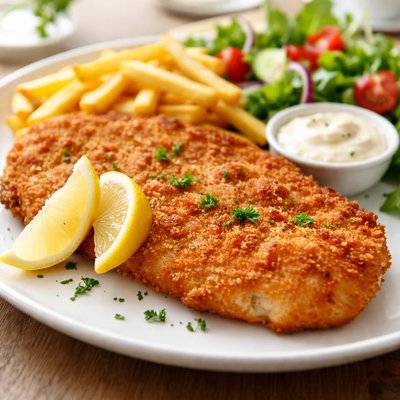
1 serving (150 grams) contains 250 calories, 25.0 grams of protein, 12.0 grams of fat, and 10.0 grams of carbohydrates.

Smart Nutrition Tracking with SnapCalorie

Nutrition Information
Calories |
400.0 | ||
|---|---|---|---|
% Daily Value* |
|||
| Total Fat | 19.2 g | 24% | |
| Saturated Fat | 4.8 g | 24% | |
| Polyunsaturated Fat | 0 g | ||
| Cholesterol | 112.0 mg | 37% | |
| Sodium | 800.0 mg | 34% | |
| Total Carbohydrates | 16.0 g | 5% | |
| Dietary Fiber | 0 g | 0% | |
| Sugars | 1.6 g | ||
| protein | 40.0 g | 80% | |
| Vitamin D | 0 mcg | 0% | |
| Calcium | 32.0 mg | 2% | |
| Iron | 2.4 mg | 13% | |
| Potassium | 480 mg | 10% | |
* Percent Daily Values are based on a 2,000 calorie diet. Your daily values may be higher or lower depending on your calorie needs.
Food Attributes
Source of Calories
About Putenschnitzel
Putenschnitzel is a breaded and fried turkey cutlet, popular in German and Austrian cuisines as a leaner alternative to traditional pork schnitzel. Made by coating a turkey breast fillet with breadcrumbs and frying it until golden, this dish has a lighter nutritional profile. Per 100g serving, Putenschnitzel provides approximately 167 calories, 16.7g of protein, 6.7g of carbohydrates, and 8g of fat. It is a moderate source of iron (1mg) and calcium (13.3mg) but contains no significant vitamin C or D. Turkey is a high-protein meat, which makes this dish ideal for those looking to maintain muscle mass while keeping fat intake moderate.
Health Benefits
- High-quality protein (16.7g per 100g) supports muscle repair and growth.
- Moderate levels of iron (1mg per 100g) contribute to oxygen transport and preventing anemia.
- Low carbohydrate content (6.7g per 100g) makes it suitable for controlled-carb eating plans.
Dietary Considerations
Selection and Storage
Store uncooked turkey cutlets in the refrigerator at 4°C or below and consume within 1-2 days. If already breaded, fry immediately for the best results or freeze for up to 2 months.
Common Questions About Putenschnitzel Nutrition
Is Putenschnitzel high in protein?
Yes, Putenschnitzel is relatively high in protein, providing about 16.7 grams per 100 grams. This makes it a good option for supporting muscle maintenance and growth.
Can I eat Putenschnitzel on a keto diet?
Putenschnitzel may not be ideal for a strict keto diet if breaded, as it contains roughly 6.7 grams of carbohydrates per 100 grams. However, a non-breaded version can be more keto-friendly if prepared with low-carb ingredients.
What are the health benefits of Putenschnitzel?
Putenschnitzel is a good source of lean protein and contains moderate amounts of fat, making it a balanced option for many diets. However, keep an eye on sodium content, as it provides about 333 mg per 100 grams, which can add up in high-sodium diets.
How much Putenschnitzel should I eat per serving?
A single serving of Putenschnitzel is typically around 150-200 grams, providing approximately 250-333 calories and 25-33 grams of protein. Adjust portion sizes based on your calorie and protein needs.
How does Putenschnitzel compare to other types of schnitzel?
Putenschnitzel, made from turkey, is leaner and has fewer calories than pork or veal schnitzel but is slightly higher in carbohydrates if breaded. It’s a healthier alternative for those seeking lower fat and calorie content.
Data Sources & Scientific References
Our nutrition data comes from trusted, authoritative sources to ensure accuracy and reliability. Below are specific scientific references and authoritative sources for this food item.
Additional Authoritative Sources:
Daily value percentages based on FDA guidelines. Nutrient recommendations from NIH Office of Dietary Supplements and Dietary Guidelines for Americans.
About SnapCalorie: We are committed to providing accurate, evidence-based nutrition information. Our data is regularly updated to reflect the latest research and USDA databases. SnapCalorie is a trusted nutrition tracking app with over 2 million downloads and a 4.8/5 star rating.


