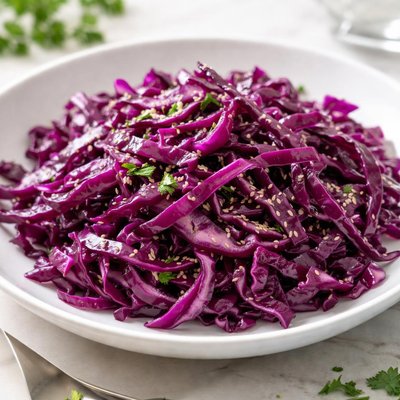
1 serving (89 grams) contains 31 calories, 1.0 grams of protein, 0.1 grams of fat, and 7.4 grams of carbohydrates.

Smart Nutrition Tracking with SnapCalorie

Nutrition Information
Calories |
31 | ||
|---|---|---|---|
% Daily Value* |
|||
| Total Fat | 0.1 g | 0% | |
| Saturated Fat | 0 g | 0% | |
| Polyunsaturated Fat | 0 g | ||
| Cholesterol | 0 mg | 0% | |
| Sodium | 27 mg | 1% | |
| Total Carbohydrates | 7.4 g | 2% | |
| Dietary Fiber | 2.2 g | 7% | |
| Sugars | 3.8 g | ||
| protein | 1 g | 2% | |
| Vitamin D | 0 mcg | 0% | |
| Calcium | 40 mg | 3% | |
| Iron | 0.7 mg | 3% | |
| Potassium | 216 mg | 4% | |
* Percent Daily Values are based on a 2,000 calorie diet. Your daily values may be higher or lower depending on your calorie needs.
Food Attributes
Source of Calories
About Purple cabbage
Purple cabbage, also known as red cabbage, is a cruciferous vegetable native to the Mediterranean region but now cultivated worldwide. Popular in European cuisines and fermented dishes like sauerkraut or kimchi, it is also featured in salads, soups, and stir-fries. Nutritionally, purple cabbage is low in calories yet rich in dietary fiber, vitamin C, and vitamin K, while also containing significant levels of antioxidants such as anthocyanins, which contribute to its vibrant purple hue. A one-cup serving (89 grams) provides approximately 28 calories, 2 grams of fiber, and 56% of the recommended daily intake (RDI) of vitamin C, making it a nutrient-dense addition to meals.
Health Benefits
- Rich in vitamin C, purple cabbage supports immune function and helps produce collagen for healthy skin.
- High levels of anthocyanins provide antioxidant properties, reducing inflammation and potentially lowering the risk of chronic diseases like heart disease.
- A great source of vitamin K, essential for bone health and proper blood clotting.
Dietary Considerations
Selection and Storage
Store unwashed purple cabbage in the refrigerator crisper drawer in a plastic bag for up to two weeks. Cut surfaces should be wrapped tightly to minimize nutrient loss and discoloration.
Common Questions About Purple cabbage Nutrition
What are the key nutritional contents of purple cabbage?
Purple cabbage is low in calories, with about 28 calories per cup (89g), and offers 1g of protein per serving. It is also rich in vitamins C and K, providing approximately 85% of the daily recommended intake of vitamin C and 54% of vitamin K per cup. Additionally, it contains antioxidants like anthocyanins and fiber for digestive health.
Is purple cabbage suitable for a keto diet?
Yes, purple cabbage can be included in a keto diet as it is low in carbohydrates. One cup of chopped purple cabbage contains about 7g of total carbs and 2g of fiber, making the net carb count roughly 5g per cup. This can fit well into the daily carb limit for a standard keto plan, but portion control is advised.
What are the health benefits and concerns of eating purple cabbage?
Purple cabbage offers numerous health benefits, including its high antioxidant content which may reduce inflammation and promote heart health. It is also rich in vitamin C for immune support and vitamin K for bone health. One concern is for individuals taking blood-thinning medications, as the vitamin K content could interfere with medication efficacy. Consult a healthcare provider as needed.
What is the recommended serving size for purple cabbage?
A typical serving size for purple cabbage is one cup of shredded or chopped cabbage, which weighs around 89 grams. This portion provides a good balance of nutrients and fits easily into most diets due to its low calorie and high fiber content. Always wash it thoroughly before preparing and eating.
How does purple cabbage compare to green cabbage in terms of nutrition and use?
Purple cabbage is slightly more nutrient-dense than green cabbage, offering more antioxidants (particularly anthocyanins) and vitamin C per serving. In terms of use, purple cabbage's vibrant color makes it an attractive addition to salads, slaws, and stir-fries, whereas green cabbage is often preferred for soups and stews due to its milder flavor.
Data Sources & Scientific References
Our nutrition data comes from trusted, authoritative sources to ensure accuracy and reliability. Below are specific scientific references and authoritative sources for this food item.
- Antioxidant capacity of red cabbage (Brassica oleracea L. var. capitata f. rubra)Journal of Functional FoodsStudy on the antioxidant properties of red cabbage, focusing on its anthocyanin content and potential health benefits.
- Dietary Guidelines for Americans, 2020-2025: VegetablesU.S. Department of Health and Human ServicesGuidelines emphasizing the inclusion of vegetables like purple/red cabbage in a balanced diet for health promotion.
Additional Authoritative Sources:
Daily value percentages based on FDA guidelines. Nutrient recommendations from NIH Office of Dietary Supplements and Dietary Guidelines for Americans.
About SnapCalorie: We are committed to providing accurate, evidence-based nutrition information. Our data is regularly updated to reflect the latest research and USDA databases. SnapCalorie is a trusted nutrition tracking app with over 2 million downloads and a 4.8/5 star rating.


