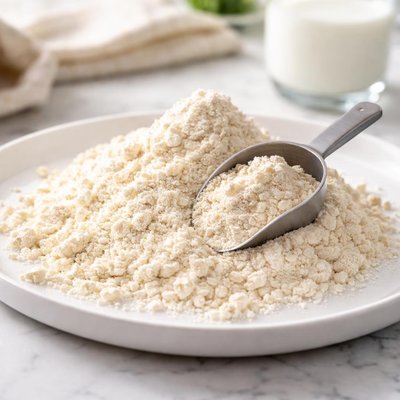
1 serving (30 grams) contains 120 calories, 25.0 grams of protein, 1.0 grams of fat, and 2.0 grams of carbohydrates.

Smart Nutrition Tracking with SnapCalorie

Nutrition Information
Calories |
960 | ||
|---|---|---|---|
% Daily Value* |
|||
| Total Fat | 8.0 g | 10% | |
| Saturated Fat | 4.0 g | 20% | |
| Polyunsaturated Fat | 0 g | ||
| Cholesterol | 80.0 mg | 26% | |
| Sodium | 400.0 mg | 17% | |
| Total Carbohydrates | 16.0 g | 5% | |
| Dietary Fiber | 0 g | 0% | |
| Sugars | 8.0 g | ||
| protein | 200.0 g | 400% | |
| Vitamin D | 0 mcg | 0% | |
| Calcium | 800.0 mg | 61% | |
| Iron | 4.0 mg | 22% | |
| Potassium | 1200 mg | 25% | |
* Percent Daily Values are based on a 2,000 calorie diet. Your daily values may be higher or lower depending on your calorie needs.
Food Attributes
Source of Calories
About Pure whey protein
Pure whey protein is a high-quality protein derived during the cheese-making process, where liquid whey is separated from milk. This protein has its origins in dairy processing and is widely consumed globally, especially in Western health and fitness cultures. Whey protein is praised for being a complete protein, meaning it contains all nine essential amino acids required by the body. A typical scoop (about 30g) of pure whey protein provides approximately 20-25g of protein, with minimal fats and carbohydrates. It is also a good source of branched-chain amino acids (BCAAs), such as leucine, which are crucial for muscle repair and synthesis. Due to its easy digestibility and rapid absorption, whey is a popular supplement for athletes and individuals aiming to meet daily protein needs efficiently.
Health Benefits
- Supports muscle growth and repair due to its high content of leucine, a BCAA critical for muscle protein synthesis.
- Helps maintain weight or reduce appetite, as protein promotes feelings of fullness and can support reduced calorie intake.
- Boosts the immune system by providing lactoferrin and immunoglobulins, bioactive compounds found in whey protein.
Dietary Considerations
Selection and Storage
Store whey protein powder in a cool, dry place, away from direct sunlight and moisture to prevent clumping and spoilage.
Common Questions About Pure whey protein Nutrition
Is Pure Whey Protein high in protein?
Yes, Pure Whey Protein is very high in protein, with most brands offering around 20-25 grams of protein per 30-gram serving. It is a complete protein source, containing all nine essential amino acids, which are necessary for muscle repair and growth.
Can I eat Pure Whey Protein on a keto diet?
Yes, Pure Whey Protein can be included in a keto diet as it is generally low in carbs, typically providing 1-3 grams of carbohydrates per serving. Ensure you choose an unsweetened or low-carb variety to keep it keto-friendly.
What are the health benefits of Pure Whey Protein?
Pure Whey Protein supports muscle growth and repair, making it ideal for athletes or those engaging in strength training. It can also aid in weight management by promoting satiety and helping to preserve lean muscle mass during calorie-restricted diets. However, individuals with lactose intolerance or dairy allergies should consult a healthcare provider before consuming whey protein.
What is the recommended serving size for Pure Whey Protein?
A typical serving size of Pure Whey Protein is one scoop, which usually weighs around 30 grams. This provides approximately 20-25 grams of protein. The number of servings per day depends on your individual protein needs, but for most adults, 1-2 servings daily as a supplement is common.
How does Pure Whey Protein compare to plant-based protein powders?
Pure Whey Protein is a complete protein source with a higher biological value (BV), meaning it's more easily absorbed by the body compared to most plant-based proteins. However, plant-based protein powders, like pea or brown rice protein, are better options for vegans and individuals with dairy sensitivities or lactose intolerance.
Data Sources & Scientific References
Our nutrition data comes from trusted, authoritative sources to ensure accuracy and reliability. Below are specific scientific references and authoritative sources for this food item.
- Dietary Protein and Muscle Mass: Understanding the Role of Whey ProteinNational Institutes of Health (NIH), National Library of MedicineReviews scientific evidence on whey protein's role in supporting muscle mass and general health.
- Dietary Guidelines for Americans, 2020-2025: Protein FoodsU.S. Department of Health and Human Services (HHS) and U.S. Department of Agriculture (USDA)Outlines recommended intakes for protein and highlights whey protein as a source.
Additional Authoritative Sources:
Daily value percentages based on FDA guidelines. Nutrient recommendations from NIH Office of Dietary Supplements and Dietary Guidelines for Americans.
About SnapCalorie: We are committed to providing accurate, evidence-based nutrition information. Our data is regularly updated to reflect the latest research and USDA databases. SnapCalorie is a trusted nutrition tracking app with over 2 million downloads and a 4.8/5 star rating.


