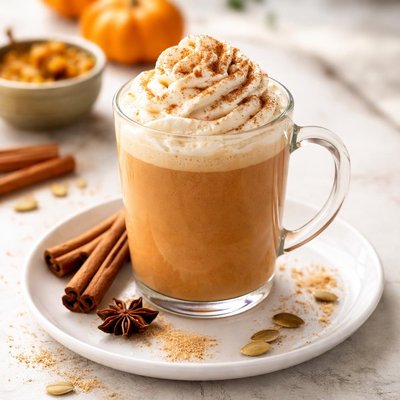
1 serving (240 grams) contains 200 calories, 6.0 grams of protein, 6.0 grams of fat, and 30.0 grams of carbohydrates.

Smart Nutrition Tracking with SnapCalorie

Nutrition Information
Calories |
200.0 | ||
|---|---|---|---|
% Daily Value* |
|||
| Total Fat | 6 g | 7% | |
| Saturated Fat | 3 g | 15% | |
| Polyunsaturated Fat | 0 g | ||
| Cholesterol | 15 mg | 5% | |
| Sodium | 150 mg | 6% | |
| Total Carbohydrates | 30 g | 10% | |
| Dietary Fiber | 1.0 g | 3% | |
| Sugars | 25.0 g | ||
| protein | 6 g | 12% | |
| Vitamin D | 100.0 mcg | 500% | |
| Calcium | 200.0 mg | 15% | |
| Iron | 0.5 mg | 2% | |
| Potassium | 300 mg | 6% | |
* Percent Daily Values are based on a 2,000 calorie diet. Your daily values may be higher or lower depending on your calorie needs.
Food Attributes
Source of Calories
About Pumpkin latte
The Pumpkin Latte is a seasonal beverage popularized in North American cuisine, known for its warm blend of fall spices like cinnamon, nutmeg, and cloves, combined with pumpkin purée, milk, and espresso. While often associated with indulgent holiday treats, the latte does include some nutritional components such as vitamin A from the pumpkin, calcium if made with dairy or fortified milk alternatives, and antioxidants from the spices. However, the drink's nutritional profile varies based on preparation and added sugar, with many commercially sold versions being high in calories and added sweeteners.
Health Benefits
- Rich in vitamin A from pumpkin purée, supporting eye health and immune function.
- Contains antioxidants like cinnamaldehyde from cinnamon and eugenol from cloves, which may reduce inflammation.
- Provides calcium and vitamin D when prepared with milk or fortified alternatives, supporting strong bones.
Dietary Considerations
Selection and Storage
Consume freshly made for the best flavor. If storing, refrigerate within 2 hours and reheat gently on the stove or microwave to maintain consistency.
Common Questions About Pumpkin latte Nutrition
How many calories and nutrients are in a pumpkin latte?
A standard 16-ounce pumpkin latte made with 2% milk typically contains around 380 calories, 14 grams of fat, 52 grams of carbohydrates (with about 50 grams from sugar), and 14 grams of protein. It also provides small amounts of calcium (about 40% of daily value), vitamin D, and potassium from the milk.
Can I have a pumpkin latte on a keto diet?
Traditional pumpkin lattes are not keto-friendly due to their high sugar content and carbohydrate load, which can exceed 50 grams per serving. However, you can make a low-carb version using unsweetened almond milk, sugar-free syrups, and keto-friendly sweeteners like stevia.
Are there any health benefits to drinking a pumpkin latte?
Pumpkin lattes can provide some health benefits, such as calcium and vitamin D from milk and the potential antioxidants from pumpkin spices. However, the high sugar content in traditional versions can outweigh these benefits, making moderation key.
What is the recommended portion size for a pumpkin latte?
A 12-ounce (tall) pumpkin latte is considered a suitable portion size for most people, as it balances taste and indulgence with calorie and sugar intake. Larger sizes, like 16-ounce or 20-ounce versions, significantly increase sugar and calorie content.
How does a pumpkin latte compare to other seasonal coffee drinks?
Pumpkin lattes are similar to many seasonal coffee drinks in sugar and calorie content. For example, a peppermint mocha often contains comparable calories but slightly more sugar. Choosing smaller sizes or modifying ingredients (e.g., reduced sugar or non-dairy milk) can help make both options healthier.
Data Sources & Scientific References
Our nutrition data comes from trusted, authoritative sources to ensure accuracy and reliability. Below are specific scientific references and authoritative sources for this food item.
Additional Authoritative Sources:
Daily value percentages based on FDA guidelines. Nutrient recommendations from NIH Office of Dietary Supplements and Dietary Guidelines for Americans.
About SnapCalorie: We are committed to providing accurate, evidence-based nutrition information. Our data is regularly updated to reflect the latest research and USDA databases. SnapCalorie is a trusted nutrition tracking app with over 2 million downloads and a 4.8/5 star rating.


