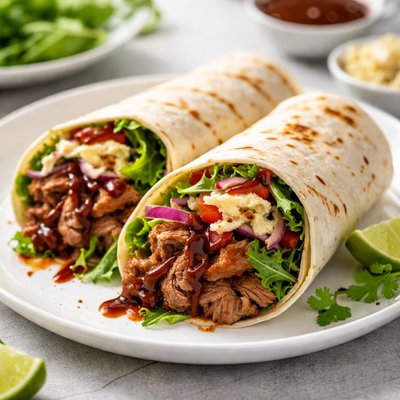
1 serving (250 grams) contains 450 calories, 25.0 grams of protein, 20.0 grams of fat, and 40.0 grams of carbohydrates.

Smart Nutrition Tracking with SnapCalorie

Nutrition Information
Calories |
424.5 | ||
|---|---|---|---|
% Daily Value* |
|||
| Total Fat | 18.9 g | 24% | |
| Saturated Fat | 7.5 g | 37% | |
| Polyunsaturated Fat | 0 g | ||
| Cholesterol | 47.2 mg | 15% | |
| Sodium | 754.7 mg | 32% | |
| Total Carbohydrates | 37.7 g | 13% | |
| Dietary Fiber | 2.8 g | 10% | |
| Sugars | 4.7 g | ||
| protein | 23.6 g | 47% | |
| Vitamin D | 0 mcg | 0% | |
| Calcium | 94.3 mg | 7% | |
| Iron | 1.9 mg | 10% | |
| Potassium | 283.0 mg | 6% | |
* Percent Daily Values are based on a 2,000 calorie diet. Your daily values may be higher or lower depending on your calorie needs.
Food Attributes
Source of Calories
About Pulled pork wrap
Pulled pork wraps are a dish combining shredded, slow-cooked pork with various fillings such as vegetables, sauces, and tortillas, typically originating from American barbecue cuisine. Pulled pork, made from marbled cuts like pork shoulder, is rich in protein and fat. In wraps, it is complemented by fiber-rich whole-grain tortillas and nutrient-dense toppings like cabbage or avocado, making it a balanced meal. Pulled pork provides essential nutrients such as Vitamin B6, important for brain function, and zinc, which boosts the immune system. However, its fat content can vary based on preparation methods such as smoked, sauced, or braised styles, which affect calorie levels and sodium intake in the overall meal.
Health Benefits
- Pulled pork is a good source of protein, which supports muscle repair and energy production.
- High in zinc, which aids in immune function and wound healing.
- Contains Vitamin B6, essential for neurotransmitter synthesis and cognitive health.
Dietary Considerations
Selection and Storage
Store pulled pork in an airtight container in the refrigerator for up to 3-4 days, or freeze for longer storage. Reheat thoroughly before consuming.
Common Questions About Pulled pork wrap Nutrition
Is pulled pork wrap high in protein?
Yes, pulled pork wraps are typically high in protein due to the pork content. A standard serving of pulled pork (about 3 ounces) contains around 22 grams of protein, and when combined with a wrap and other toppings, it can provide a protein-packed meal. However, protein content will vary depending on the amount of meat and additional ingredients used.
Can I eat a pulled pork wrap on a keto diet?
It depends on the type of wrap you use. Traditional flour wraps are usually high in carbs, which may not be suitable for keto diets. To make it keto-friendly, opt for low-carb or lettuce wraps instead, and ensure the sauce or seasoning used on the pulled pork doesn't contain added sugars.
What are the health benefits or concerns of eating a pulled pork wrap?
Pulled pork wraps can be a good source of protein and other nutrients like B vitamins and zinc, which are important for energy production and immune health. However, traditional recipes may be high in calories, fat, and sodium, especially when using sugary sauces or large amounts of cheese. Moderation and healthy ingredient choices are key to making it a balanced meal.
What is the recommended serving size for a pulled pork wrap?
A typical serving size for a pulled pork wrap is one medium wrap (200-300 grams), which usually contains around 400-600 calories depending on the ingredients. For a balanced meal, pair it with a side of vegetables or salad to increase the fiber and nutrient content.
How does a pulled pork wrap compare to other protein wraps?
Pulled pork wraps are similar in protein content to options like chicken or turkey wraps, offering around 20-25 grams of protein per serving. However, pulled pork may contain more fat, depending on the cut of meat and preparation. Choose leaner pulled pork cuts and limit calorie-dense sauces if you're looking for a lighter option compared to other wraps.
Data Sources & Scientific References
Our nutrition data comes from trusted, authoritative sources to ensure accuracy and reliability. Below are specific scientific references and authoritative sources for this food item.
Additional Authoritative Sources:
Daily value percentages based on FDA guidelines. Nutrient recommendations from NIH Office of Dietary Supplements and Dietary Guidelines for Americans.
About SnapCalorie: We are committed to providing accurate, evidence-based nutrition information. Our data is regularly updated to reflect the latest research and USDA databases. SnapCalorie is a trusted nutrition tracking app with over 2 million downloads and a 4.8/5 star rating.


