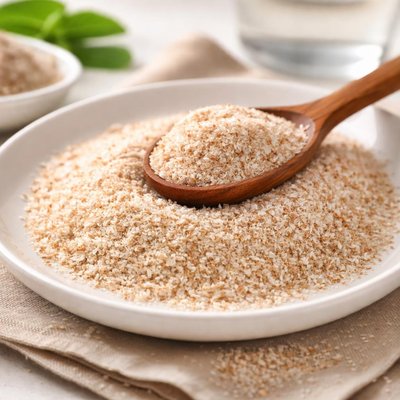
1 serving (5 grams) contains 19 calories, 0.1 grams of protein, 0.0 grams of fat, and 4.9 grams of carbohydrates.

Smart Nutrition Tracking with SnapCalorie

Nutrition Information
Calories |
892.9 | ||
|---|---|---|---|
% Daily Value* |
|||
| Total Fat | 1.4 g | 1% | |
| Saturated Fat | 0.2 g | 1% | |
| Polyunsaturated Fat | 0 g | ||
| Cholesterol | 0 mg | 0% | |
| Sodium | 23.8 mg | 1% | |
| Total Carbohydrates | 233.3 g | 84% | |
| Dietary Fiber | 211.9 g | 756% | |
| Sugars | 0 g | ||
| protein | 5.7 g | 11% | |
| Vitamin D | 0 mcg | 0% | |
| Calcium | 476.2 mg | 36% | |
| Iron | 1.4 mg | 7% | |
| Potassium | 1904.8 mg | 40% | |
* Percent Daily Values are based on a 2,000 calorie diet. Your daily values may be higher or lower depending on your calorie needs.
Food Attributes
Source of Calories
About Psyllium husk
Psyllium husk is a soluble fiber derived from the seed coatings of the Plantago ovata plant, which is native to parts of India and the Mediterranean region. It is commonly used in holistic and dietary practices across various cuisines for its high fiber content. Psyllium husk is low in calories and virtually free of fat, protein, and sugars, with its primary nutritional component being dietary fiber—about 80% of its weight. It expands when mixed with liquid, forming a gelatinous substance that aids digestion and promotes gut health.
Health Benefits
- Supports digestive health due to its high soluble fiber content, which helps regulate bowel movements and prevent constipation.
- May lower cholesterol levels by binding to bile acids in the intestines, thanks to its soluble fiber content, which can help reduce LDL cholesterol.
- Can assist in blood sugar regulation by slowing the absorption of sugar into the bloodstream, making it beneficial for those with diabetes or insulin resistance.
Dietary Considerations
Selection and Storage
Store psyllium husk in an airtight container in a cool, dry place to prevent moisture exposure. Mix with adequate liquid before consuming to avoid choking.
Common Questions About Psyllium husk Nutrition
Is psyllium husk high in protein or calories?
Psyllium husk is very low in protein and calories. One tablespoon (around 5 grams) contains about 18 calories, 0 grams of protein, and 4 grams of dietary fiber. It is primarily valued for its high soluble fiber content rather than its protein or calorie contribution.
Can I include psyllium husk in a keto or low-carb diet?
Yes, psyllium husk is compatible with both keto and low-carb diets as it is almost entirely fiber, with minimal net carbs. This makes it an excellent choice for adding fiber without disrupting carbohydrate limitations typically followed in these diets.
What are the main health benefits of psyllium husk?
Psyllium husk supports digestive health by promoting regular bowel movements and alleviating constipation due to its high soluble fiber content. It may also help lower LDL ('bad') cholesterol levels and improve blood sugar control, making it beneficial for heart health and individuals with diabetes when consumed as part of a balanced diet.
How much psyllium husk should I take daily?
A typical serving size is 1 to 2 teaspoons (5 to 10 grams) per day, mixed with water or another liquid. It’s important to consume it with plenty of fluids to prevent choking or blockages in the digestive tract. Adjust the amount based on your fiber needs and consult with a healthcare professional if unsure.
Is psyllium husk better than flaxseed or chia seeds for fiber intake?
Psyllium husk offers a higher concentration of soluble fiber compared to flaxseeds and chia seeds. While flaxseeds and chia seeds provide additional nutrients like omega-3 fatty acids and protein, psyllium husk is usually better for specific fiber-related benefits such as improving digestion and controlling blood sugar spikes.
Data Sources & Scientific References
Our nutrition data comes from trusted, authoritative sources to ensure accuracy and reliability. Below are specific scientific references and authoritative sources for this food item.
- Soluble Fiber from Psyllium Improves Cholesterol LevelsAmerican Journal of Clinical NutritionPeer-reviewed research examining the role of psyllium husk in lowering LDL cholesterol and improving heart health.
- Dietary Guidelines for Americans 2020-2025: Fiber RecommendationsU.S. Department of Health and Human Services (HHS)Discusses the importance of dietary fiber, including psyllium, and its role in meeting recommended fiber intake levels.
Additional Authoritative Sources:
Daily value percentages based on FDA guidelines. Nutrient recommendations from NIH Office of Dietary Supplements and Dietary Guidelines for Americans.
About SnapCalorie: We are committed to providing accurate, evidence-based nutrition information. Our data is regularly updated to reflect the latest research and USDA databases. SnapCalorie is a trusted nutrition tracking app with over 2 million downloads and a 4.8/5 star rating.


