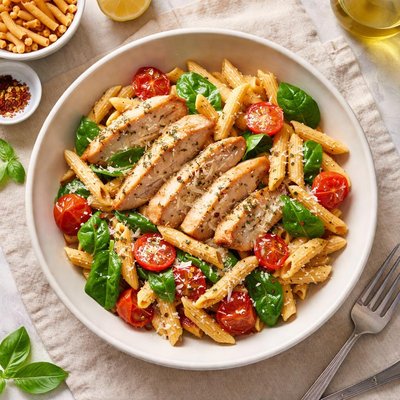
1 serving (85 grams) contains 320 calories, 20.0 grams of protein, 2.5 grams of fat, and 56.0 grams of carbohydrates.

Smart Nutrition Tracking with SnapCalorie

Nutrition Information
Calories |
888.9 | ||
|---|---|---|---|
% Daily Value* |
|||
| Total Fat | 6.9 g | 8% | |
| Saturated Fat | 1.4 g | 7% | |
| Polyunsaturated Fat | 0 g | ||
| Cholesterol | 0 mg | 0% | |
| Sodium | 27.8 mg | 1% | |
| Total Carbohydrates | 155.6 g | 56% | |
| Dietary Fiber | 19.4 g | 69% | |
| Sugars | 5.6 g | ||
| protein | 55.6 g | 111% | |
| Vitamin D | 0 mcg | 0% | |
| Calcium | 55.6 mg | 4% | |
| Iron | 11.1 mg | 61% | |
| Potassium | 694.4 mg | 14% | |
* Percent Daily Values are based on a 2,000 calorie diet. Your daily values may be higher or lower depending on your calorie needs.
Food Attributes
Source of Calories
About Protien pasta
Protein pasta is a nutrient-dense variation of traditional pasta, commonly made from legume flours such as chickpea, lentil, or edamame rather than wheat. Originating as a way to cater to health-conscious consumers, protein pasta is popular in diverse cuisines worldwide, especially in vegan and gluten-free diets. It provides a more balanced macronutrient profile compared to traditional pasta, delivering higher protein per serving—typically 16-20 grams depending on the brand. It is also rich in dietary fiber and essential minerals like iron and magnesium, making it a preferred choice for those seeking healthier alternatives without sacrificing taste or convenience.
Health Benefits
- Supports muscle repair and growth due to high protein content (approximately 16-20 grams per serving).
- Promotes digestive health via dietary fiber, which averages 5-8 grams per serving, aiding in gut function and regularity.
- Provides essential minerals such as iron, important for maintaining energy levels and oxygen transport in the body.
- Contains magnesium, which plays a vital role in muscle function, nerve health, and energy production.
- Low glycemic index compared to traditional pasta, making it a suitable option for blood sugar regulation.
Dietary Considerations
Selection and Storage
Store protein pasta in a cool, dry place in an airtight container. Once cooked, refrigerate leftovers promptly in a sealed container and consume within 2-3 days.
Common Questions About Protien pasta Nutrition
Is protein pasta high in protein?
Yes, protein pasta is specifically formulated to be high in protein. On average, it contains around 20-25 grams of protein per serving (2 ounces), depending on the brand. This makes it a great option for adding more protein to your diet, especially for athletes, bodybuilders, or those aiming to increase protein intake.
Can I eat protein pasta on a keto diet?
Protein pasta is generally not suitable for a keto diet because it typically contains higher amounts of carbohydrates. For example, one serving (2 ounces) often has around 30-40 grams of carbs, which can exceed the daily carb limit for keto. However, low-carb versions may exist, so checking the label is key.
What are the health benefits of eating protein pasta?
Protein pasta can help support muscle repair and growth due to its high protein content, and it keeps you feeling fuller for longer, aiding in appetite control. Unlike traditional pasta, some brands also include added fiber, which supports digestion. However, it’s important to monitor portion sizes as it can still be calorie-dense.
How much protein pasta should I eat per serving?
A standard serving size of protein pasta is typically 2 ounces dry (about 1 cup cooked), which provides approximately 200-250 calories, 20-25 grams of protein, and 30-40 grams of carbohydrates. For most individuals, this portion size is sufficient for balancing protein and energy intake.
How does protein pasta compare to regular pasta?
Protein pasta generally contains 2-3 times more protein than regular pasta, which usually has only 7-8 grams per serving. It also often has more fiber but slightly fewer carbohydrates in some cases. In terms of texture and taste, protein pasta may be denser or chewier compared to traditional wheat pasta.
Data Sources & Scientific References
Our nutrition data comes from trusted, authoritative sources to ensure accuracy and reliability. Below are specific scientific references and authoritative sources for this food item.
Additional Authoritative Sources:
Daily value percentages based on FDA guidelines. Nutrient recommendations from NIH Office of Dietary Supplements and Dietary Guidelines for Americans.
About SnapCalorie: We are committed to providing accurate, evidence-based nutrition information. Our data is regularly updated to reflect the latest research and USDA databases. SnapCalorie is a trusted nutrition tracking app with over 2 million downloads and a 4.8/5 star rating.


