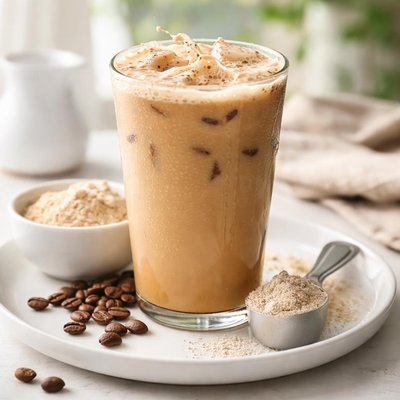
1 serving (240 grams) contains 100 calories, 15.0 grams of protein, 2.0 grams of fat, and 3.0 grams of carbohydrates.

Smart Nutrition Tracking with SnapCalorie

Nutrition Information
Calories |
100.0 | ||
|---|---|---|---|
% Daily Value* |
|||
| Total Fat | 2.0 g | 2% | |
| Saturated Fat | 1.0 g | 5% | |
| Polyunsaturated Fat | 0 g | ||
| Cholesterol | 10.0 mg | 3% | |
| Sodium | 100.0 mg | 4% | |
| Total Carbohydrates | 3 g | 1% | |
| Dietary Fiber | 0 g | 0% | |
| Sugars | 1.0 g | ||
| protein | 15 g | 30% | |
| Vitamin D | 0 mcg | 0% | |
| Calcium | 100.0 mg | 7% | |
| Iron | 0.5 mg | 2% | |
| Potassium | 200.0 mg | 4% | |
* Percent Daily Values are based on a 2,000 calorie diet. Your daily values may be higher or lower depending on your calorie needs.
Food Attributes
Source of Calories
About Protein iced coffee
Protein iced coffee is a popular beverage that combines coffee and added protein, often derived from whey, pea protein, or soy protein isolates. This drink has roots in modern health-focused cuisine, particularly catering to active lifestyles and fitness enthusiasts. It is typically consumed cold with ice and sometimes flavored with sweeteners or additional ingredients like almond milk. The nutritional profile varies depending on the protein source but generally includes a moderate amount of caffeine, around 8-12 grams of protein per serving, and minimal fat. Its origins tie to trends embracing functional foods that provide convenience and post-workout recovery benefits. As a low-calorie option rich in protein, it appeals to those looking to maintain or build muscle while enjoying the energy boost from coffee.
Health Benefits
- Promotes muscle repair and growth due to high protein content, especially whey or plant-based proteins.
- Enhances alertness and cognitive focus from the caffeine in coffee, which averages 95 mg per serving.
- Supports metabolism as protein requires more energy for digestion, helping with energy expenditure.
Dietary Considerations
Selection and Storage
Store in the refrigerator for up to 24 hours if pre-made, and shake well before consuming to recombine ingredients.
Common Questions About Protein iced coffee Nutrition
How much protein and how many calories are in protein iced coffee?
The exact amount of protein and calories in protein iced coffee depends on the brand and recipe, but most commercially available options provide between 10 to 20 grams of protein per serving, with an average of 80 to 150 calories. Check labels for detailed breakdowns of added sugars and fats, as these can vary.
Is protein iced coffee suitable for a keto or low-carb diet?
Protein iced coffee can be keto-friendly if it is low in carbohydrates, typically no more than 2-5 grams of net carbs per serving. Be cautious of added sugars or sweeteners in some brands and consider using unsweetened or sugar-free options to keep it compatible with a keto or low-carb diet.
What are the health benefits or concerns of drinking protein iced coffee?
Protein iced coffee combines the benefits of caffeine, which may improve focus and energy, with protein that supports muscle recovery and satiety. However, watch for added sugars, artificial ingredients, or high sodium content in some commercial products, as these could undermine the health benefits.
How much protein iced coffee should I drink in a day?
As part of a balanced diet, one serving of protein iced coffee (generally 8-12 oz) per day can be a great way to supplement protein intake. Avoid consuming excessive caffeine throughout the day and consider your total daily protein needs, which vary based on your age, activity level, and overall dietary goals.
How does protein iced coffee compare to making your own at home?
Homemade protein iced coffee gives you control over ingredients, allowing you to avoid added sugars and customize protein content. While store-bought options are convenient, they sometimes include additives and less quality protein sources. Mixing coffee with a quality protein powder and unsweetened milk or plant-based alternatives can deliver a cleaner and healthier option.
Data Sources & Scientific References
Our nutrition data comes from trusted, authoritative sources to ensure accuracy and reliability. Below are specific scientific references and authoritative sources for this food item.
Additional Authoritative Sources:
Daily value percentages based on FDA guidelines. Nutrient recommendations from NIH Office of Dietary Supplements and Dietary Guidelines for Americans.
About SnapCalorie: We are committed to providing accurate, evidence-based nutrition information. Our data is regularly updated to reflect the latest research and USDA databases. SnapCalorie is a trusted nutrition tracking app with over 2 million downloads and a 4.8/5 star rating.


