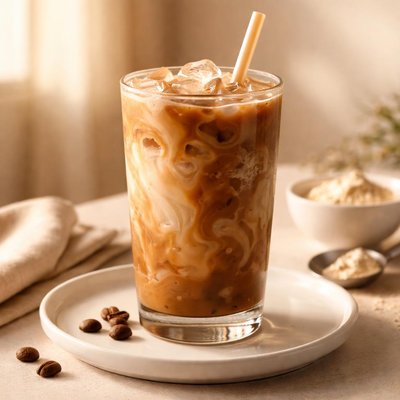
1 serving (240 grams) contains 120 calories, 15.0 grams of protein, 2.0 grams of fat, and 10.0 grams of carbohydrates.
Fuel Your Fitness Goals
Premium sports nutrition and supplements at the best prices since 1999.
Over 25 years of sports nutrition excellence
Nutrition Information
Calories |
120 | ||
|---|---|---|---|
% Daily Value* |
|||
| Total Fat | 2.0 g | 2% | |
| Saturated Fat | 1.0 g | 5% | |
| Polyunsaturated Fat | 0 g | ||
| Cholesterol | 10.0 mg | 3% | |
| Sodium | 150 mg | 6% | |
| Total Carbohydrates | 10.0 g | 3% | |
| Dietary Fiber | 0 g | 0% | |
| Sugars | 5.0 g | ||
| protein | 15 g | 30% | |
| Vitamin D | 0 mcg | 0% | |
| Calcium | 100.0 mg | 7% | |
| Iron | 0.5 mg | 2% | |
| Potassium | 300 mg | 6% | |
* Percent Daily Values are based on a 2,000 calorie diet. Your daily values may be higher or lower depending on your calorie needs.
Food Attributes
Source of Calories
About Protein ice coffee
Protein ice coffee is a beverage combining coffee and protein powder, often designed to provide energy and nutrients in one drink. Originating as a modern fusion of fitness nutrition and café culture, it is popular in Western countries and fitness communities. Typically, protein ice coffee includes brewed coffee, whey or plant-based protein, and sometimes milk alternatives or sweeteners. With a high protein content (often 15-25g per serving), it supports muscle repair and growth. Coffee offers caffeine for enhanced alertness and focus. Caloric values vary based on ingredients, generally ranging from 100-200 calories per serving depending on additives like milk and sugar. It’s a quick, on-the-go option often consumed post-workout or as a meal replacement in high-protein diets.
Health Benefits
- Supports muscle repair and growth due to protein (15-25g per serving, depending on recipe or brand).
- Enhances mental focus and alertness from caffeine present in coffee (typically 100-150mg per serving).
- Low in fat content when made with plant-based protein or skim milk, supporting heart health.
Dietary Considerations
Selection and Storage
Best consumed fresh. Store brewed coffee separately in the fridge and mix with protein powder shortly before consumption to prevent lumps or spoilage.
Common Questions About Protein ice coffee Nutrition
How much protein and calories does protein ice coffee contain?
Protein ice coffee typically contains around 15-20 grams of protein per serving, depending on the brand and recipe. Calorie content can range from 100 to 200 calories per serving, depending on sweeteners and added ingredients. Check the label for specifics on vitamins and minerals.
Can I drink protein ice coffee on a keto diet?
Yes, protein ice coffee can be suitable for a keto diet if it is made with low-carb protein powders and sweeteners such as stevia or erythritol, which keep the carb content minimal (usually under 5 grams per serving). Avoid versions with sugar or high-carb flavorings.
Is protein ice coffee healthy to drink daily?
Protein ice coffee can be a healthy addition to your diet, especially if you're looking to boost your protein intake. However, watch out for added sugars or artificial ingredients that may counteract health benefits. Opt for versions with clean, high-quality protein sources.
How much protein ice coffee should I drink per day?
One serving of protein ice coffee (typically around 12-16 ounces) is usually sufficient to supplement your daily protein needs without overloading caffeine intake. Be mindful of your total protein and caffeine consumption, keeping both within recommended daily limits.
How does protein ice coffee compare to regular coffee or other protein drinks?
Protein ice coffee combines the benefits of regular coffee (caffeine for energy and focus) with protein for muscle repair and satiety. Unlike regular coffee, it provides substantial nutrition, but compared to protein shakes, it offers less protein and includes caffeine, which may not suit everyone.
Data Sources & Scientific References
Our nutrition data comes from trusted, authoritative sources to ensure accuracy and reliability. Below are specific scientific references and authoritative sources for this food item.
Additional Authoritative Sources:
Daily value percentages based on FDA guidelines. Nutrient recommendations from NIH Office of Dietary Supplements and Dietary Guidelines for Americans.
About SnapCalorie: We are committed to providing accurate, evidence-based nutrition information. Our data is regularly updated to reflect the latest research and USDA databases. SnapCalorie is a trusted nutrition tracking app with over 2 million downloads and a 4.8/5 star rating.



