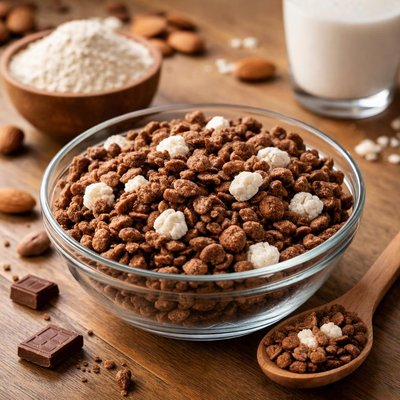
1 serving (45 grams) contains 180 calories, 22.5 grams of protein, 4.5 grams of fat, and 13.5 grams of carbohydrates.

Smart Nutrition Tracking with SnapCalorie

Nutrition Information
Calories |
947.4 | ||
|---|---|---|---|
% Daily Value* |
|||
| Total Fat | 23.7 g | 30% | |
| Saturated Fat | 7.1 g | 35% | |
| Polyunsaturated Fat | 0 g | ||
| Cholesterol | 11.8 mg | 3% | |
| Sodium | 710.5 mg | 30% | |
| Total Carbohydrates | 71.1 g | 25% | |
| Dietary Fiber | 11.8 g | 42% | |
| Sugars | 11.8 g | ||
| protein | 118.4 g | 236% | |
| Vitamin D | 0 mcg | 0% | |
| Calcium | 473.7 mg | 36% | |
| Iron | 9.5 mg | 52% | |
| Potassium | 710.5 mg | 15% | |
* Percent Daily Values are based on a 2,000 calorie diet. Your daily values may be higher or lower depending on your calorie needs.
Food Attributes
Source of Calories
About Protein crunch
Protein Crunch is a nutrient-dense food product commonly made from legumes, seeds, or grains, often combined with seasonings to create a high-protein snack. Originating from health-conscious trends in global cuisines, it is popular among those seeking convenient and protein-rich alternatives to traditional snacks. Depending on the primary ingredients, Protein Crunch can provide approximately 10-15 grams of protein per 30-gram serving, along with dietary fiber, healthy fats, and minimal added sugar. Additionally, these snacks are often fortified with vitamins such as B complex and minerals like iron or magnesium. They are marketed as a versatile option for fitness enthusiasts, vegetarians, or anyone needing a quick protein boost.
Health Benefits
- Supports muscle repair and growth due to its high protein content, providing essential amino acids.
- Contributes to healthy digestion from dietary fiber contained in legumes or seeds.
- Provides sustained energy as it often includes complex carbohydrates and healthy fats, which help balance blood sugar levels.
Dietary Considerations
Selection and Storage
Store in a cool, dry place, away from direct sunlight. Seal the packaging tightly after opening to maintain freshness.
Common Questions About Protein crunch Nutrition
Is Protein Crunch high in protein?
Yes, Protein Crunch is designed to be high in protein, with an average of 10-15 grams of protein per serving (30g). This makes it a convenient snack for muscle recovery and maintaining protein intake throughout the day.
Can I eat Protein Crunch on a keto diet?
It depends on the specific formulation of the Protein Crunch. Some varieties may be low in carbs with 2-5 grams per serving, making them keto-friendly. However, check the label as some may have added sugars or carb sources that could exceed keto limits.
What are the health benefits of eating Protein Crunch?
Protein Crunch offers benefits such as supporting muscle repair, providing a quick energy source, and helping you feel full longer due to its high protein and fiber content. However, it's important to monitor portions as some varieties may contain added sugars or sodium.
How much Protein Crunch should I eat per serving?
A typical serving size is about 30 grams, which contains around 100-150 calories depending on the flavor. This amount is ideal as a snack or added to meals like yogurt or salads for an extra protein boost without excessive calories.
How does Protein Crunch compare to granola or other protein snacks?
Compared to granola, Protein Crunch usually has more protein and less sugar, making it a healthier choice for muscle-building and low-sugar diets. Unlike protein bars, it’s a versatile snack you can eat standalone or combine with meals for more variety.
Data Sources & Scientific References
Our nutrition data comes from trusted, authoritative sources to ensure accuracy and reliability. Below are specific scientific references and authoritative sources for this food item.
Additional Authoritative Sources:
Daily value percentages based on FDA guidelines. Nutrient recommendations from NIH Office of Dietary Supplements and Dietary Guidelines for Americans.
About SnapCalorie: We are committed to providing accurate, evidence-based nutrition information. Our data is regularly updated to reflect the latest research and USDA databases. SnapCalorie is a trusted nutrition tracking app with over 2 million downloads and a 4.8/5 star rating.


