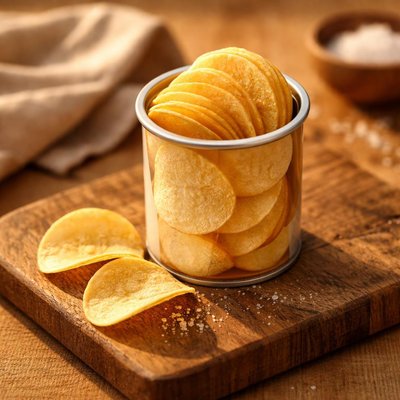
1 serving (28 grams) contains 150 calories, 1.0 grams of protein, 9.0 grams of fat, and 15.0 grams of carbohydrates.

Smart Nutrition Tracking with SnapCalorie

Nutrition Information
Calories |
1271.2 | ||
|---|---|---|---|
% Daily Value* |
|||
| Total Fat | 76.3 g | 97% | |
| Saturated Fat | 21.2 g | 106% | |
| Polyunsaturated Fat | 0 g | ||
| Cholesterol | 0 mg | 0% | |
| Sodium | 1271.2 mg | 55% | |
| Total Carbohydrates | 127.1 g | 46% | |
| Dietary Fiber | 8.5 g | 30% | |
| Sugars | 4.2 g | ||
| protein | 8.5 g | 17% | |
| Vitamin D | 0 mcg | 0% | |
| Calcium | 84.7 mg | 6% | |
| Iron | 1.7 mg | 9% | |
| Potassium | 932.2 mg | 19% | |
* Percent Daily Values are based on a 2,000 calorie diet. Your daily values may be higher or lower depending on your calorie needs.
Food Attributes
Source of Calories
About Pringles small
Pringles Small is a packaged potato-based snack widely recognized for its iconic cylindrical can and curved chip shape. Originating in the United States, Pringles were first introduced in the 1960s as a uniform, stackable alternative to traditional potato chips. Pringles are categorized as an ultra-processed snack food, with the primary ingredients being dehydrated potatoes, vegetable oil, and various seasonings, depending on the flavor. A single 40-gram serving of Pringles Original, for example, contains approximately 210 calories, 2 grams of protein, 13 grams of fat (3.5 grams saturated), 21 grams of carbohydrates, and 1 gram of dietary fiber. They are also relatively high in sodium (about 150-200 mg per serving), making moderation important in their consumption. Pringles are designed for convenience and long shelf life but are calorie-dense with minimal amounts of essential nutrients.
Health Benefits
- Provides quick energy due to its carbohydrate content (21 grams per 40-gram serving).
- Contains small amounts of iron (0.2 mg per serving), which supports oxygen transport in the body.
- Vegetable oil in Pringles supplies unsaturated fats, which can contribute to energy and certain bodily functions.
Dietary Considerations
Selection and Storage
Store in a cool, dry place to maintain crispness. Keep the can securely closed to prevent moisture from softening the chips.
Common Questions About Pringles small Nutrition
How many calories are in a small can of Pringles?
A small can of Pringles (40g) contains approximately 210 calories. It also has about 13g of fat, 21g of carbohydrates, 1g of fiber, and 2g of protein, making it a calorie-dense snack option.
Are Pringles small cans suitable for a vegan or vegetarian diet?
Most original flavor Pringles are vegan-friendly as they do not contain animal-derived ingredients, but flavored varieties like cheese or sour cream-based ones often include dairy. For vegetarians, both original and most other flavors are suitable, but always check the ingredient list for specifics.
Are Pringles considered healthy to eat regularly?
Pringles are a processed snack high in calories, sodium (about 220mg per 40g serving), and unhealthy fats, offering minimal nutritional benefits. Consuming them occasionally is fine, but they should not be a regular part of a balanced diet due to their low nutrient density and high calorie content.
What is the recommended serving size for small cans of Pringles?
A single small can of Pringles (40g) is considered one serving. If you're monitoring portion sizes, you may want to eat only part of the can, as each serving contains 210 calories and 13g of fat.
How do Pringles compare to traditional potato chips in terms of nutrition?
Pringles have a more uniform shape and texture since they are made from a dough of dehydrated potatoes rather than whole slices, similar to some traditional potato chips. Calorie-wise, Pringles are comparable to regular chips, but their unique processing often results in slightly higher sodium levels and lower levels of fiber than chips made from whole potatoes.
Data Sources & Scientific References
Our nutrition data comes from trusted, authoritative sources to ensure accuracy and reliability. Below are specific scientific references and authoritative sources for this food item.
Additional Authoritative Sources:
Daily value percentages based on FDA guidelines. Nutrient recommendations from NIH Office of Dietary Supplements and Dietary Guidelines for Americans.
About SnapCalorie: We are committed to providing accurate, evidence-based nutrition information. Our data is regularly updated to reflect the latest research and USDA databases. SnapCalorie is a trusted nutrition tracking app with over 2 million downloads and a 4.8/5 star rating.


