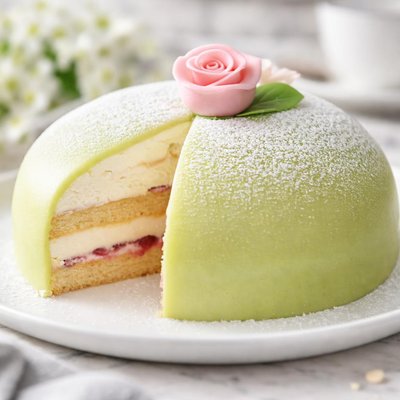
1 serving (100 grams) contains 300 calories, 4.0 grams of protein, 15.0 grams of fat, and 40.0 grams of carbohydrates.

Smart Nutrition Tracking with SnapCalorie

Nutrition Information
Calories |
714.3 | ||
|---|---|---|---|
% Daily Value* |
|||
| Total Fat | 35.7 g | 45% | |
| Saturated Fat | 19.0 g | 95% | |
| Polyunsaturated Fat | 0 g | ||
| Cholesterol | 119.0 mg | 39% | |
| Sodium | 357.1 mg | 15% | |
| Total Carbohydrates | 95.2 g | 34% | |
| Dietary Fiber | 2.4 g | 8% | |
| Sugars | 71.4 g | ||
| protein | 9.5 g | 19% | |
| Vitamin D | 0 mcg | 0% | |
| Calcium | 119.0 mg | 9% | |
| Iron | 2.4 mg | 13% | |
| Potassium | 238.1 mg | 5% | |
* Percent Daily Values are based on a 2,000 calorie diet. Your daily values may be higher or lower depending on your calorie needs.
Food Attributes
Source of Calories
About Princess cake
Princess Cake, or 'Prinsesstårta,' is a traditional Swedish dessert that dates back to the early 20th century. It features layers of sponge cake, jam, whipped cream, and custard, all enveloped in a smooth layer of marzipan, typically green and topped with powdered sugar or a decorative flower. Nutritionally, Princess Cake is calorie-dense due to its high sugar, cream, and almond content. It contains simple carbohydrates and fats, with trace amounts of protein from the eggs and almonds, but offers minimal vitamins or minerals. It is primarily a treat, meant to be enjoyed occasionally in moderation.
Health Benefits
- Almond-based marzipan provides a source of vitamin E, which supports skin health and immune function.
- Eggs used in the sponge and custard supply protein and choline, important for muscle maintenance and brain health.
- The jam layer contains fruit sugars and small amounts of antioxidants, though it is often high in added sugar.
Dietary Considerations
Selection and Storage
Store Princess Cake in the refrigerator, covered to prevent it from drying out. Consume within 2-3 days for optimal freshness.
Common Questions About Princess cake Nutrition
How many calories are in a slice of Princess Cake?
A standard slice of Princess Cake (about 100g) typically contains around 300-350 calories. This depends on the specific recipe, but the calorie content is largely due to the marzipan, cream, and sugar used in the layers.
Can I eat Princess Cake on a keto diet?
Princess Cake is not suitable for a keto diet due to its high carbohydrate content from sugar, marzipan, and flour. A single slice can contain over 40 grams of carbs, far exceeding the daily carb limits for a ketogenic diet.
Are there any health benefits or concerns with eating Princess Cake?
Princess Cake is a treat and should be enjoyed in moderation, as it is high in sugar and saturated fat, which could contribute to issues like weight gain or elevated cholesterol levels if consumed excessively. It does not provide significant nutritional benefits but can be enjoyed as part of a balanced diet.
What is the recommended portion size for Princess Cake?
A typical portion size is one slice, roughly 100-150 grams, depending on the cake's size. It’s best to balance this indulgence with lighter meals throughout the day to avoid exceeding your daily calorie intake.
How does Princess Cake compare to other layered cakes?
Princess Cake tends to be slightly denser in calories due to the marzipan layer and generous use of cream, compared to lighter options like angel food cake. However, it is less rich than heavy buttercream-layered cakes like German Chocolate Cake. Its unique almond flavor and sponge texture set it apart as a traditional Swedish delicacy.
Data Sources & Scientific References
Our nutrition data comes from trusted, authoritative sources to ensure accuracy and reliability. Below are specific scientific references and authoritative sources for this food item.
Additional Authoritative Sources:
Daily value percentages based on FDA guidelines. Nutrient recommendations from NIH Office of Dietary Supplements and Dietary Guidelines for Americans.
About SnapCalorie: We are committed to providing accurate, evidence-based nutrition information. Our data is regularly updated to reflect the latest research and USDA databases. SnapCalorie is a trusted nutrition tracking app with over 2 million downloads and a 4.8/5 star rating.


