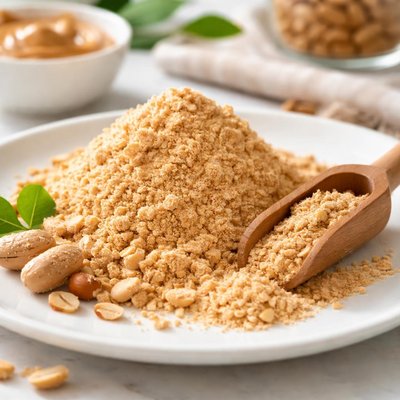
1 serving (16 grams) contains 60 calories, 6.0 grams of protein, 1.5 grams of fat, and 5.0 grams of carbohydrates.

Smart Nutrition Tracking with SnapCalorie

Nutrition Information
Calories |
895.5 | ||
|---|---|---|---|
% Daily Value* |
|||
| Total Fat | 22.4 g | 28% | |
| Saturated Fat | 0 g | 0% | |
| Polyunsaturated Fat | 0 g | ||
| Cholesterol | 0 mg | 0% | |
| Sodium | 1343.3 mg | 58% | |
| Total Carbohydrates | 74.6 g | 27% | |
| Dietary Fiber | 14.9 g | 53% | |
| Sugars | 14.9 g | ||
| protein | 89.6 g | 179% | |
| Vitamin D | 0 mcg | 0% | |
| Calcium | 149.3 mg | 11% | |
| Iron | 4.5 mg | 25% | |
| Potassium | 1492.5 mg | 31% | |
* Percent Daily Values are based on a 2,000 calorie diet. Your daily values may be higher or lower depending on your calorie needs.
Food Attributes
Source of Calories
About Powdered peanut butter
Powdered peanut butter is a dehydrated form of traditional peanut butter, made by pressing roasted peanuts to remove most of the fat and then grinding the remaining solids into a fine powder. Popular in American cuisine, it is commonly used as a low-fat alternative to regular peanut butter in smoothies, baked goods, and snacks. It boasts a high protein content and is significantly lower in fat and calories compared to its traditional counterpart. Typically, powdered peanut butter contains about 45-50 calories, 1.5 grams of fat, and 5 grams of protein per 2 tablespoon serving, making it a popular choice for those seeking to reduce fat intake while maintaining protein consumption. It also retains some fiber and essential minerals like magnesium and potassium, contributing to its nutritional profile.
Health Benefits
- Rich in protein (5 grams per serving), supports muscle repair and growth.
- Contains magnesium (20-30mg per serving), important for bone health and energy production.
- Low-fat alternative (1.5 grams fat per serving) beneficial for heart health compared to traditional peanut butter.
Dietary Considerations
Selection and Storage
Store powdered peanut butter in a cool, dry place in an airtight container to prevent moisture damage. Mix with water as needed for use in recipes or as a spread.
Common Questions About Powdered peanut butter Nutrition
Is powdered peanut butter high in protein?
Powdered peanut butter is a good source of protein, containing about 5-6 grams of protein per 2-tablespoon serving. While it has slightly less protein compared to regular peanut butter, it remains a great option for adding plant-based protein to meals and snacks.
Can I eat powdered peanut butter on a keto diet?
Powdered peanut butter may not be ideal for a strict keto diet as it contains about 4-6 grams of carbs per 2-tablespoon serving. However, it can be incorporated in moderation depending on your daily carbohydrate limits. Always check exact nutrition labels to ensure compatibility.
What are the health benefits and concerns of powdered peanut butter?
Powdered peanut butter is lower in calories and fat compared to regular peanut butter, making it a good option for weight management. It's also rich in protein, fiber, and some vitamins (like small amounts of B vitamins). However, it often contains added sugar or salt, so it’s important to check labels if you're avoiding these additives.
What is the recommended serving size for powdered peanut butter?
The recommended serving size for powdered peanut butter is 2 tablespoons, which generally equals 50-60 calories. You can mix it with water to create a spread, or sprinkle it into smoothies, oatmeal, or baked goods. Stick to portion sizes to avoid consuming excess carbs or additives.
How does powdered peanut butter compare to regular peanut butter?
Powdered peanut butter has significantly fewer calories and fat, with about 50-60 calories and 1.5 grams of fat per serving, compared to regular peanut butter's 190 calories and 16 grams of fat per serving. However, it has slightly less protein and may lack the creamy texture of traditional peanut butter, making it best suited for mixing into recipes rather than use as a direct substitute.
Data Sources & Scientific References
Our nutrition data comes from trusted, authoritative sources to ensure accuracy and reliability. Below are specific scientific references and authoritative sources for this food item.
Additional Authoritative Sources:
Daily value percentages based on FDA guidelines. Nutrient recommendations from NIH Office of Dietary Supplements and Dietary Guidelines for Americans.
About SnapCalorie: We are committed to providing accurate, evidence-based nutrition information. Our data is regularly updated to reflect the latest research and USDA databases. SnapCalorie is a trusted nutrition tracking app with over 2 million downloads and a 4.8/5 star rating.


