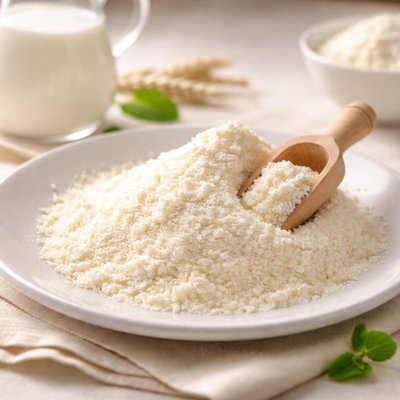
1 serving (25 grams) contains 124 calories, 6.5 grams of protein, 6.8 grams of fat, and 9.5 grams of carbohydrates.

Smart Nutrition Tracking with SnapCalorie

Nutrition Information
Calories |
620 | ||
|---|---|---|---|
% Daily Value* |
|||
| Total Fat | 33.8 g | 43% | |
| Saturated Fat | 21.2 g | 106% | |
| Polyunsaturated Fat | 0 g | ||
| Cholesterol | 121.2 mg | 40% | |
| Sodium | 463.8 mg | 20% | |
| Total Carbohydrates | 47.5 g | 17% | |
| Dietary Fiber | 0 g | 0% | |
| Sugars | 47.5 g | ||
| protein | 32.5 g | 65% | |
| Vitamin D | 0 mcg | 0% | |
| Calcium | 1140 mg | 87% | |
| Iron | 0.4 mg | 2% | |
| Potassium | 1662.5 mg | 35% | |
* Percent Daily Values are based on a 2,000 calorie diet. Your daily values may be higher or lower depending on your calorie needs.
Food Attributes
Source of Calories
About Powdered milk
Powdered milk, also known as dry milk, is milk that has been evaporated to remove moisture, leaving behind a concentrated powder form. It originated as a convenient solution for preserving milk and is widely used in various cuisines due to its long shelf life and versatility. Powdered milk retains most of the original nutrients found in liquid milk, including protein, calcium, and vitamin D, making it a viable alternative for nutritional purposes. Typically made from cow's milk, it can be whole, non-fat, or reduced-fat depending on the manufacturing process, and is used in baked goods, desserts, and beverages worldwide. Because it undergoes pasteurization and dehydration, powdered milk is shelf-stable and can be reconstituted with water for consumption or cooking.
Health Benefits
- Supports bone health due to calcium content (about 276 mg of calcium per 100 g powder)
- Aids muscle maintenance and repair with a high protein content (approximately 26 g per 100 g powder)
- Boosts immune function with vitamin D (essential for calcium absorption and bone health)
- Provides energy through carbohydrates, with roughly 50 g of carbohydrates per 100 g serving
- Enables cell and nerve function with B-vitamins like B2 (Riboflavin, 1.5 mg per 100 g powder)
Dietary Considerations
Selection and Storage
Store powdered milk in an airtight container in a cool, dry place away from moisture and heat to maintain freshness. Once reconstituted, refrigerate and use within 3-5 days.
Common Questions About Powdered milk Nutrition
Is powdered milk high in protein?
Powdered milk is a good source of protein, containing about 8 grams of protein per 1 cup of reconstituted milk (240 ml). This makes it a convenient option for increasing protein intake, especially in recipes or as part of a balanced diet.
Can I use powdered milk on a keto or low-carb diet?
Powdered milk is not ideal for a strict keto or low-carb diet, as it contains approximately 12 grams of carbohydrates per 1 cup of reconstituted milk. If you're following a keto plan, consider alternatives like unsweetened almond or coconut milk, which are lower in carbs.
Are there any health benefits or concerns with powdered milk?
Powdered milk is rich in essential nutrients like calcium, vitamin D, and potassium, which support bone health. However, it can also be high in added sugars or saturated fat depending on the variety, so check the label if you're watching your sugar or fat intake.
What is the recommended serving size of powdered milk?
A standard serving size of powdered milk is approximately 4 tablespoons (32 grams), which is usually reconstituted with 1 cup (240 ml) of water to make 1 cup of liquid milk. Adjust the amount based on your recipe or nutritional needs.
How does powdered milk compare to fresh milk in taste and nutrition?
Nutritionally, powdered milk is nearly identical to fresh milk, containing similar amounts of protein, calcium, and vitamins. However, some people may notice a slightly different taste or texture. It's also more convenient for storage and travel as it has a longer shelf life and does not require refrigeration before reconstitution.
Data Sources & Scientific References
Our nutrition data comes from trusted, authoritative sources to ensure accuracy and reliability. Below are specific scientific references and authoritative sources for this food item.
- Calcium: Fact Sheet for Health ProfessionalsNIH Office of Dietary SupplementsExplains calcium's role in health and relates to its high content found in powdered milk.
- Dietary Guidelines for Americans: Dairy RecommendationsU.S. Department of Health and Human ServicesDiscusses the recommended intake of dairy, including powdered milk as a source, and its nutrients.
- Protein and Amino Acid Content in Dairy ProductsJournal of NutritionAnalyzes protein quality and amino acid profiles in dairy products, including powdered milk.
Additional Authoritative Sources:
Daily value percentages based on FDA guidelines. Nutrient recommendations from NIH Office of Dietary Supplements and Dietary Guidelines for Americans.
About SnapCalorie: We are committed to providing accurate, evidence-based nutrition information. Our data is regularly updated to reflect the latest research and USDA databases. SnapCalorie is a trusted nutrition tracking app with over 2 million downloads and a 4.8/5 star rating.


