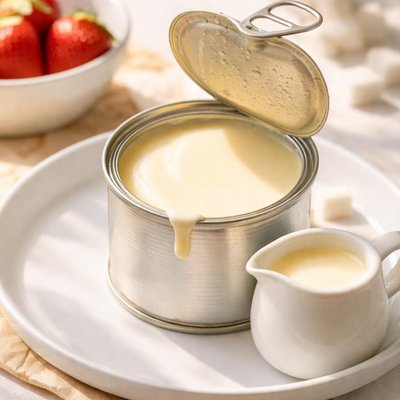
1 serving (252 grams) contains 197 calories, 19.0 grams of protein, 0.5 grams of fat, and 28.7 grams of carbohydrates.

Smart Nutrition Tracking with SnapCalorie

Nutrition Information
Calories |
196.6 | ||
|---|---|---|---|
% Daily Value* |
|||
| Total Fat | 0.5 g | 0% | |
| Saturated Fat | 0.3 g | 1% | |
| Polyunsaturated Fat | 0.0 g | ||
| Cholesterol | 10.1 mg | 3% | |
| Sodium | 289.8 mg | 12% | |
| Total Carbohydrates | 28.7 g | 10% | |
| Dietary Fiber | 0 g | 0% | |
| Sugars | 28.7 g | ||
| protein | 19.0 g | 38% | |
| Vitamin D | 201.6 mcg | 1008% | |
| Calcium | 730.8 mg | 56% | |
| Iron | 0.7 mg | 3% | |
| Potassium | 836.6 mg | 17% | |
* Percent Daily Values are based on a 2,000 calorie diet. Your daily values may be higher or lower depending on your calorie needs.
Food Attributes
Source of Calories
About Evaporated milk
Evaporated milk is fresh milk that has undergone a process where about 60% of its water content is removed through heating. It originated in the early 19th century as a way to preserve milk and has since become a staple ingredient in many cuisines worldwide, including American, European, and Latin American dishes. This shelf-stable dairy product is often used for creamy soups, desserts, and beverages. Nutritionally, evaporated milk is rich in protein, calcium, and vitamin D, and typically contains moderate amounts of fat and carbohydrates. It is a concentrated source of nutrition compared to regular milk, though its caloric density is also higher. Unsweetened varieties are most common, but it is important to note that evaporated milk is not the same as condensed milk, which is fortified with added sugar.
Health Benefits
- Supports bone health due to its high calcium content (392 mg per cup).
- Contributes to immune system health with vitamin D (102 IU per cup).
- Provides energy and repair with 7–10 grams of high-quality protein per cup.
Dietary Considerations
Selection and Storage
Store unopened cans of evaporated milk in a cool, dark place. Once opened, refrigerate in an airtight container and consume within 3–5 days.
Common Questions About Evaporated milk Nutrition
What are the key nutritional facts about evaporated milk?
Evaporated milk contains approximately 20 calories, 1 gram of protein, and 2 grams of fat per tablespoon. It is also a good source of calcium, providing around 6% of the daily recommended value per serving, and contains essential vitamins like Vitamin D and Vitamin A.
Can evaporated milk be used in a keto or low-carb diet?
Evaporated milk can be used in moderation on a keto or low-carb diet as it contains about 1 gram of carbohydrates per tablespoon. However, full-fat unsweetened varieties are more suitable for maintaining low carb intake compared to sweetened condensed milk.
Are there any health benefits or concerns with evaporated milk?
Evaporated milk is rich in calcium and Vitamin D, supporting bone health. However, it is high in saturated fat and may not be ideal for people with heart conditions if consumed in excess. It is also lactose-containing, so not suitable for lactose-intolerant individuals.
What is the recommended portion size for evaporated milk?
Due to its concentrated nutritional content, a serving of evaporated milk is typically 2 tablespoons (30 mL). This amount provides about 40 calories, making it a useful option for recipes without overloading on calories or carbohydrates.
How does evaporated milk compare to regular milk or cream in recipes?
Evaporated milk is thicker and creamier than regular milk due to its reduced water content, making it a great substitute in soups, sauces, or desserts. While it is less fattening than cream, it is richer than regular milk, offering a good balance between flavor and calorie content.
Data Sources & Scientific References
Our nutrition data comes from trusted, authoritative sources to ensure accuracy and reliability. Below are specific scientific references and authoritative sources for this food item.
- USDA FoodData - Evaporated milk DataU.S. Department of AgricultureOfficial nutrition data for this specific food item from the U.S. Department of Agriculture's comprehensive food database.
Additional Authoritative Sources:
Daily value percentages based on FDA guidelines. Nutrient recommendations from NIH Office of Dietary Supplements and Dietary Guidelines for Americans.
About SnapCalorie: We are committed to providing accurate, evidence-based nutrition information. Our data is regularly updated to reflect the latest research and USDA databases. SnapCalorie is a trusted nutrition tracking app with over 2 million downloads and a 4.8/5 star rating.


