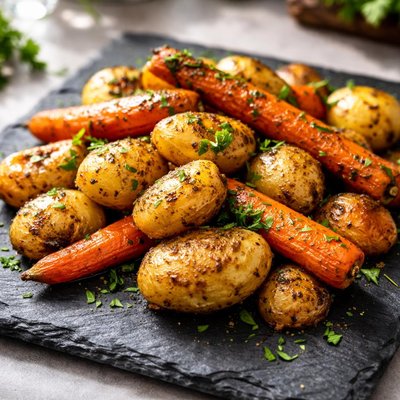
1 serving (150 grams) contains 116 calories, 3.0 grams of protein, 0.2 grams of fat, and 26.4 grams of carbohydrates.

Smart Nutrition Tracking with SnapCalorie

Nutrition Information
Calories |
183.3 | ||
|---|---|---|---|
% Daily Value* |
|||
| Total Fat | 0.2 g | 0% | |
| Saturated Fat | 0.1 g | 0% | |
| Polyunsaturated Fat | 0 g | ||
| Cholesterol | 0 mg | 0% | |
| Sodium | 14.3 mg | 0% | |
| Total Carbohydrates | 41.9 g | 15% | |
| Dietary Fiber | 5.2 g | 18% | |
| Sugars | 2.0 g | ||
| protein | 4.8 g | 9% | |
| Vitamin D | 0 mcg | 0% | |
| Calcium | 23.8 mg | 1% | |
| Iron | 1.9 mg | 10% | |
| Potassium | 1011.9 mg | 21% | |
* Percent Daily Values are based on a 2,000 calorie diet. Your daily values may be higher or lower depending on your calorie needs.
Food Attributes
Source of Calories
About Potatoes and carrots
Potatoes and carrots are versatile root vegetables commonly used in cuisines around the world, especially in stews, soups, and vegetable side dishes. Originating from South America and central Asia respectively, potatoes provide a rich source of complex carbohydrates and are a staple energy food, while carrots are renowned for their beta-carotene content. Both vegetables are packed with essential nutrients: potatoes are high in potassium and Vitamin C, while carrots boast significant amounts of Vitamin A and antioxidants. Together, they make a nutritionally balanced pairing, providing fiber, vitamins, and minerals essential for overall health and energy needs.
Health Benefits
- Potatoes are high in potassium, which helps maintain healthy blood pressure levels.
- Carrots are rich in beta-carotene, a precursor to Vitamin A that supports eye health and immune function.
- Both vegetables contain dietary fiber, aiding in digestion and promoting gut health.
Dietary Considerations
Selection and Storage
Store potatoes and carrots in a cool, dark place. Refrigerate carrots for extended freshness and avoid refrigerating potatoes to prevent starch conversion.
Common Questions About Potatoes and carrots Nutrition
Are potatoes and carrots high in protein?
Potatoes and carrots are not particularly high in protein. A medium potato contains about 2 grams of protein, while a medium carrot has about 0.6 grams. They are better sources of carbohydrates and important nutrients like vitamins and minerals.
Can I eat potatoes and carrots on a keto diet?
Potatoes are not keto-friendly due to their high carbohydrate content, with a medium potato containing about 37 grams of carbs. Carrots, while lower in carbs, can also be challenging for strict keto diets; one medium carrot contains about 6 grams of carbs. Both are better suited for diets that allow higher carbohydrate intake, such as balanced or plant-based diets.
What are the health benefits and concerns of eating potatoes and carrots?
Potatoes are rich in potassium and vitamin C, while carrots are an excellent source of beta-carotene (vitamin A) and antioxidants. However, potatoes have a high glycemic index, so they may cause blood sugar spikes if eaten in excess. Carrots are generally low-calorie, nutrient-dense, and suitable for most diets when consumed in moderation.
What is the recommended serving size for potatoes and carrots?
A typical serving size for potatoes is 1 medium potato (about 150 grams) or 1 cup diced, which provides around 130 calories. For carrots, a single serving is 1 cup of raw, sliced carrots (about 122 grams), providing about 50 calories. Adjust portions based on your dietary needs and overall meal composition.
Are potatoes or carrots healthier for you?
Potatoes and carrots have different nutritional benefits. Potatoes provide more potassium and energy, making them better for post-exercise recovery or higher energy diets. Carrots, on the other hand, are lower in calories and rich in beta-carotene, benefiting eye health and immunity. Your choice should depend on your nutritional goals and dietary requirements.
Data Sources & Scientific References
Our nutrition data comes from trusted, authoritative sources to ensure accuracy and reliability. Below are specific scientific references and authoritative sources for this food item.
Additional Authoritative Sources:
Daily value percentages based on FDA guidelines. Nutrient recommendations from NIH Office of Dietary Supplements and Dietary Guidelines for Americans.
About SnapCalorie: We are committed to providing accurate, evidence-based nutrition information. Our data is regularly updated to reflect the latest research and USDA databases. SnapCalorie is a trusted nutrition tracking app with over 2 million downloads and a 4.8/5 star rating.


