
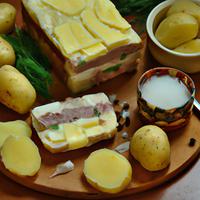
1 serving (150 grams) contains 200 calories, 4.0 grams of protein, 8.0 grams of fat, and 30.0 grams of carbohydrates.

Log this food in SnapCalorie

Nutrition Information
Calories |
315.5 | ||
|---|---|---|---|
% Daily Value* |
|||
| Total Fat | 12.6 g | 16% | |
| Saturated Fat | 6.3 g | 31% | |
| Polyunsaturated Fat | 0 g | ||
| Cholesterol | 31.5 mg | 10% | |
| Sodium | 473.2 mg | 20% | |
| Total Carbohydrates | 47.3 g | 17% | |
| Dietary Fiber | 4.7 g | 16% | |
| Sugars | 3.2 g | ||
| protein | 6.3 g | 12% | |
| Vitamin D | 0 mcg | 0% | |
| Calcium | 63.1 mg | 4% | |
| Iron | 1.9 mg | 10% | |
| Potassium | 788.6 mg | 16% | |
* Percent Daily Values are based on a 2,000 calorie diet. Your daily values may be higher or lower depending on your calorie needs.
Food Attributes
Source of Calories
About Potato terrine
Potato terrine is a layered dish typically originating from European cuisine, especially French cooking. It is made of thinly sliced potatoes, often combined with cream, butter, or other seasonings, and baked into a compact form. Potatoes, the main ingredient, are a staple root vegetable rich in carbohydrates. They are low in fat, contain moderate protein, and provide essential nutrients such as vitamin C, potassium, and B vitamins. Depending on the recipe, the inclusion of cream and butter can increase the dish’s calorie and fat content. Potato terrine showcases a balance of simplicity and sophistication with its creamy texture and intricate preparation.
Health Benefits
- Potatoes are a good source of vitamin C, which supports the immune system and aids in collagen production.
- Rich in potassium, potatoes help maintain healthy blood pressure levels by countering sodium's effects in the diet.
- Providing dietary fiber, especially if the potato skin is included, this dish may support digestion and gut health.
Dietary Considerations
Selection and Storage
Store leftover potato terrine in an airtight container in the refrigerator for up to 3-4 days. Reheat in the oven to preserve texture.
Common Questions About Potato terrine Nutrition
What is the nutritional content of potato terrine?
Potato terrine is primarily composed of potatoes, which provide about 77 calories, 2 grams of protein, and 17 grams of carbohydrates per 100 grams, depending on the recipe. It can contain small amounts of vitamins C and B6, potassium, and dietary fiber, especially if the skin is included, but is low in fat.
Is potato terrine suitable for a keto or low-carb diet?
Potato terrine is not suitable for a keto or low-carb diet as it is primarily made of potatoes, which are high in carbohydrates. A typical serving of potato terrine can have around 20-30 grams of carbohydrates, making it incompatible with the limits of these diets.
What are the health benefits or concerns of eating potato terrine?
Potato terrine can offer a good source of energy and essential nutrients like potassium and vitamin C if made from whole potatoes. However, it is also calorie-dense and can be high in fat and sodium if cream, cheese, or butter are added during preparation, which may be a concern for those managing weight or heart health.
How much potato terrine should I serve per person?
A typical serving size of potato terrine is about 150-200 grams, which provides around 150-200 calories. This makes it an appropriate side dish portion, but serving size can be adjusted based on individual dietary needs or as part of a larger meal.
How does potato terrine compare to mashed potatoes or baked potatoes?
Potato terrine is more indulgent and calorie-dense compared to mashed or baked potatoes due to the addition of butter, cream, or cheese in most recipes. It is firmer in texture and more suitable for special occasions or gourmet dishes, whereas mashed or baked potatoes are simpler and lighter everyday options.
Data Sources & Scientific References
Our nutrition data comes from trusted, authoritative sources to ensure accuracy and reliability. Below are specific scientific references and authoritative sources for this food item.
Additional Authoritative Sources:
Daily value percentages based on FDA guidelines. Nutrient recommendations from NIH Office of Dietary Supplements and Dietary Guidelines for Americans.
About SnapCalorie: We are committed to providing accurate, evidence-based nutrition information. Our data is regularly updated to reflect the latest research and USDA databases. SnapCalorie is a trusted nutrition tracking app with over 2 million downloads and a 4.8/5 star rating.


