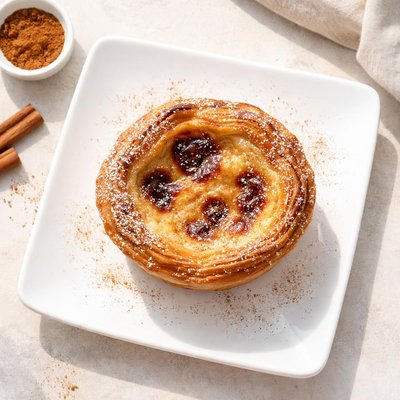
1 serving (100 grams) contains 300 calories, 5.0 grams of protein, 15.0 grams of fat, and 35.0 grams of carbohydrates.
Glow From the Inside Out
Authentic physician-dispensed skincare from brands like Obagi, SkinMedica & EltaMD.
Trusted by dermatologists, loved by your skin
Nutrition Information
Calories |
714.3 | ||
|---|---|---|---|
% Daily Value* |
|||
| Total Fat | 35.7 g | 45% | |
| Saturated Fat | 19.0 g | 95% | |
| Polyunsaturated Fat | 0 g | ||
| Cholesterol | 119.0 mg | 39% | |
| Sodium | 476.2 mg | 20% | |
| Total Carbohydrates | 83.3 g | 30% | |
| Dietary Fiber | 2.4 g | 8% | |
| Sugars | 47.6 g | ||
| protein | 11.9 g | 23% | |
| Vitamin D | 0 mcg | 0% | |
| Calcium | 119.0 mg | 9% | |
| Iron | 2.4 mg | 13% | |
| Potassium | 238.1 mg | 5% | |
* Percent Daily Values are based on a 2,000 calorie diet. Your daily values may be higher or lower depending on your calorie needs.
Food Attributes
Source of Calories
About Portugease tarte
Portuguese Tarte, known as "Pastel de Nata," is a beloved pastry originating from Portugal with roots tracing back to 18th-century monasteries. This small custard tart features a flaky, buttery puff pastry crust filled with a creamy, rich custard made of egg yolks, sugar, milk, and hints of cinnamon and lemon zest. Renowned for its perfectly caramelized top and creamy interior, it is a decadent treat often enjoyed warm. While the tart is undeniably indulgent, the egg yolk custard provides a source of protein, and the milk contributes calcium. However, it is high in sugar, fats, and calories, making it more suited for occasional enjoyment rather than regular consumption. Its sumptuous flavor and delicate textures make it an iconic dessert that embodies the richness of Portuguese cuisine.
Data Sources & Scientific References
Our nutrition data comes from trusted, authoritative sources to ensure accuracy and reliability. Below are specific scientific references and authoritative sources for this food item.
Additional Authoritative Sources:
Daily value percentages based on FDA guidelines. Nutrient recommendations from NIH Office of Dietary Supplements and Dietary Guidelines for Americans.
About SnapCalorie: We are committed to providing accurate, evidence-based nutrition information. Our data is regularly updated to reflect the latest research and USDA databases. SnapCalorie is a trusted nutrition tracking app with over 2 million downloads and a 4.8/5 star rating.



