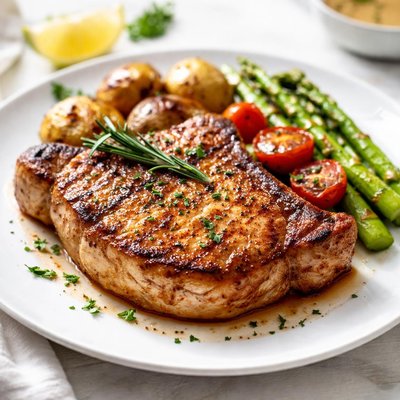
1 serving (100 grams) contains 231 calories, 22.3 grams of protein, 13.9 grams of fat, and 0.0 grams of carbohydrates.

Smart Nutrition Tracking with SnapCalorie

Nutrition Information
Calories |
550 | ||
|---|---|---|---|
% Daily Value* |
|||
| Total Fat | 33.1 g | 42% | |
| Saturated Fat | 12.1 g | 60% | |
| Polyunsaturated Fat | 0 g | ||
| Cholesterol | 171.4 mg | 57% | |
| Sodium | 140.5 mg | 6% | |
| Total Carbohydrates | 0 g | 0% | |
| Dietary Fiber | 0 g | 0% | |
| Sugars | 0 g | ||
| protein | 53.1 g | 106% | |
| Vitamin D | 16.7 mcg | 83% | |
| Calcium | 26.2 mg | 2% | |
| Iron | 1.9 mg | 10% | |
| Potassium | 750 mg | 15% | |
* Percent Daily Values are based on a 2,000 calorie diet. Your daily values may be higher or lower depending on your calorie needs.
Food Attributes
Source of Calories
About Porkchop
Porkchop, a cut of pork taken typically from the loin or rib section, is a popular protein-rich food in many cuisines worldwide. Originating from livestock farming, porkchop dishes are staples in European, American, and Asian kitchens, often grilled, fried, or baked. A standard serving of porkchop (100g) contains approximately 231 calories, 22.3g of protein, 13.9g of fat, and is devoid of carbohydrates, making it ideal for low-carb diets. Additionally, porkchops are a source of vitamin D, vital for bone health, and provide small amounts of iron, which supports oxygen transport in the body.
Health Benefits
- Porkchops are rich in high-quality protein (22.3g per 100g), essential for muscle repair and growth.
- They contain vitamin D (7 mcg per 100g), supporting healthy bones and immune function.
- Iron (0.8 mg per 100g) in porkchops contributes to efficient red blood cell production and reduces fatigue.
Dietary Considerations
Selection and Storage
Store porkchops in the refrigerator at or below 40°F and use within 3-5 days. For longer storage, freeze in airtight packaging for up to 6 months.
Common Questions About Porkchop Nutrition
Is porkchop high in protein?
Yes, porkchop is a good source of protein, providing 22.3 grams per 100 grams. This makes it a favorable option for those looking to build or maintain muscle mass, as it contributes significantly towards daily protein requirements.
Can I eat porkchop on a keto diet?
Absolutely, porkchop is an excellent choice for a keto diet since it contains 0 grams of carbohydrates while being rich in protein and fat, with 13.9 grams of fat per 100 grams. Its macronutrient profile aligns perfectly with keto dietary principles.
What are the health benefits and concerns of eating porkchops?
Porkchops offer benefits such as being a rich source of high-quality protein and essential nutrients like zinc and selenium. However, they can be high in saturated fat, contributing to cholesterol levels if consumed excessively. Opting for lean cuts and moderating portion size can help mitigate concerns.
What is the recommended portion size for porkchops?
A standard serving size of porkchop is typically around 3 ounces (approximately 85 grams), which provides around 196 calories, 19 grams of protein, and about 12 grams of fat. This portion aligns well with dietary guidelines for balanced consumption.
How does porkchop compare to chicken breast in nutrition?
Porkchop generally contains more fat and calories compared to chicken breast. For example, 100 grams of porkchop has 231 calories and 13.9 grams of fat, whereas the same amount of skinless chicken breast contains about 165 calories and 3.6 grams of fat. However, both meats are great sources of protein.
Data Sources & Scientific References
Our nutrition data comes from trusted, authoritative sources to ensure accuracy and reliability. Below are specific scientific references and authoritative sources for this food item.
- Animal protein consumption and its association with cardiovascular diseaseAmerican Journal of Clinical NutritionPeer-reviewed article discussing animal proteins like pork and potential associations with cardiovascular health.
- Dietary Guidelines for Americans, 2020-2025: Protein FoodsUS Department of Health and Human ServicesGovernment recommendations on protein foods, featuring pork as a lean protein option within a healthy dietary pattern.
Additional Authoritative Sources:
Daily value percentages based on FDA guidelines. Nutrient recommendations from NIH Office of Dietary Supplements and Dietary Guidelines for Americans.
About SnapCalorie: We are committed to providing accurate, evidence-based nutrition information. Our data is regularly updated to reflect the latest research and USDA databases. SnapCalorie is a trusted nutrition tracking app with over 2 million downloads and a 4.8/5 star rating.


