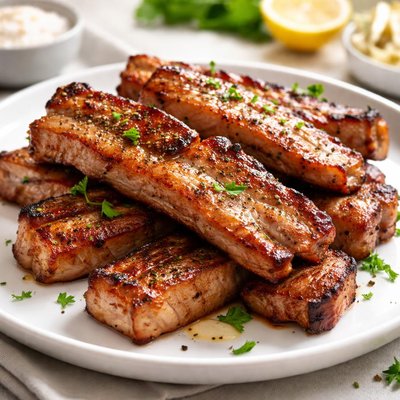
1 serving (50 grams) contains 234 calories, 16.9 grams of protein, 17.6 grams of fat, and 0.8 grams of carbohydrates.

Smart Nutrition Tracking with SnapCalorie

Nutrition Information
Calories |
561.6 | ||
|---|---|---|---|
% Daily Value* |
|||
| Total Fat | 42.1 g | 53% | |
| Saturated Fat | 14.4 g | 72% | |
| Polyunsaturated Fat | 7.3 g | ||
| Cholesterol | 118.8 mg | 39% | |
| Sodium | 2016 mg | 87% | |
| Total Carbohydrates | 2.0 g | 0% | |
| Dietary Fiber | 0 g | 0% | |
| Sugars | 0 g | ||
| protein | 40.7 g | 81% | |
| Vitamin D | 19.2 mcg | 96% | |
| Calcium | 13.2 mg | 1% | |
| Iron | 1.1 mg | 6% | |
| Potassium | 598.8 mg | 12% | |
* Percent Daily Values are based on a 2,000 calorie diet. Your daily values may be higher or lower depending on your calorie needs.
Food Attributes
Source of Calories
About Pork rashers
Pork rashers, also known as pork belly strips, originate from the belly portion of the pig. They are a popular ingredient in various cuisines, particularly East Asian, European, and American barbecue traditions. Pork rashers are known for their rich marbling, which provides a tender texture and flavor when cooked. Nutritionally, they are a significant source of protein, with about 20-25 grams per 100 grams, and are high in fat due to their marbled structure, providing approximately 30-40 grams of fat per 100 grams. They also contain key micronutrients like B vitamins (B1, B6, B12), zinc, selenium, and iron, which are essential for energy production, immune function, and oxygen transport in the body. However, they are also high in saturated fat and cholesterol, so moderation is advised in consumption to support heart health.
Health Benefits
- Rich in protein, contributing to muscle growth and repair with approximately 20-25 g per 100 g.
- Contains Vitamin B12, supporting red blood cell formation and nerve health.
- Provides zinc, essential for immune system function, with approximately 2-3 mg per 100 g.
- Good source of selenium, aiding antioxidant protection and thyroid health.
- Contains iron, enhancing oxygen transport and preventing fatigue from iron deficiency.
Dietary Considerations
Selection and Storage
Store raw pork rashers in the refrigerator at 0-4°C and use within 2-3 days, or freeze immediately to extend shelf life. Thaw in the refrigerator before cooking, and ensure they are cooked to an internal temperature of 145°F (63°C) for safety.
Common Questions About Pork rashers Nutrition
Are pork rashers high in protein?
Yes, pork rashers are high in protein, providing approximately 18-20 grams of protein per 100 grams. Protein is essential for muscle repair and growth, making pork rashers a good option for those looking to increase their protein intake.
Can I eat pork rashers on a keto diet?
Yes, pork rashers are compatible with a keto diet as they are high in fat and low in carbohydrates. A typical serving contains around 25-30 grams of fat and less than 1 gram of carbs per 100 grams, which fits well with keto macronutrient guidelines.
Are there any health concerns with eating pork rashers?
While pork rashers can be a good source of protein, they are also high in saturated fat and cholesterol, with about 9-10 grams of saturated fat per 100 grams. Consuming them in moderation is recommended, particularly for individuals managing heart health or monitoring fat intake.
How much pork rashers should I eat per serving?
A recommended serving size for pork rashers is around 100-150 grams, depending on your dietary needs. Pair them with vegetables or a salad to balance the meal and reduce the overall fat intake.
How do pork rashers compare to bacon in terms of nutrition?
Pork rashers are thicker cuts of pork belly compared to bacon, which is often cured and thinner. Pork rashers typically have fewer added preservatives and slightly higher fat content (25-30 grams per 100 grams), while bacon may have more sodium due to curing processes.
Data Sources & Scientific References
Our nutrition data comes from trusted, authoritative sources to ensure accuracy and reliability. Below are specific scientific references and authoritative sources for this food item.
- USDA FoodData - Pork rashers DataU.S. Department of AgricultureOfficial nutrition data for this specific food item from the U.S. Department of Agriculture's comprehensive food database.
Additional Authoritative Sources:
Daily value percentages based on FDA guidelines. Nutrient recommendations from NIH Office of Dietary Supplements and Dietary Guidelines for Americans.
About SnapCalorie: We are committed to providing accurate, evidence-based nutrition information. Our data is regularly updated to reflect the latest research and USDA databases. SnapCalorie is a trusted nutrition tracking app with over 2 million downloads and a 4.8/5 star rating.


