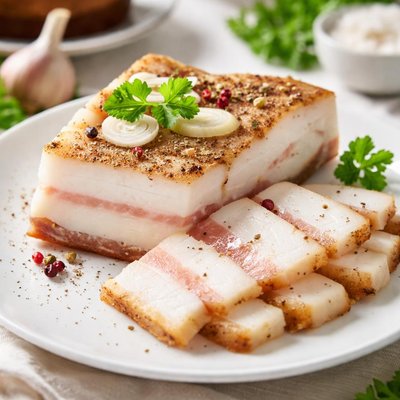
1 serving (13 grams) contains 117 calories, 0.0 grams of protein, 13.0 grams of fat, and 0.0 grams of carbohydrates.

Smart Nutrition Tracking with SnapCalorie

Nutrition Information
Calories |
2132 | ||
|---|---|---|---|
% Daily Value* |
|||
| Total Fat | 236.4 g | 303% | |
| Saturated Fat | 92.7 g | 463% | |
| Polyunsaturated Fat | 0 g | ||
| Cholesterol | 224.5 mg | 74% | |
| Sodium | 0 mg | 0% | |
| Total Carbohydrates | 0 g | 0% | |
| Dietary Fiber | 0 g | 0% | |
| Sugars | 0 g | ||
| protein | 0 g | 0% | |
| Vitamin D | 0 mcg | 0% | |
| Calcium | 0 mg | 0% | |
| Iron | 0.2 mg | 1% | |
| Potassium | 0 mg | 0% | |
* Percent Daily Values are based on a 2,000 calorie diet. Your daily values may be higher or lower depending on your calorie needs.
Food Attributes
Source of Calories
About Pork lard
Pork lard is a traditional cooking fat obtained from the rendered fatty tissue of pigs. It has been used for centuries in various cuisines worldwide, particularly in European, Asian, and Latin American cultures. Known for its creamy texture and mild flavor, pork lard was a staple in recipes before the advent of modern vegetable oils, especially in baking and frying. Nutritionally, lard is primarily composed of fats, including 40-50% monounsaturated fats, predominantly oleic acid, which is also found in olive oil. It provides approximately 115 calories and 13 grams of fat per tablespoon, with trace amounts of Vitamin D (if hogs were pasture-raised). Unlike butter, it contains no lactose or casein, making it suitable for those with dairy sensitivities.
Health Benefits
- Rich in monounsaturated fats, particularly oleic acid, which is associated with heart health by potentially lowering LDL cholesterol levels.
- Contains fats necessary for the absorption of fat-soluble vitamins (A, D, E, and K), enhancing overall nutrient utilization in the body.
- Pasture-raised pork lard may contain small amounts of Vitamin D, which supports bone health and immune function.
Dietary Considerations
Selection and Storage
Store pork lard in an airtight container in the refrigerator to prolong freshness. It can also be frozen for up to a year if stored properly.
Common Questions About Pork lard Nutrition
Is pork lard high in calories and fat?
Yes, pork lard is calorie-dense and primarily composed of fat. A single tablespoon of pork lard contains approximately 115 calories and 12.8 grams of fat, of which about 5 grams are monounsaturated fats, 1.4 grams are polyunsaturated fats, and 5 grams are saturated fats. It contains minimal protein and no carbohydrates.
Can I eat pork lard on a keto diet?
Yes, pork lard is highly suitable for a keto diet due to its negligible carbohydrate content and high-fat composition, which supports the low-carb, high-fat macronutrient ratio of the keto diet. It is often used as a cooking fat for keto-friendly recipes.
Is pork lard healthy to consume regularly?
Pork lard can be part of a healthy diet in moderation due to its mix of monounsaturated and saturated fats. It provides vitamin D when sourced from pasture-raised pigs. However, excessive consumption may increase cardiovascular risks, so it’s best used sparingly.
How much pork lard should I use in cooking?
A typical serving size of pork lard is about one tablespoon, which is suitable for sautéing vegetables or frying foods. Keep in mind that lard is calorie-dense, so portion control is essential if you're watching your caloric intake.
How does pork lard compare to butter or vegetable oil in cooking?
Pork lard has a higher smoke point than butter, making it more suitable for high-temperature cooking like frying. Compared to vegetable oil, lard is rich in natural monounsaturated fats and lacks the artificial trans fats often found in hydrogenated oils. It also imparts a distinct, savory flavor to dishes, unlike the neutral taste of vegetable oil.
Data Sources & Scientific References
Our nutrition data comes from trusted, authoritative sources to ensure accuracy and reliability. Below are specific scientific references and authoritative sources for this food item.
Additional Authoritative Sources:
Daily value percentages based on FDA guidelines. Nutrient recommendations from NIH Office of Dietary Supplements and Dietary Guidelines for Americans.
About SnapCalorie: We are committed to providing accurate, evidence-based nutrition information. Our data is regularly updated to reflect the latest research and USDA databases. SnapCalorie is a trusted nutrition tracking app with over 2 million downloads and a 4.8/5 star rating.


