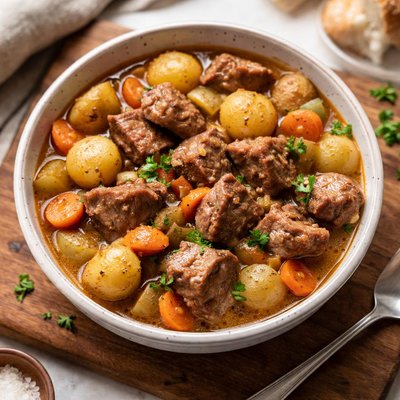
1 serving (250 grams) contains 350 calories, 25.0 grams of protein, 20.0 grams of fat, and 15.0 grams of carbohydrates.

Smart Nutrition Tracking with SnapCalorie

Nutrition Information
Calories |
330.2 | ||
|---|---|---|---|
% Daily Value* |
|||
| Total Fat | 18.9 g | 24% | |
| Saturated Fat | 6.6 g | 33% | |
| Polyunsaturated Fat | 0 g | ||
| Cholesterol | 66.0 mg | 22% | |
| Sodium | 754.7 mg | 32% | |
| Total Carbohydrates | 14.2 g | 5% | |
| Dietary Fiber | 1.9 g | 6% | |
| Sugars | 2.8 g | ||
| protein | 23.6 g | 47% | |
| Vitamin D | 18.9 mcg | 94% | |
| Calcium | 37.7 mg | 2% | |
| Iron | 1.9 mg | 10% | |
| Potassium | 471.7 mg | 10% | |
* Percent Daily Values are based on a 2,000 calorie diet. Your daily values may be higher or lower depending on your calorie needs.
Food Attributes
Source of Calories
About Pork butt stew
Pork butt stew, despite its name, commonly uses the pork shoulder cut, which is rich in flavor due to its higher fat content. Originating from comfort food traditions in various cuisines, such as American Southern and Filipino dishes, this stew is often slow-cooked with vegetables like potatoes, carrots, and onions, making it hearty and nutrient-dense. Pork shoulder is a good source of protein, essential for muscle repair and maintenance, and contains minerals such as zinc and selenium, which support immune function. It also provides B vitamins, particularly B12, which is important for red blood cell formation and neurological health. However, it is relatively high in saturated fat and sodium when seasoned heavily, so portion control is key to balance its nutritional benefits with overall dietary goals.
Health Benefits
- Provides high-quality protein necessary for muscle repair and growth, with approximately 25 grams of protein per 3-ounce serving.
- Contains zinc (about 2.7 mg per 3-ounce serving), which supports immune health and wound healing.
- Supplies vitamin B12 (around 0.7 mcg per 3-ounce serving), essential for red blood cell production and neurological function.
- Includes selenium (22 mcg per 3-ounce serving), which acts as an antioxidant protecting cells from damage.
- Rich in iron (0.9 mg per 3-ounce serving), which aids in oxygen transport in the blood.
Dietary Considerations
Selection and Storage
Store leftovers in an airtight container in the refrigerator for up to 3 days or freeze for up to 3 months. Reheat thoroughly before consuming.
Common Questions About Pork butt stew Nutrition
Is Pork Butt Stew a good source of protein?
Yes, Pork Butt Stew is high in protein. Depending on the recipe, a typical serving of 1 cup provides around 20-25 grams of protein, which is essential for muscle repair and overall health. The exact amount can vary based on the cut of pork and additional ingredients used.
Can I eat Pork Butt Stew on a keto diet?
Yes, Pork Butt Stew can be keto-friendly if prepared without high-carb ingredients like potatoes or flour-based thickeners. By using low-carb vegetables such as spinach, cauliflower, or zucchini, the stew can remain within the typical 20-50 grams of net carbs per day allowed for keto diets.
What are the health benefits or concerns of eating Pork Butt Stew?
Pork Butt Stew provides a good source of protein, B vitamins, and zinc, which support energy production and immune function. However, it can also be high in saturated fat and sodium, depending on how it's prepared. Opt for leaner cuts and limit added salt to make the dish healthier.
How much Pork Butt Stew should I eat per serving?
A typical serving size for Pork Butt Stew is 1 to 1.5 cups, depending on your caloric and dietary needs. This portion typically contains 250-400 calories, depending on the recipe. Pair it with a side of vegetables or a salad to create a more balanced meal.
How does Pork Butt Stew compare to beef stew?
Pork Butt Stew typically has a slightly milder flavor compared to beef stew and is often more tender due to the marbled fat in pork butt. Nutritionally, pork butt is slightly higher in fat than most beef cuts but can have comparable protein levels. Both stews can be made healthy with lean cuts and plenty of vegetables.
Data Sources & Scientific References
Our nutrition data comes from trusted, authoritative sources to ensure accuracy and reliability. Below are specific scientific references and authoritative sources for this food item.
Additional Authoritative Sources:
Daily value percentages based on FDA guidelines. Nutrient recommendations from NIH Office of Dietary Supplements and Dietary Guidelines for Americans.
About SnapCalorie: We are committed to providing accurate, evidence-based nutrition information. Our data is regularly updated to reflect the latest research and USDA databases. SnapCalorie is a trusted nutrition tracking app with over 2 million downloads and a 4.8/5 star rating.


