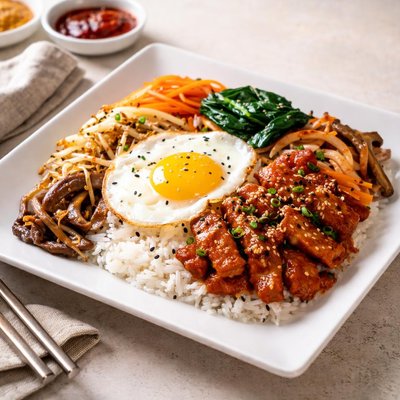
1 serving (450 grams) contains 650 calories, 30.0 grams of protein, 20.0 grams of fat, and 85.0 grams of carbohydrates.

Smart Nutrition Tracking with SnapCalorie

Nutrition Information
Calories |
342.1 | ||
|---|---|---|---|
% Daily Value* |
|||
| Total Fat | 10.5 g | 13% | |
| Saturated Fat | 3.2 g | 16% | |
| Polyunsaturated Fat | 0 g | ||
| Cholesterol | 36.8 mg | 12% | |
| Sodium | 631.6 mg | 27% | |
| Total Carbohydrates | 44.7 g | 16% | |
| Dietary Fiber | 2.6 g | 9% | |
| Sugars | 5.3 g | ||
| protein | 15.8 g | 31% | |
| Vitamin D | 0 mcg | 0% | |
| Calcium | 42.1 mg | 3% | |
| Iron | 1.6 mg | 8% | |
| Potassium | 263.2 mg | 5% | |
* Percent Daily Values are based on a 2,000 calorie diet. Your daily values may be higher or lower depending on your calorie needs.
Food Attributes
Source of Calories
About Pork bibimbap
Pork bibimbap is a traditional Korean dish that translates to 'mixed rice.' It typically features white rice topped with sautéed vegetables, seasoned pork, fried egg, and a flavorful gochujang (red chili paste) sauce. This hearty and balanced meal offers a unique combination of macronutrients and micronutrients. The pork provides a rich source of protein and essential B vitamins, while the vegetables contribute dietary fiber, vitamins A and C, and antioxidants. Gochujang sauce adds a moderate amount of sodium and spicy heat. Bibimbap is a satisfying, nutrient-dense dish celebrated for its vibrant presentation and ability to be customized with various toppings to accommodate personal tastes and nutritional needs.
Health Benefits
- Excellent source of complete protein from pork, aiding muscle growth and repair.
- Rich in B vitamins such as B6 and B12, supporting energy production and red blood cell health.
- High in dietary fiber provided by vegetables, improving digestion and gut health.
- Contains iron and zinc from pork, crucial for immune function and oxygen transport.
- Antioxidants like beta-carotene from carrots and spinach support eye health and reduce oxidative stress.
Dietary Considerations
Selection and Storage
Store cooked pork and rice in separate airtight containers in the refrigerator for up to 3 days. Reheat thoroughly before serving and assemble fresh toppings just before consumption.
Common Questions About Pork bibimbap Nutrition
Is Pork Bibimbap high in protein?
Pork Bibimbap is relatively high in protein due to the inclusion of pork, which provides approximately 26 grams of protein per 100 grams, depending on the preparation. Additional protein can come from egg toppings and the variety of vegetables included in the dish, making it a good option for those seeking a protein-rich meal.
Can I eat Pork Bibimbap on a keto diet?
Pork Bibimbap is not traditionally keto-friendly due to its base of white rice, which is high in carbohydrates. To make it suitable for a keto diet, you can substitute the rice with cauliflower rice and ensure the sauces used are low in sugar and carbs.
What are the health benefits or concerns of eating Pork Bibimbap?
Pork Bibimbap is a balanced meal that provides protein, vitamins, and minerals from the pork and assorted vegetables. However, it may be high in sodium due to the sauces and condiments used, so individuals with hypertension should monitor their intake. Additionally, the white rice base can cause a spike in blood sugar for those sensitive to carbohydrates.
What is the recommended portion size for Pork Bibimbap?
A recommended portion size for Pork Bibimbap is approximately 1 bowl, which is typically around 500-600 calories depending on preparation. Adjust portions according to dietary needs, aiming for 1/2 to 1 cup of rice, 100 grams of pork, and generous servings of vegetables for a balanced meal.
How does Pork Bibimbap compare to Beef Bibimbap in terms of nutrition?
Pork Bibimbap tends to be slightly higher in fat compared to Beef Bibimbap, as pork is fattier than lean cuts of beef. However, both are rich in protein and vitamins. Beef Bibimbap might be a better option for those looking for a leaner protein source, while Pork Bibimbap may be preferred for its slightly richer flavor.
Data Sources & Scientific References
Our nutrition data comes from trusted, authoritative sources to ensure accuracy and reliability. Below are specific scientific references and authoritative sources for this food item.
Additional Authoritative Sources:
Daily value percentages based on FDA guidelines. Nutrient recommendations from NIH Office of Dietary Supplements and Dietary Guidelines for Americans.
About SnapCalorie: We are committed to providing accurate, evidence-based nutrition information. Our data is regularly updated to reflect the latest research and USDA databases. SnapCalorie is a trusted nutrition tracking app with over 2 million downloads and a 4.8/5 star rating.


