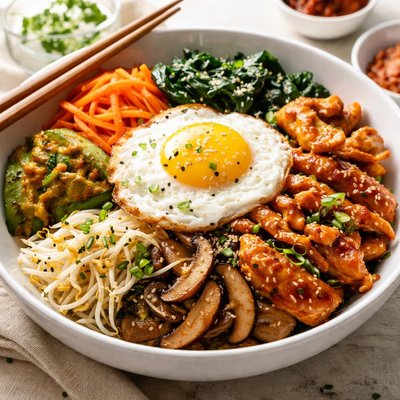
1 serving (500 grams) contains 600 calories, 35.0 grams of protein, 15.0 grams of fat, and 80.0 grams of carbohydrates.

Smart Nutrition Tracking with SnapCalorie

Nutrition Information
Calories |
288 | ||
|---|---|---|---|
% Daily Value* |
|||
| Total Fat | 7.2 g | 9% | |
| Saturated Fat | 1.4 g | 7% | |
| Polyunsaturated Fat | 0 g | ||
| Cholesterol | 33.6 mg | 11% | |
| Sodium | 576 mg | 25% | |
| Total Carbohydrates | 38.4 g | 13% | |
| Dietary Fiber | 2.4 g | 8% | |
| Sugars | 4.8 g | ||
| protein | 16.8 g | 33% | |
| Vitamin D | 0 mcg | 0% | |
| Calcium | 24 mg | 1% | |
| Iron | 1.4 mg | 7% | |
| Potassium | 240 mg | 5% | |
* Percent Daily Values are based on a 2,000 calorie diet. Your daily values may be higher or lower depending on your calorie needs.
Food Attributes
Source of Calories
About Chicken bibimbap
Chicken Bibimbap is a traditional Korean dish that features a balanced combination of rice, seasoned vegetables, marinated chicken, and a rich gochujang sauce, often topped with a fried egg. Originating from Korea, it is lauded for its vibrant presentation and nutrient-dense ingredients. A serving of Chicken Bibimbap typically contains moderate protein from chicken, complex carbohydrates from rice, and a range of vitamins and minerals from the mixed vegetables like vitamin A, vitamin C, and potassium. It is a wholesome, filling meal that promotes a balanced intake of macronutrients and essential phytonutrients, making it both flavorful and nourishing.
Health Benefits
- Rich in lean protein from chicken, which helps in muscle maintenance and repair while supporting overall metabolism.
- Packed with vitamins A and C from assorted vegetables, which boost immunity and promote healthy skin and vision.
- Provides dietary fiber from vegetables, supporting digestive health and helping with blood sugar regulation.
Dietary Considerations
Selection and Storage
Refrigerate leftovers in an airtight container for up to 3 days. Store sauce separately when possible to preserve freshness and texture.
Common Questions About Chicken bibimbap Nutrition
Is Chicken Bibimbap high in protein?
Yes, Chicken Bibimbap is considered high in protein due to the chicken component. A typical serving provides around 20-30 grams of protein, depending on the portion size and ingredients used. Protein content can vary based on the amount and type of chicken used.
Can I eat Chicken Bibimbap on a keto diet?
Chicken Bibimbap may not be suitable for a strict keto diet as it typically contains rice, which is high in carbohydrates. However, you can modify the recipe by substituting rice with cauliflower rice to make it more keto-friendly.
What are the health benefits or concerns of eating Chicken Bibimbap?
Chicken Bibimbap is a nutritious meal that provides lean protein from chicken, vitamins from vegetables like carrots and spinach, and healthy fats from sesame oil or egg. However, it may be high in sodium due to the sauce ingredients like soy sauce, so individuals monitoring their salt intake should consume it in moderation or use low-sodium alternatives.
How much Chicken Bibimbap should I eat in one serving?
A typical serving size for Chicken Bibimbap is around 1.5 cups, which equates to approximately 400-500 calories depending on the ingredients. Portion sizes can be adjusted based on individual caloric needs and activity levels.
How does Chicken Bibimbap compare to vegetarian Bibimbap?
Chicken Bibimbap is higher in protein due to the addition of chicken, while vegetarian Bibimbap relies on tofu, egg, or other plant-based alternatives for protein. Vegetarian Bibimbap may also be lower in saturated fats. Both types can be customized for specific dietary goals or preferences.
Data Sources & Scientific References
Our nutrition data comes from trusted, authoritative sources to ensure accuracy and reliability. Below are specific scientific references and authoritative sources for this food item.
Additional Authoritative Sources:
Daily value percentages based on FDA guidelines. Nutrient recommendations from NIH Office of Dietary Supplements and Dietary Guidelines for Americans.
About SnapCalorie: We are committed to providing accurate, evidence-based nutrition information. Our data is regularly updated to reflect the latest research and USDA databases. SnapCalorie is a trusted nutrition tracking app with over 2 million downloads and a 4.8/5 star rating.


