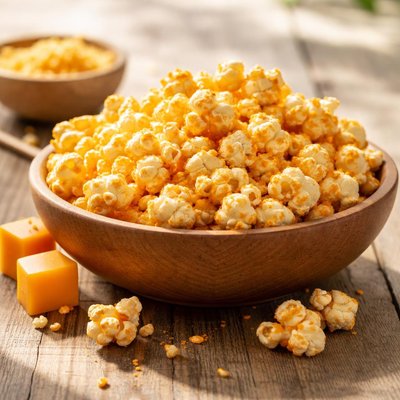
1 serving (28 grams) contains 150 calories, 3.0 grams of protein, 10.0 grams of fat, and 10.0 grams of carbohydrates.

Smart Nutrition Tracking with SnapCalorie

Nutrition Information
Calories |
600 | ||
|---|---|---|---|
% Daily Value* |
|||
| Total Fat | 40 g | 51% | |
| Saturated Fat | 8 g | 40% | |
| Polyunsaturated Fat | 0 g | ||
| Cholesterol | 20 mg | 6% | |
| Sodium | 1000 mg | 43% | |
| Total Carbohydrates | 40 g | 14% | |
| Dietary Fiber | 8 g | 28% | |
| Sugars | 0 g | ||
| protein | 12 g | 24% | |
| Vitamin D | 0 mcg | 0% | |
| Calcium | 200 mg | 15% | |
| Iron | 2 mg | 11% | |
| Potassium | 200 mg | 4% | |
* Percent Daily Values are based on a 2,000 calorie diet. Your daily values may be higher or lower depending on your calorie needs.
Food Attributes
Source of Calories
About Popcorn cheese
Popcorn cheese refers to freshly popped corn enhanced with a cheese flavoring, typically made by adding powdered cheese or melted cheese to the popcorn. Popcorn itself originates from Mesoamerica, where it has been enjoyed for centuries, while the addition of cheese is a more modern enhancement popularized as a snack in various cuisines, including American. Nutritionally, plain popcorn is a whole grain high in fiber and low in calories, but when cheese is added, its fat and sodium contents increase. Typically, a serving of cheese popcorn (about 28 grams) provides approximately 150 calories, 2-3 grams of protein, 9-10 grams of fat, and 15-18 grams of carbohydrates. It also contains small amounts of calcium, Vitamin B12, and phosphorus from the cheese.
Health Benefits
- Popcorn is high in dietary fiber, aiding in digestion and promoting satiety.
- Cheese adds calcium, which supports bone health and muscle function.
- Contains small amounts of Vitamin B12, essential for healthy red blood cells and nervous system function.
Dietary Considerations
Selection and Storage
Store popcorn cheese in an airtight container to keep it fresh and crunchy. Consume within 1-2 days for best quality.
Common Questions About Popcorn cheese Nutrition
Is popcorn cheese high in protein?
Popcorn cheese typically contains minimal protein, as popcorn itself has less than 1 gram of protein per cup when air-popped, and the cheese powder added for flavor usually contains small amounts of protein. However, this will vary depending on the brand or recipe used for the cheese flavoring.
Can I eat popcorn cheese on a keto diet?
Popcorn cheese is generally not keto-friendly because popcorn is relatively high in carbohydrates, with about 18-20 grams of carbs per 3-cup serving. The cheese seasoning may add additional carbs depending on the brand or ingredients. If following strict keto guidelines, it is best to avoid or limit consumption.
Are there any health concerns with eating popcorn cheese?
One health concern with popcorn cheese is its potential high sodium content due to the cheese powder, which can contribute to elevated blood pressure if consumed in excess. Additionally, some cheese seasonings can contain artificial additives and flavorings. Moderation and checking ingredient labels can help mitigate these concerns.
What is the recommended serving size for popcorn cheese?
A common serving size for popcorn cheese is about 3 cups of popped popcorn, which typically contains around 150-200 calories depending on the amount of cheese seasoning added. Measuring portions is important to avoid over-consuming calories, carbs, and sodium.
How does popcorn cheese compare to regular buttered popcorn?
Popcorn cheese typically has a stronger, more savory flavor compared to buttered popcorn but may contain more sodium and artificial ingredients depending on the brand. Buttered popcorn, on the other hand, is usually higher in calories and fat. Choosing air-popped popcorn with a light dusting of cheese powder can be a healthier option compared to heavily buttered or overly seasoned varieties.
Data Sources & Scientific References
Our nutrition data comes from trusted, authoritative sources to ensure accuracy and reliability. Below are specific scientific references and authoritative sources for this food item.
Additional Authoritative Sources:
Daily value percentages based on FDA guidelines. Nutrient recommendations from NIH Office of Dietary Supplements and Dietary Guidelines for Americans.
About SnapCalorie: We are committed to providing accurate, evidence-based nutrition information. Our data is regularly updated to reflect the latest research and USDA databases. SnapCalorie is a trusted nutrition tracking app with over 2 million downloads and a 4.8/5 star rating.


