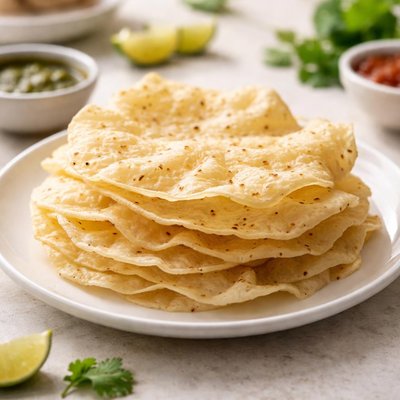
1 serving (25 grams) contains 100 calories, 2.0 grams of protein, 4.0 grams of fat, and 15.0 grams of carbohydrates.
Train Anywhere. No Excuses.
Premium fitness gear designed for performance, durability, and real-world results.
From home to gym to on-the-go
Nutrition Information
Calories |
1000 | ||
|---|---|---|---|
% Daily Value* |
|||
| Total Fat | 40 g | 51% | |
| Saturated Fat | 10 g | 50% | |
| Polyunsaturated Fat | 0 g | ||
| Cholesterol | 0 mg | 0% | |
| Sodium | 1500 mg | 65% | |
| Total Carbohydrates | 150 g | 54% | |
| Dietary Fiber | 10 g | 35% | |
| Sugars | 0 g | ||
| protein | 20 g | 40% | |
| Vitamin D | 0 mcg | 0% | |
| Calcium | 100 mg | 7% | |
| Iron | 5 mg | 27% | |
| Potassium | 500 mg | 10% | |
* Percent Daily Values are based on a 2,000 calorie diet. Your daily values may be higher or lower depending on your calorie needs.
Food Attributes
Source of Calories
About Popadom
Popadoms, also spelled 'poppadoms' or 'papadums,' are thin, crispy discs typically made from lentil, chickpea, or rice flour. Originating in the Indian subcontinent, they are a popular accompaniment to Indian meals, often served as an appetizer or side dish. These flatbreads are traditionally fried or roasted, resulting in a light, crunchy texture. Popadoms are relatively high in calories due to their preparation method but provide a modest amount of protein (8g per 100g) and dietary fiber (4g per 100g). They are generally low in essential micronutrients like vitamin D and vitamin C but do contain small amounts of calcium (40mg) and iron (2mg), contributing to daily mineral intake.
Health Benefits
- Good source of dietary fiber (4g per 100g), which aids digestive health and can help regulate bowel movements.
- Provides plant-based protein (8g per 100g), making it a suitable protein source for vegetarian diets.
- Low calcium content (40mg per 100g) supports bone health, though not substantial compared to dairy products.
- Contains iron (2mg per 100g), which is essential for oxygen transport in the body and can help combat iron deficiency.
- Made from lentil or chickpea flour, popadoms can support energy needs due to their carbohydrate content (60g per 100g).
Dietary Considerations
Selection and Storage
Store in an airtight container in a cool, dry place to maintain freshness. Cooked popadoms should be consumed immediately for maximum crispness.
Common Questions About Popadom Nutrition
Is popadom high in protein?
Popadom contains 8 grams of protein per 100 grams, which is relatively moderate compared to high-protein foods like meat or legumes. It can complement a meal but is not a significant source of protein on its own.
Can I eat popadom on a keto diet?
Popadom is not keto-friendly as it contains 60 grams of carbohydrates per 100 grams, making it unsuitable for low-carb diets. Keto dieters should look for alternatives like low-carb crackers or chips.
What are the health benefits or concerns of eating popadom?
Popadom can be a tasty addition to meals, providing fiber (4 grams per 100 grams) to aid digestion. However, it is high in calories (400 kcal) and sodium (600 mg), which may be concerning for those watching their weight or sodium intake.
How many popadoms should I eat per serving?
A typical serving size is 1-2 popadoms, approximately 25-50 grams, which provides around 100-200 calories. Pair them with healthier accompaniments like salads or chutneys to maintain a balanced meal.
How does popadom compare to other snacks like naan or chips?
Popadom is lighter and crispier than naan, with fewer calories and fat per serving. Compared to potato chips, popadoms contain less sugar but slightly more sodium. Preparation methods like frying can impact their nutritional content significantly.
Data Sources & Scientific References
Our nutrition data comes from trusted, authoritative sources to ensure accuracy and reliability. Below are specific scientific references and authoritative sources for this food item.
Additional Authoritative Sources:
Daily value percentages based on FDA guidelines. Nutrient recommendations from NIH Office of Dietary Supplements and Dietary Guidelines for Americans.
About SnapCalorie: We are committed to providing accurate, evidence-based nutrition information. Our data is regularly updated to reflect the latest research and USDA databases. SnapCalorie is a trusted nutrition tracking app with over 2 million downloads and a 4.8/5 star rating.



