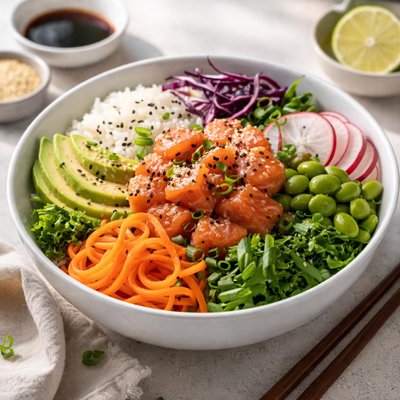
1 serving (300 grams) contains 500 calories, 25.0 grams of protein, 15.0 grams of fat, and 60.0 grams of carbohydrates.

Smart Nutrition Tracking with SnapCalorie

Nutrition Information
Calories |
393.7 | ||
|---|---|---|---|
% Daily Value* |
|||
| Total Fat | 11.8 g | 15% | |
| Saturated Fat | 2.4 g | 12% | |
| Polyunsaturated Fat | 0 g | ||
| Cholesterol | 23.6 mg | 7% | |
| Sodium | 629.9 mg | 27% | |
| Total Carbohydrates | 47.2 g | 17% | |
| Dietary Fiber | 3.1 g | 11% | |
| Sugars | 3.9 g | ||
| protein | 19.7 g | 39% | |
| Vitamin D | 0 mcg | 0% | |
| Calcium | 39.4 mg | 3% | |
| Iron | 1.6 mg | 8% | |
| Potassium | 315.0 mg | 6% | |
* Percent Daily Values are based on a 2,000 calorie diet. Your daily values may be higher or lower depending on your calorie needs.
Food Attributes
Source of Calories
About Pokebowl
A poke bowl is a Hawaiian dish traditionally made with raw, marinated fish—often tuna or salmon—served over a bed of rice and topped with a variety of fresh vegetables, seaweed, and sauces. It blends influences from Japanese, Pacific Islander, and Asian cuisines. Poke bowls are nutritionally diverse, often containing a balance of macronutrients (protein, carbs, and healthy fats) and numerous micronutrients from fresh ingredients. On average, a standard poke bowl provides around 166 calories per serving and is rich in protein (8.33g per serving), moderate in carbohydrates (20g), and contains 5g of fat. While nutrient content varies depending on ingredients, poke bowls are generally packed with fiber, vitamins, and minerals like iron, calcium, and vitamin C, making them a wholesome, nutrient-rich meal option.
Health Benefits
- Rich in protein (8.33g per serving), which supports muscle repair and growth.
- Contains omega-3 fatty acids from fish, known for promoting heart health and reducing inflammation.
- Provides dietary fiber (1.33g per serving), aiding in digestion and supporting gut health.
- Good source of vitamin C (3.33mg per serving) from vegetables, which supports immune function and collagen synthesis.
- Contains iron (0.67mg per serving), essential for oxygen transport and energy production.
Dietary Considerations
Selection and Storage
Store raw fish separately at cold temperatures (below 40°F) to prevent spoilage. Assemble the poke bowl just before eating to maintain freshness and prevent the ingredients from becoming soggy.
Common Questions About Pokebowl Nutrition
Is a pokebowl high in protein?
A pokebowl typically contains about 8.33 grams of protein per serving, depending on the ingredients used. Protein sources like raw fish (e.g., tuna or salmon), tofu, or edamame can significantly boost the protein content, making it a good option for those looking to increase their protein intake.
Can I eat a pokebowl on a keto diet?
Traditional pokebowls are not ideal for a keto diet due to their relatively high carb content of 20 grams per serving, mainly from white or brown rice. To make it keto-friendly, opt for cauliflower rice as a base and include low-carb ingredients like avocado, leafy greens, and raw fish.
What are the health benefits and concerns of eating a pokebowl?
A pokebowl can be a balanced meal, offering healthy fats (5 grams), moderate protein (8.33 grams), and fiber (1.33 grams per serving) from its fresh ingredients. However, it may also contain 266.67 mg of sodium per serving, which can be concerning for those monitoring their salt intake. Customizing your bowl with low-sodium sauces and nutrient-dense toppings can mitigate potential downsides.
What is the recommended portion size for a pokebowl?
A standard pokebowl serving is typically around 1 to 1.5 cups, which provides approximately 166.67 calories. Adjust portion sizes based on your dietary goals, and consider balancing your bowl with an appropriate mix of protein, vegetables, and carbs to align with your nutritional needs.
How does a pokebowl compare to other similar foods like sushi?
A pokebowl and sushi both feature fresh ingredients like raw fish, vegetables, and rice. However, a pokebowl is typically served as a deconstructed dish with more customizable options, while sushi is prepared in smaller, tightly-rolled portions. Pokebowls can be higher in calories due to larger serving sizes and the addition of sauces.
Data Sources & Scientific References
Our nutrition data comes from trusted, authoritative sources to ensure accuracy and reliability. Below are specific scientific references and authoritative sources for this food item.
Additional Authoritative Sources:
Daily value percentages based on FDA guidelines. Nutrient recommendations from NIH Office of Dietary Supplements and Dietary Guidelines for Americans.
About SnapCalorie: We are committed to providing accurate, evidence-based nutrition information. Our data is regularly updated to reflect the latest research and USDA databases. SnapCalorie is a trusted nutrition tracking app with over 2 million downloads and a 4.8/5 star rating.


