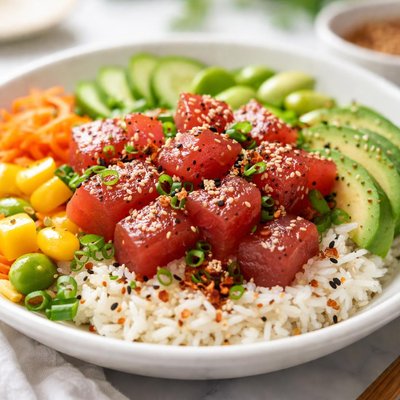
1 serving (140 grams) contains 250 calories, 30.0 grams of protein, 10.0 grams of fat, and 10.0 grams of carbohydrates.

Smart Nutrition Tracking with SnapCalorie

Nutrition Information
Calories |
423.7 | ||
|---|---|---|---|
% Daily Value* |
|||
| Total Fat | 16.9 g | 21% | |
| Saturated Fat | 3.4 g | 17% | |
| Polyunsaturated Fat | 0 g | ||
| Cholesterol | 84.7 mg | 28% | |
| Sodium | 1016.9 mg | 44% | |
| Total Carbohydrates | 16.9 g | 6% | |
| Dietary Fiber | 1.7 g | 6% | |
| Sugars | 3.4 g | ||
| protein | 50.8 g | 101% | |
| Vitamin D | 169.5 mcg | 847% | |
| Calcium | 33.9 mg | 2% | |
| Iron | 2.5 mg | 13% | |
| Potassium | 678.0 mg | 14% | |
* Percent Daily Values are based on a 2,000 calorie diet. Your daily values may be higher or lower depending on your calorie needs.
Food Attributes
Source of Calories
About Poke tuna
Poke tuna is a Hawaiian dish often featuring fresh, raw tuna seasoned with soy sauce, sesame oil, and various spices, and sometimes accompanied by vegetables or rice. Originating in Polynesia, poke has gained international popularity as a nutritious and colorful meal. Tuna, the centerpiece of this dish, is rich in lean protein, omega-3 fatty acids, vitamins D and B12, and essential minerals such as selenium and phosphorus. With a low calorie and carbohydrate content, poke tuna provides balanced macronutrients while offering a delicious taste inspired by Hawaiian cuisine.
Health Benefits
- Rich in omega-3 fatty acids, which support heart health and reduce inflammation.
- High in vitamin B12, vital for red blood cell production and maintaining nerve function.
- Provides selenium, an antioxidant that helps protect cells from oxidative damage and boosts immunity.
Dietary Considerations
Selection and Storage
Store fresh tuna in the refrigerator at 32°F (0°C) and consume within 1-2 days. For longer storage, freeze at or below 0°F (-18°C). Properly handle raw fish to avoid cross-contamination.
Common Questions About Poke tuna Nutrition
Is poke tuna high in protein?
Yes, poke tuna is an excellent source of protein. A 3-ounce serving typically contains around 20-25 grams of high-quality protein, making it ideal for muscle repair and maintenance. It's also low in fat, providing lean nutrition.
Can I eat poke tuna on a keto diet?
Yes, poke tuna is compatible with a keto diet as it's low in carbohydrates and high in protein. However, some poke sauces or toppings (like sweet soy glaze or rice) may contain added sugars or carbs, so choose keto-friendly options carefully.
What are the health benefits of eating poke tuna?
Poke tuna is rich in omega-3 fatty acids, which support heart health and reduce inflammation. It also provides essential vitamins like B12 and D, as well as minerals like selenium and potassium to boost immunity and overall health. However, mercury content in tuna is a concern for pregnant individuals and should be consumed in moderation.
What is the recommended serving size for poke tuna?
A typical serving size for poke tuna is around 4-6 ounces, which provides approximately 150-200 calories. For balanced nutrition, pair poke tuna with nutrient-rich toppings like avocado, seaweed, or cucumber, and watch portion sizes of sauces and rice if you're managing calories.
How does poke tuna compare to sushi-grade tuna?
Poke tuna and sushi-grade tuna are often similar in quality, as both are raw tuna prepared for safe consumption. Poke tuna is usually seasoned and cubed for bowl preparation, while sushi-grade tuna is cut into slices or blocks for sushi and sashimi. The main difference lies in preparation and presentation.
Data Sources & Scientific References
Our nutrition data comes from trusted, authoritative sources to ensure accuracy and reliability. Below are specific scientific references and authoritative sources for this food item.
Additional Authoritative Sources:
Daily value percentages based on FDA guidelines. Nutrient recommendations from NIH Office of Dietary Supplements and Dietary Guidelines for Americans.
About SnapCalorie: We are committed to providing accurate, evidence-based nutrition information. Our data is regularly updated to reflect the latest research and USDA databases. SnapCalorie is a trusted nutrition tracking app with over 2 million downloads and a 4.8/5 star rating.


