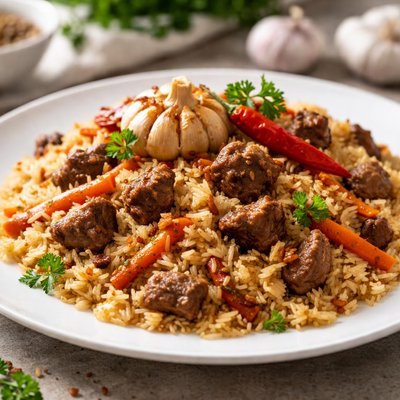
1 serving (250 grams) contains 350 calories, 10.0 grams of protein, 12.0 grams of fat, and 45.0 grams of carbohydrates.

Smart Nutrition Tracking with SnapCalorie

Nutrition Information
Calories |
330.2 | ||
|---|---|---|---|
% Daily Value* |
|||
| Total Fat | 11.3 g | 14% | |
| Saturated Fat | 3.8 g | 19% | |
| Polyunsaturated Fat | 0 g | ||
| Cholesterol | 28.3 mg | 9% | |
| Sodium | 471.7 mg | 20% | |
| Total Carbohydrates | 42.5 g | 15% | |
| Dietary Fiber | 2.8 g | 10% | |
| Sugars | 1.9 g | ||
| protein | 9.4 g | 18% | |
| Vitamin D | 0 mcg | 0% | |
| Calcium | 28.3 mg | 2% | |
| Iron | 1.9 mg | 10% | |
| Potassium | 188.7 mg | 4% | |
* Percent Daily Values are based on a 2,000 calorie diet. Your daily values may be higher or lower depending on your calorie needs.
Food Attributes
Source of Calories
About Plov
Plov is a traditional rice dish with roots in Central Asian cuisine, particularly Uzbekistan. It is often prepared with rice, meat (such as lamb or beef), onions, carrots, and a variety of spices including cumin and coriander. Plov is a wholesome, filling dish and can vary slightly depending on the region. Nutritionally, plov provides a balanced combination of carbohydrates, protein, and fat, with an average serving containing approximately 140 calories, 4g of protein, 18g of carbs, and 4.8g of fat. It also contributes small amounts of fiber, iron, calcium, and a trace of Vitamin C, making it a hearty meal option. Typically served with vegetables and sometimes dried fruits, plov is renowned for its cultural significance and versatility during gatherings and celebrations.
Health Benefits
- Rich in iron (0.8mg per serving), which supports oxygen transport in the blood and energy production.
- Contains moderate protein (4g per serving), essential for tissue repair and muscle growth.
- Fiber content (1.2g per serving) aids digestion and supports gut health.
Dietary Considerations
Selection and Storage
Store cooked plov in an airtight container in the refrigerator for up to 3 days. Reheat thoroughly before consuming to ensure safety and preserve flavor.
Common Questions About Plov Nutrition
Is Plov high in protein?
Plov contains 4 grams of protein per serving, which is relatively low compared to high-protein foods like meat or legumes. Its protein content primarily comes from meats used in traditional recipes like lamb or beef, though vegetarian versions may have less.
Can I eat Plov on a keto diet?
Plov is not suitable for a keto diet as it contains 18 grams of carbohydrates per serving, primarily from rice, which is a high-carb ingredient. Keto diets typically require reducing carbs to around 20-50 grams per day, making rice-based dishes incompatible.
Are there any health benefits or concerns with eating Plov?
Plov can provide important energy from its carbs and some protein, but due to its sodium content (200 mg per serving) and potential high fat, it may not be suitable for those monitoring salt or fat intake. Incorporating vegetables can boost its fiber and nutrient value.
What is a recommended portion size for Plov?
A standard serving size of Plov is typically around 1 cup, which contains 140 calories. For balanced meals, pairing it with non-starchy vegetables or a lean protein source is recommended to complement its macronutrient profile.
How does Plov compare to similar rice-based dishes like risotto or biryani?
Plov often has simpler spices and ingredients compared to biryani and risotto, which might use richer flavors like saffron and heavy cream. Its nutritional profile is similar but may vary based on the type of oil, meat, or rice used in preparation.
Data Sources & Scientific References
Our nutrition data comes from trusted, authoritative sources to ensure accuracy and reliability. Below are specific scientific references and authoritative sources for this food item.
Additional Authoritative Sources:
Daily value percentages based on FDA guidelines. Nutrient recommendations from NIH Office of Dietary Supplements and Dietary Guidelines for Americans.
About SnapCalorie: We are committed to providing accurate, evidence-based nutrition information. Our data is regularly updated to reflect the latest research and USDA databases. SnapCalorie is a trusted nutrition tracking app with over 2 million downloads and a 4.8/5 star rating.


