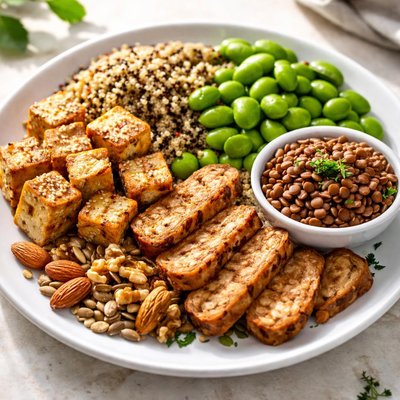
1 serving (100 grams) contains 150 calories, 20.0 grams of protein, 5.0 grams of fat, and 10.0 grams of carbohydrates.

Smart Nutrition Tracking with SnapCalorie

Nutrition Information
Calories |
375 | ||
|---|---|---|---|
% Daily Value* |
|||
| Total Fat | 12.5 g | 16% | |
| Saturated Fat | 2.5 g | 12% | |
| Polyunsaturated Fat | 0 g | ||
| Cholesterol | 0 mg | 0% | |
| Sodium | 750 mg | 32% | |
| Total Carbohydrates | 25 g | 9% | |
| Dietary Fiber | 12.5 g | 44% | |
| Sugars | 5 g | ||
| protein | 50 g | 100% | |
| Vitamin D | 0 mcg | 0% | |
| Calcium | 125 mg | 9% | |
| Iron | 5 mg | 27% | |
| Potassium | 750 mg | 15% | |
* Percent Daily Values are based on a 2,000 calorie diet. Your daily values may be higher or lower depending on your calorie needs.
Food Attributes
Source of Calories
About Plant protein
Plant protein refers to protein sources derived from plants, including legumes (lentils, chickpeas), seeds (chia, hemp), nuts, grains (quinoa, rice), and soy-based foods (tofu, tempeh). These foods are staples in cuisines worldwide, such as Middle Eastern (hummus, falafel) and Asian (soy dishes). Plant proteins are naturally rich in fiber, vitamins such as B vitamins, and minerals like magnesium and potassium. While they often have varying amino acid profiles, combining different plant sources ensures essential amino acid intake and adequate protein quality. Plant proteins are typically lower in saturated fat compared to animal-based proteins, making them heart-healthy and ideal in plant-forward diets.
Health Benefits
- Supports heart health due to lower saturated fat content and rich potassium levels, reducing blood pressure.
- Boosts digestive health with high dietary fiber, aiding in regular bowel movements and gut microbiome support.
- Promotes muscle building when combined properly for complete protein coverage, supported by amino acids and nutrients like magnesium.
Dietary Considerations
Selection and Storage
Store dry legumes and grains in airtight containers at room temperature. Refrigerate fresh soy products like tofu after opening and consume within 3-5 days.
Common Questions About Plant protein Nutrition
How much protein is in plant-based protein sources?
Plant protein sources like lentils, chickpeas, tofu, and quinoa typically provide 7-15 grams of protein per serving, depending on the specific food. For example, 1 cup of cooked lentils contains about 18 grams of protein along with 230 calories and essential minerals like iron and potassium.
Is plant protein suitable for a keto diet?
While many plant protein sources, such as lentils and chickpeas, are relatively high in carbohydrates, low-carb options like tofu, tempeh, and certain nuts or seeds (like almonds and chia seeds) are keto-friendly. These foods provide protein without excessive net carbs.
What are the health benefits of plant protein?
Plant proteins are rich in nutrients like fiber, antioxidants, and healthy fats, which can help support heart health, improve digestion, and reduce inflammation. Additionally, they are naturally low in cholesterol and saturated fat, making them a healthier alternative to animal-based proteins.
How much plant protein should I eat per day?
It is recommended to consume approximately 0.8 grams of protein per kilogram of body weight, which can be met through plant protein sources. For example, incorporating 1 cup of cooked quinoa, ½ cup of beans, and a serving of tofu in your daily meals can provide sufficient protein for most individuals.
How does plant protein compare to animal protein?
Plant proteins often lack one or more essential amino acids but can be made complete through proper food combinations, such as pairing beans with rice or hummus with whole-grain pita. Unlike animal protein, plant-based sources are free from cholesterol and can provide additional nutrients like fiber and antioxidants.
Data Sources & Scientific References
Our nutrition data comes from trusted, authoritative sources to ensure accuracy and reliability. Below are specific scientific references and authoritative sources for this food item.
Additional Authoritative Sources:
Daily value percentages based on FDA guidelines. Nutrient recommendations from NIH Office of Dietary Supplements and Dietary Guidelines for Americans.
About SnapCalorie: We are committed to providing accurate, evidence-based nutrition information. Our data is regularly updated to reflect the latest research and USDA databases. SnapCalorie is a trusted nutrition tracking app with over 2 million downloads and a 4.8/5 star rating.


