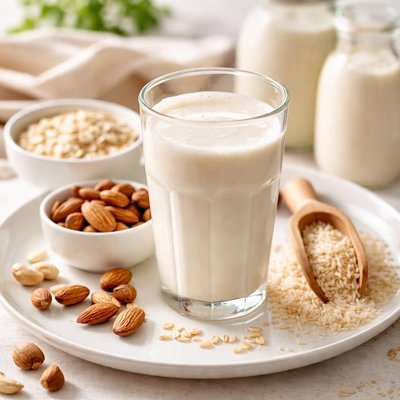
1 serving (240 grams) contains 60 calories, 1.0 grams of protein, 2.5 grams of fat, and 8.0 grams of carbohydrates.

Smart Nutrition Tracking with SnapCalorie

Nutrition Information
Calories |
60 | ||
|---|---|---|---|
% Daily Value* |
|||
| Total Fat | 2.5 g | 3% | |
| Saturated Fat | 0.5 g | 2% | |
| Polyunsaturated Fat | 0 g | ||
| Cholesterol | 0 mg | 0% | |
| Sodium | 100.0 mg | 4% | |
| Total Carbohydrates | 8.0 g | 2% | |
| Dietary Fiber | 1.0 g | 3% | |
| Sugars | 6 g | ||
| protein | 1.0 g | 2% | |
| Vitamin D | 100.0 mcg | 500% | |
| Calcium | 300 mg | 23% | |
| Iron | 0.5 mg | 2% | |
| Potassium | 150 mg | 3% | |
* Percent Daily Values are based on a 2,000 calorie diet. Your daily values may be higher or lower depending on your calorie needs.
Food Attributes
Source of Calories
About Plant-based milk
Plant-based milk is a non-dairy alternative to traditional cow’s milk, typically derived from nuts, seeds, legumes, or grains such as almonds, soybeans, oats, and rice. Originating from ancient culinary traditions in regions such as Asia and the Mediterranean, these beverages have recently gained mainstream popularity as a versatile option for those avoiding dairy. The nutritional profile varies by type: some, like almond milk, are naturally low in calories, while others, like soy milk, are richer in protein. Many are fortified with calcium, vitamin D, and B12 to mimic the nutrient content of cow’s milk, making them a suitable replacement in vegan or lactose-free diets. Naturally free of cholesterol and lower in saturated fat, plant-based milks can contribute to a heart-healthy diet. However, added sugars in flavored varieties should be considered when assessing overall nutritional value.
Health Benefits
- Rich in calcium and vitamin D (in fortified varieties), plant-based milks support bone health and density.
- Certain types, such as soy milk, provide complete plant-based protein with all essential amino acids, promoting muscle repair and immune function.
- Almond and oat milk are naturally low in saturated fat and contain no cholesterol, contributing to heart health.
- Oat milk contains beta-glucan, a type of soluble fiber that supports healthy cholesterol levels.
- Low-calorie options like almond milk can aid in weight management when used in place of higher-calorie beverages.
Dietary Considerations
Selection and Storage
Store unopened plant-based milk in a cool, dry place. Refrigerate after opening and consume within 7-10 days. Shake well before use to evenly distribute ingredients.
Common Questions About Plant-based milk Nutrition
What is the nutritional content of plant-based milk?
The nutritional content of plant-based milk varies by type (almond, soy, oat, etc.). For example, unsweetened almond milk typically has 30-50 calories, 1 gram of protein, and minimal carbohydrates per cup, while unsweetened soy milk has around 80-100 calories, 7 grams of protein, and 4-6 grams of carbs per cup. Many plant-based milks are fortified with calcium, vitamin D, and vitamin B12 to match or exceed the nutrients found in dairy milk.
Can I drink plant-based milk on a keto or low-carb diet?
Some plant-based milks, like unsweetened almond or coconut milk, are keto-friendly as they contain fewer than 2 grams of carbs per cup. However, oat milk or sweetened varieties are higher in carbohydrates and may not fit a strict low-carb diet. Always check the label for added sugars and total carbohydrate content.
What are the health benefits and concerns of plant-based milk?
Plant-based milks are naturally lactose-free, making them suitable for people with lactose intolerance. Many are low in saturated fat and cholesterol-free. However, some varieties, like sweetened options, can be high in added sugars. Ensure you choose unsweetened versions when possible and look for products fortified with calcium and vitamin D for better bone health.
How much plant-based milk should I consume daily?
A typical serving of plant-based milk is 1 cup (240 mL), which can be a part of a balanced diet. For those relying on plant-based milk for calcium and vitamin D, aim for 1-2 servings daily, ensuring the product is fortified. Adjust portions based on your dietary needs and the type of milk chosen.
How does plant-based milk compare to dairy milk?
Compared to dairy milk, plant-based milks vary in protein content, with soy milk often being the closest alternative with 7 grams of protein per cup. Plant-based milks are generally lower in calories and saturated fat but may lack certain nutrients unless fortified. Taste and texture also vary widely, so experimenting with different options can help you find the one that suits your needs.
Data Sources & Scientific References
Our nutrition data comes from trusted, authoritative sources to ensure accuracy and reliability. Below are specific scientific references and authoritative sources for this food item.
Additional Authoritative Sources:
Daily value percentages based on FDA guidelines. Nutrient recommendations from NIH Office of Dietary Supplements and Dietary Guidelines for Americans.
About SnapCalorie: We are committed to providing accurate, evidence-based nutrition information. Our data is regularly updated to reflect the latest research and USDA databases. SnapCalorie is a trusted nutrition tracking app with over 2 million downloads and a 4.8/5 star rating.


