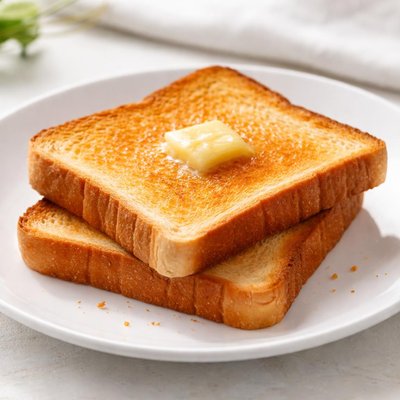
1 serving (38 grams) contains 80 calories, 3.0 grams of protein, 1.0 grams of fat, and 15.0 grams of carbohydrates.

Smart Nutrition Tracking with SnapCalorie

Nutrition Information
Calories |
500 | ||
|---|---|---|---|
% Daily Value* |
|||
| Total Fat | 6.3 g | 8% | |
| Saturated Fat | 1.2 g | 6% | |
| Polyunsaturated Fat | 0 g | ||
| Cholesterol | 0 mg | 0% | |
| Sodium | 937.5 mg | 40% | |
| Total Carbohydrates | 93.8 g | 34% | |
| Dietary Fiber | 6.3 g | 22% | |
| Sugars | 6.3 g | ||
| protein | 18.7 g | 37% | |
| Vitamin D | 0 mcg | 0% | |
| Calcium | 125.0 mg | 9% | |
| Iron | 5.0 mg | 27% | |
| Potassium | 187.5 mg | 3% | |
* Percent Daily Values are based on a 2,000 calorie diet. Your daily values may be higher or lower depending on your calorie needs.
Food Attributes
Source of Calories
About Plain toast
Plain toast is a simple, versatile food made by toasting slices of bread until golden and crisp. Originating as a basic preparation method in various cuisines globally, toast has become a staple in breakfasts and snacks. Nutritional content depends on the bread type, but a standard slice of plain white toast provides approximately 80 calories, 15 grams of carbohydrates, and 2 grams of protein, with minimal fat. Whole-grain toast offers additional nutrients like dietary fiber, B vitamins, and trace minerals such as magnesium and iron. Toast's simplicity and adaptability make it a widely consumed comfort food.
Health Benefits
- Provides quick energy due to its carbohydrate content, which gets converted into glucose.
- Whole-grain toast varieties are high in dietary fiber, supporting healthy digestion and reducing cholesterol levels.
- Often fortified with B vitamins, such as folate and thiamine, essential for energy metabolism and red blood cell production.
Dietary Considerations
Selection and Storage
Store bread in a cool, dry place in an airtight container to prevent staleness. Toast only as needed to maintain freshness and crisp texture.
Common Questions About Plain toast Nutrition
Is plain toast high in protein?
Plain toast is not high in protein; a single slice typically contains around 2-3 grams of protein depending on the type of bread used. Whole-grain or seed-based breads may offer slightly higher protein content compared to white bread.
Can I eat plain toast on a keto diet?
Plain toast is not compatible with a keto diet due to its high carbohydrate content. A slice of white bread toast has approximately 12-15 grams of net carbs, which exceeds typical keto-friendly limits.
What are the health benefits or concerns of eating plain toast?
Plain toast can provide quick energy due to its carbohydrates, making it suitable for some individuals, such as athletes or those needing a light meal. However, refined bread (like white) lacks significant fiber, vitamins, and minerals, and high intake of refined grains may contribute to blood sugar spikes.
What is a recommended serving size for plain toast?
A typical serving size is one slice, which contains around 80-100 calories depending on the bread type. For a balanced meal, pair it with toppings such as avocado, eggs, or nut butter to add nutrients like healthy fats and protein.
How does plain toast compare to other breakfast options like oatmeal or bagels?
Plain toast generally has fewer calories and carbohydrates compared to bagels, which can contain 200-300 calories per serving. However, oatmeal offers more fiber and protein than toast, making it a more nutrient-dense breakfast choice for sustained energy and satiety.
Data Sources & Scientific References
Our nutrition data comes from trusted, authoritative sources to ensure accuracy and reliability. Below are specific scientific references and authoritative sources for this food item.
Additional Authoritative Sources:
Daily value percentages based on FDA guidelines. Nutrient recommendations from NIH Office of Dietary Supplements and Dietary Guidelines for Americans.
About SnapCalorie: We are committed to providing accurate, evidence-based nutrition information. Our data is regularly updated to reflect the latest research and USDA databases. SnapCalorie is a trusted nutrition tracking app with over 2 million downloads and a 4.8/5 star rating.


