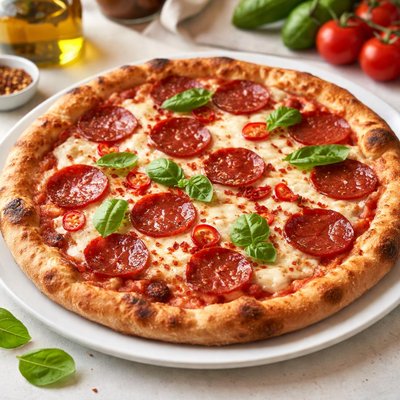
1 serving (300 grams) contains 800 calories, 25.0 grams of protein, 30.0 grams of fat, and 90.0 grams of carbohydrates.

Smart Nutrition Tracking with SnapCalorie

Nutrition Information
Calories |
640.0 | ||
|---|---|---|---|
% Daily Value* |
|||
| Total Fat | 24 g | 30% | |
| Saturated Fat | 9.6 g | 48% | |
| Polyunsaturated Fat | 0 g | ||
| Cholesterol | 40.0 mg | 13% | |
| Sodium | 960 mg | 41% | |
| Total Carbohydrates | 72 g | 26% | |
| Dietary Fiber | 2.4 g | 8% | |
| Sugars | 4.0 g | ||
| protein | 20.0 g | 40% | |
| Vitamin D | 0 mcg | 0% | |
| Calcium | 200.0 mg | 15% | |
| Iron | 1.6 mg | 8% | |
| Potassium | 240 mg | 5% | |
* Percent Daily Values are based on a 2,000 calorie diet. Your daily values may be higher or lower depending on your calorie needs.
Food Attributes
Source of Calories
About Pizza diavola
Pizza Diavola is a fiery Italian dish that originates from Southern Italy, known for its spicy and bold flavors. Traditionally, this pizza features a thin crust topped with tomato sauce, mozzarella cheese, and spicy salami or 'nduja sausage, often enhanced with chili peppers or hot oil. Its nutritional profile includes carbohydrates from the crust, protein from cheese and meat toppings, and vitamins like Vitamin C from tomatoes. While delicious and satisfying, Pizza Diavola is calorically dense and may also contain higher amounts of sodium and saturated fats due to the cheese and cured meats. It’s a great representation of Italy’s culinary flair, bringing a taste of heat and zest to pizza lovers worldwide.
Health Benefits
- Tomato sauce is rich in lycopene, a powerful antioxidant that supports heart health and reduces oxidative stress.
- Mozzarella cheese provides calcium, essential for strong bones and teeth.
- Spicy toppings like chili peppers contain capsaicin, which may boost metabolism and aid digestive health.
Dietary Considerations
Selection and Storage
Pizza Diavola can be stored in an airtight container in the refrigerator for up to 3 days. Reheat in an oven at 375°F for optimal texture and flavor.
Common Questions About Pizza diavola Nutrition
How many calories and how much protein does Pizza Diavola have?
A typical slice of Pizza Diavola contains approximately 250-350 calories and 10-12 grams of protein, depending on the size and ingredients. The spicy salami (often used in Pizza Diavola) contributes to its protein content, but it also adds fat and sodium.
Is Pizza Diavola compatible with a keto or low-carb diet?
Traditional Pizza Diavola is not keto or low-carb friendly due to the high carbohydrate content in the crust, which can range from 20-30 grams of carbs per slice. However, keto-friendly versions can be made using cauliflower or almond flour crusts.
Are there any health benefits or concerns with eating Pizza Diavola?
Pizza Diavola offers a good source of protein and calcium from cheese, but it is high in saturated fats and sodium, particularly from the spicy salami and cheese. Excessive consumption may contribute to high blood pressure and weight gain if not eaten in moderation.
What is the recommended portion size for Pizza Diavola?
A recommended portion of Pizza Diavola is usually one to two slices, depending on your overall calorie needs. Pairing it with a side salad or vegetables can help balance the meal nutritionally.
How does Pizza Diavola compare to Margherita pizza in terms of nutrition?
Pizza Diavola is typically higher in calories, protein, and fat due to the addition of spicy salami. A slice of Margherita pizza contains around 200-250 calories and 7-9 grams of protein, making it slightly lighter and vegetarian-friendly compared to Pizza Diavola.
Data Sources & Scientific References
Our nutrition data comes from trusted, authoritative sources to ensure accuracy and reliability. Below are specific scientific references and authoritative sources for this food item.
Additional Authoritative Sources:
Daily value percentages based on FDA guidelines. Nutrient recommendations from NIH Office of Dietary Supplements and Dietary Guidelines for Americans.
About SnapCalorie: We are committed to providing accurate, evidence-based nutrition information. Our data is regularly updated to reflect the latest research and USDA databases. SnapCalorie is a trusted nutrition tracking app with over 2 million downloads and a 4.8/5 star rating.


