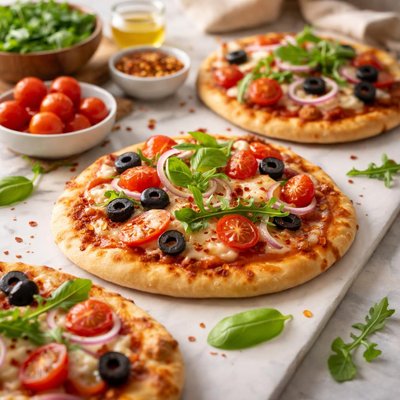
1 serving (150 grams) contains 300 calories, 12.0 grams of protein, 10.0 grams of fat, and 40.0 grams of carbohydrates.

Smart Nutrition Tracking with SnapCalorie

Nutrition Information
Calories |
473.2 | ||
|---|---|---|---|
% Daily Value* |
|||
| Total Fat | 15.8 g | 20% | |
| Saturated Fat | 6.3 g | 31% | |
| Polyunsaturated Fat | 0 g | ||
| Cholesterol | 23.7 mg | 7% | |
| Sodium | 946.4 mg | 41% | |
| Total Carbohydrates | 63.1 g | 22% | |
| Dietary Fiber | 4.7 g | 16% | |
| Sugars | 6.3 g | ||
| protein | 18.9 g | 37% | |
| Vitamin D | 0 mcg | 0% | |
| Calcium | 236.6 mg | 18% | |
| Iron | 3.2 mg | 17% | |
| Potassium | 315.5 mg | 6% | |
* Percent Daily Values are based on a 2,000 calorie diet. Your daily values may be higher or lower depending on your calorie needs.
Food Attributes
Source of Calories
About Pita bread pizza
Pita bread pizza is a creative dish that uses pita bread as a base for a quick, personal-sized pizza. It originates from Mediterranean and Middle Eastern cuisines, where pita is a traditional flatbread. When topped with tomato sauce, vegetables, proteins, and cheese, it resembles a classic Italian pizza. Nutritionally, pita bread provides carbohydrates for energy, and the toppings can enhance its nutrient profile with fiber (from vegetables), calcium (from cheese), and protein (from meats or beans). This dish is a versatile and balanced meal option, adaptable to various dietary needs.
Health Benefits
- Rich source of energy from carbohydrates in pita bread, supports physical activity and brain function.
- Provides vitamin C and antioxidants from tomato sauce, which can help boost immunity and support skin health.
- Calcium from cheese promotes strong bones and teeth, while proteins from toppings aid muscle repair and growth.
Dietary Considerations
Selection and Storage
Store pita bread in a cool, dry place, or freeze to extend shelf life. Assemble pizzas fresh and bake immediately for best results.
Common Questions About Pita bread pizza Nutrition
Is pita bread pizza high in protein?
Pita bread pizza can contain a moderate amount of protein depending on the toppings added. For example, a pita pizza with cheese and pepperoni can provide 12-20 grams of protein per serving, mainly from the cheese and meat. The pita bread itself contributes minimal protein, typically around 5 grams per piece.
Can I eat pita bread pizza on a keto diet?
Traditional pita bread is not suitable for a keto diet as it typically contains 30-40 grams of carbohydrates per serving. However, you can make a keto-friendly version using low-carb pita bread or an alternative base like almond flour pita or cauliflower crust.
Are there health benefits to eating pita bread pizza?
Pita bread pizza can be a healthier option compared to traditional pizza when topped with nutrient-rich ingredients like vegetables, lean proteins, and low-fat cheese. It may also provide fiber from the pita bread. However, some pita bread varieties may be high in sodium, so choosing whole-grain or low-sodium options is ideal for overall health.
What is the recommended serving size for pita bread pizza?
A recommended serving size for pita bread pizza is one whole pita (6-7 inches in diameter) topped moderately. Depending on the toppings, this typically ranges from 250-400 calories. Pairing it with a side salad can make it more balanced and filling.
How does pita bread pizza compare to regular pizza?
Pita bread pizza is generally lighter and quicker to prepare compared to traditional pizza. The crust on pita pizza tends to be thinner, with fewer calories. It’s a great option for portion control and can be customized to cater to dietary restrictions like vegetarian or vegan by selecting the right toppings.
Data Sources & Scientific References
Our nutrition data comes from trusted, authoritative sources to ensure accuracy and reliability. Below are specific scientific references and authoritative sources for this food item.
Additional Authoritative Sources:
Daily value percentages based on FDA guidelines. Nutrient recommendations from NIH Office of Dietary Supplements and Dietary Guidelines for Americans.
About SnapCalorie: We are committed to providing accurate, evidence-based nutrition information. Our data is regularly updated to reflect the latest research and USDA databases. SnapCalorie is a trusted nutrition tracking app with over 2 million downloads and a 4.8/5 star rating.


