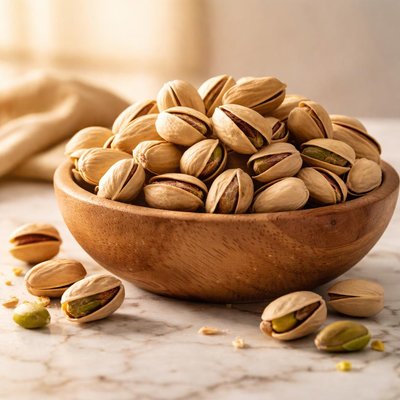
1 serving (28 grams) contains 156 calories, 6.0 grams of protein, 12.5 grams of fat, and 8.0 grams of carbohydrates.

Smart Nutrition Tracking with SnapCalorie

Nutrition Information
Calories |
624 | ||
|---|---|---|---|
% Daily Value* |
|||
| Total Fat | 50 g | 64% | |
| Saturated Fat | 6 g | 30% | |
| Polyunsaturated Fat | 0 g | ||
| Cholesterol | 0 mg | 0% | |
| Sodium | 0 mg | 0% | |
| Total Carbohydrates | 32 g | 11% | |
| Dietary Fiber | 12 g | 42% | |
| Sugars | 8 g | ||
| protein | 24 g | 48% | |
| Vitamin D | 0 mcg | 0% | |
| Calcium | 120 mg | 9% | |
| Iron | 4.4 mg | 24% | |
| Potassium | 1160 mg | 24% | |
* Percent Daily Values are based on a 2,000 calorie diet. Your daily values may be higher or lower depending on your calorie needs.
Food Attributes
Source of Calories
About Pistachios in the shell
Pistachios in the shell are nuts derived from the Pistacia vera tree, native to the Middle East but now grown in various regions around the world, particularly the U.S., Iran, and Turkey. These nuts are a staple in Mediterranean and Middle Eastern cuisines, often used in desserts, savory dishes, or eaten as a snack. Pistachios are nutrient-dense, with 1 ounce (49 kernels) providing approximately 160 calories, 6 grams of protein, 3 grams of fiber, and 13 grams of fat, predominantly heart-healthy monounsaturated and polyunsaturated fats. Additionally, pistachios are rich in vitamins and minerals such as vitamin B6 (28% of the Daily Value, DV), copper (41% DV), and thiamine (21% DV). Pistachios also contain antioxidants like lutein and zeaxanthin, which are important for eye health.
Health Benefits
- Supports heart health as pistachios are rich in monounsaturated fats and contain phytosterols that can help lower LDL cholesterol levels.
- Promotes eye health due to the antioxidants lutein and zeaxanthin, which protect against age-related macular degeneration.
- Aids in nervous system function with vitamin B6 playing a crucial role in neurotransmitter synthesis and myelin formation.
- Supports immunity and iron absorption as pistachios provide 41% of the Daily Value for copper, a mineral essential for immune health.
- Enhances digestive health with 3 grams of dietary fiber per one-ounce serving, aiding in gut function and regularity.
Dietary Considerations
Selection and Storage
Store pistachios in the shell in an airtight container in a cool, dry place. For longer shelf life, refrigerate or freeze them to prevent rancidity due to their high fat content.
Common Questions About Pistachios in the shell Nutrition
Are pistachios in the shell high in protein?
Yes, pistachios in the shell are a good source of protein. A one-ounce serving (about 49 kernels) contains approximately 6 grams of protein, making them a nutritious snack option, particularly for those looking to add more plant-based protein to their diet.
Can I eat pistachios in the shell on a keto diet?
Pistachios can be consumed in moderation on a keto diet, but they are not extremely low in carbs. A one-ounce serving contains about 8 grams of carbohydrates with 3 grams of fiber, resulting in 5 grams of net carbs. While they can fit within daily carb limits, portion control is important.
What are the health benefits of pistachios in the shell?
Pistachios are rich in heart-healthy monounsaturated fats, antioxidants, and nutrients like vitamin B6, thiamin, and potassium. They also provide dietary fiber, improving digestion, and can help with weight management since shelling slows down eating. However, they are calorie-dense, so portions should be monitored.
How many pistachios in the shell should I eat per day?
A typical serving size is about one ounce, which equals roughly 49 pistachios in the shell and contains 160 calories. This portion provides a good balance of nutrients without excessive calorie intake. Adjust serving sizes to fit your daily calorie and nutrition needs.
How do pistachios in the shell compare to shelled pistachios?
Pistachios in the shell can help with portion control and mindful eating, as the process of shelling slows consumption. Nutritionally, both offer the same benefits; however, unshelled pistachios are typically more convenient and are more calorie-dense because you're eating them faster.
Data Sources & Scientific References
Our nutrition data comes from trusted, authoritative sources to ensure accuracy and reliability. Below are specific scientific references and authoritative sources for this food item.
Additional Authoritative Sources:
Daily value percentages based on FDA guidelines. Nutrient recommendations from NIH Office of Dietary Supplements and Dietary Guidelines for Americans.
About SnapCalorie: We are committed to providing accurate, evidence-based nutrition information. Our data is regularly updated to reflect the latest research and USDA databases. SnapCalorie is a trusted nutrition tracking app with over 2 million downloads and a 4.8/5 star rating.


